
Main Courses
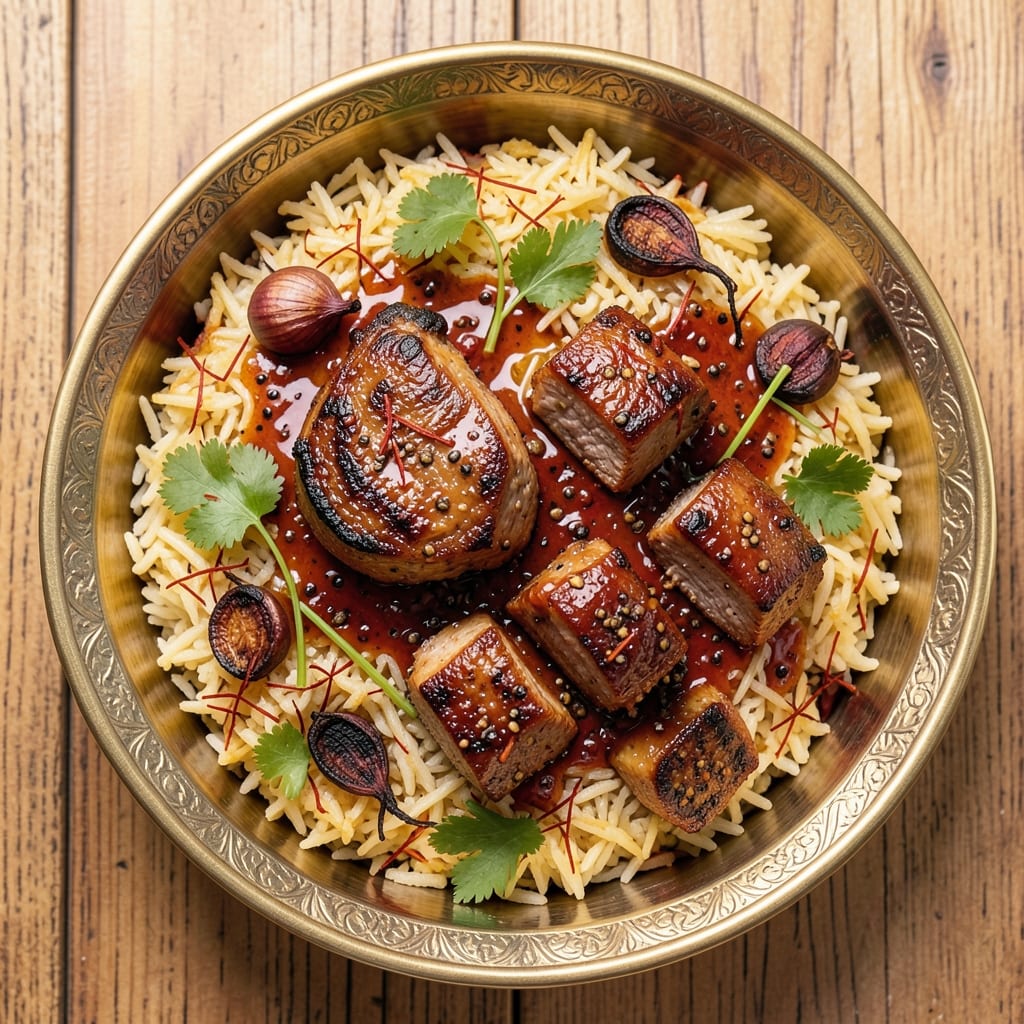
This Arabian kabsa rice recipe brings the heart of Saudi Arabia to your kitchen with its fragrant blend of spiced lamb, saffron-infused rice, and sweet raisins. The dish combines tender meat with aromatic basmati rice cooked in rich tomato sauce and baharat spice, creating a meal that’s both comforting and elegant. What makes kabsa special is its balance of flavors—warm spices, sweet raisins, and the delicate floral notes of saffron—all coming together in one flavorful pot.
The secret to authentic kabsa lies in the slow-cooked lamb, which becomes melt-in-your-mouth tender, and the fragrant rice that absorbs the flavors of the spiced tomato base. Traditional recipes call for baharat, a Middle Eastern spice blend that adds depth, while saffron threads infuse the rice with a golden hue and luxurious aroma. This recipe stays true to those traditions while offering a straightforward method for home cooks to achieve restaurant-quality results.
By the time you serve this dish, your kitchen will be filled with the irresistible scent of spiced lamb and saffron rice, and every bite will deliver layers of flavor—tender meat, fragrant rice, and the subtle sweetness of raisins. It’s the kind of meal that feels like a celebration, perfect for family gatherings or special occasions. The best part? It all comes together in one pot, making it both impressive and manageable for any home cook.
Whether you’re serving it with a side of fresh salad or warm flatbread, kabsa is a dish that brings people together. The recipe includes tips for customizing the spice levels and adjusting the meat-to-rice ratio, so you can make it your own while keeping the essence of this beloved Arabian classic intact. Let’s get cooking!
Ingredients for arabian kabsa rice
Spiced lamb and fragrant saffron rice—just 15 ingredients for a dish that feels like a celebration.
| Ingredient | Amount | Notes |
|---|---|---|
| Lamb Shoulder 🐑 | 2 lb | Bone-in for flavor, cut into chunks |
| Basmati Rice 🍚 | 1 ½ cups | Long-grain, uncooked |
| Saffron Threads 🌼 | ¼ tsp | High-quality, steeped in warm water |
| Tomato Paste 🍅 | ½ cup | Smooth, no sugar added |
| Baharat Spice Blend 🌶️ | 2 tbsp | Traditional Middle Eastern blend |
| Ground Cumin 🌿 | 1 tbsp | Toasted for deeper flavor |
| Ground Coriander 🌿 | 1 tbsp | Freshly ground preferred |
| Garlic Cloves 🧄 | 6 cloves | Peeled, roughly chopped |
| Onion 🧅 | 1 whole | Yellow or red, diced |
| Golden Raisins 🍇 | ½ cup | Plump, not shriveled |
| Vegetable Oil 🫒 | ½ cup | Light or neutral flavor |
| Chicken Broth 💧 | 2 cups | Low-sodium preferred |
| Lemon Juice 🍋 | 2 tbsp | Freshly squeezed |
| Salt 🧂 | 1 ½ tsp | Kosher or sea salt |
| Black Pepper 🌶️ | ½ tsp | Freshly ground |
The lamb is everything here. Bone-in shoulder stays juicy and flavorful—skip the lean cuts. Look for well-marbled meat at Middle Eastern markets or your local butcher. If you can't find baharat, Penzeys sells it online, or mix your own with cinnamon, cardamom, and black pepper. The saffron? Don't skimp—cheap threads taste like dirt. Steep them in warm water for 10 minutes before adding to the rice. For the raisins, Golden Barrel brand has the best plump ones, but any good quality will work.
No baharat? Mix 1 tsp cinnamon, 1 tsp cumin, 0.5 tsp cardamom, 0.5 tsp black pepper, and 0.25 tsp cloves. Out of saffron? Turmeric at half the amount gives color but no floral notes. The tomato paste can be fresh (blend canned tomatoes) or store-bought—Muir Glen is my go-to. For extra richness, add 2 tbsp of heavy cream at the end, but traditionalists will say no. The rice should be basmati—jasmine won't give that same aromatic punch. And if you're feeling fancy, toast the rice in oil for 2 minutes before adding broth—worth the extra minute.
This dish tastes even better the next day. Store leftovers in the fridge for 4-5 days or freeze for 3 months. I always make a double batch—one for dinner, one for lunches. The rice dries out fast, so reheat with a splash of water or broth. For serving, warm flatbread or a simple cucumber salad cuts through the richness. The scent alone will have everyone gathering around your table.
Why You'll Love This Recipe
- One-Pot Magic: I swear by this recipe on busy nights—just brown the lamb, layer in the rice, and let the spices work their magic. No chopping, no fuss, just dump-and-go with that fragrant saffron-infused steam filling the kitchen.
- Spice Symphony: That baharat blend? It’s the secret weapon—warm, earthy, with just a hint of citrus. The tomato paste deepens the flavor while the saffron adds a golden, luxurious touch that makes it taste like a restaurant dish.
- Weeknight to Celebration: Honestly, this is my go-to for both Tuesday dinners and Sunday gatherings. The lamb stays tender, the rice fluffs up perfectly, and the leftovers? Even better the next day. (Yes, even on a Tuesday night.)
- Budget-Friendly Feast: Lamb shoulder stretches further than you’d think, and basmati rice keeps it affordable. A single batch feeds four heartily, with enough leftovers to turn into fried rice or a quick wrap the next day—zero waste, maximum flavor.
Step-by-step instructions for Arabian kabsa rice
This one-pot wonder delivers rich, fragrant flavors with tender lamb and fragrant saffron rice.
Prepare the Lamb and Saffron Infusion
Begin by cutting the 2 lb lamb shoulder into 2-inch chunks, removing any excess fat but leaving a thin layer for flavor. In a small bowl, steep the 0.25 tsp saffron threads in 2 tablespoons hot water for 5 minutes to release their vibrant color and aroma. This infusion will transform your rice into a golden, fragrant masterpiece.
Heat 0.5 cup vegetable oil in a large, heavy-bottomed pot over medium-high heat. Add the lamb chunks and sear them until deep golden brown on all sides, about 5-7 minutes. This step develops the deep, caramelized flavors that define kabsa. Remove the lamb and set it aside temporarily.
Build the Spiced Base
In the same pot, add the diced onion and cook for 3-4 minutes until softened and translucent. Add the 6 cloves garlic cloves and cook for another 30 seconds until fragrant. Here's where the magic happens: stir in the 0.5 cup tomato paste, 2 tbsp baharat spice blend, 1 tbsp ground cumin, 1 tbsp ground coriander, 1.5 tsp salt, and 0.5 tsp black pepper. Cook for 2 minutes, stirring constantly, until the spices release their aromatic oils and the mixture becomes deeply fragrant.
Pour in the 2 cups chicken broth and scrape up any browned bits from the bottom of the pot. These flavorful bits, called fond, are packed with concentrated taste that will infuse your entire dish. Return the seared lamb to the pot and bring everything to a gentle simmer. Cover and cook for 45 minutes, stirring occasionally, until the lamb is tender and the sauce has thickened slightly.
Add Rice and Raisins for Perfect Texture
Rinse the 1.5 cups basmati rice under cold water until the water runs clear, then drain well. Stir the rice into the lamb mixture along with the 0.5 cup golden raisins and the saffron infusion. The raisins will plump up beautifully, adding a touch of sweetness that balances the savory lamb. Bring the mixture to a boil, then reduce heat to low, cover tightly, and simmer for 15-18 minutes until the rice is tender and the liquid has been absorbed.
Here's the thing about kabsa—you want the rice to be perfectly cooked but still slightly separate, not mushy. If you notice the rice is absorbing the liquid too quickly, add 2-3 tablespoons hot water through the lid to maintain moisture. The dish should have a thick, saucy consistency with tender lamb pieces nestled among the fragrant grains.
Finish with Lemon and Rest
Once the rice is fully cooked, stir in the 2 tbsp lemon juice. This bright citrus note cuts through the richness of the lamb and spices, adding a refreshing contrast that makes each bite sing. Taste and adjust seasoning if needed—you might want to add a pinch more salt or a crack of black pepper to enhance the flavors.
Remove from heat and let the kabsa rest, covered, for 10 minutes. This resting period allows the juices to redistribute throughout the dish, ensuring every bite is moist and flavorful. Serve immediately with warm flatbread or over a bed of fresh herbs for an authentic Arabian dining experience.
Pro Tips For Making Arabian Kabsa Rice
- CRISP THE LAMB FIRST: Skip the slow start—sear the lamb shoulder in small batches until deeply browned before adding any liquid. I learned this the hard way: rushing this step means the meat stays tough, and the sauce never gets that rich, caramelized depth that makes kabsa sing. Use a heavy pot and don’t crowd the meat—give it space to develop that crust.
- SOAK SAFFRON IN WARM WATER: Crush the saffron threads and steep them in 2 tablespoons of warm water for at least 10 minutes before adding to the rice. Cold water? You’ll end up with specks of color floating on top instead of a golden, fragrant infusion. Trust me, the difference is night and day—no one wants to serve rice that looks like it’s missing its soul.
- DON’T STIR THE RICE: Once the rice hits the pot, resist the urge to poke or stir it. After burning three batches, I finally figured out that letting it sit undisturbed for the first 5 minutes—until the liquid comes to a boil—guarantees even cooking and prevents those annoying dry spots. (Yes, even if you’re impatient like me.)
- LAYER THE BAHARAT GRADUALLY: Add half the baharat spice blend with the lamb, then save the rest to sprinkle over the rice at the very end. This keeps the flavors balanced—too much upfront can make the dish bitter, while finishing with it brightens every bite. I was skeptical until I tried it: the aroma alone makes the dish feel like a proper celebration.
Best sauces and condiments for this recipe
Tomato Sauce Base
The heart of kabsa's flavor starts with the tomato paste foundation. For extra depth, I blend 1 can (14 oz) crushed tomatoes with the 0.5 cup paste before adding to the pot. This creates a smoother, more complex sauce that coats the lamb beautifully. If you prefer chunky texture, simply stir the paste directly into the onions and garlic. The key is cooking it until the raw tomato taste disappears—about 5 minutes of constant stirring. 🍅
Yogurt Sauce Twist
For a cooling contrast, whip ½ cup plain yogurt with 1 tbsp lemon juice, ½ tsp salt, and 1 crushed garlic clove. Drizzle this over finished kabsa just before serving—it cuts through the richness while adding a creamy, tangy dimension. I like to serve it with toasted pita triangles for dipping. For extra flair, top with chopped mint and a pinch of smoked paprika.
Spiced Butter Garnish
Melt 2 tbsp butter with ½ tsp baharat and ¼ tsp saffron until fragrant. Drizzle this golden mixture over the finished kabsa right before serving—it adds a luxurious sheen and extra saffron aroma. For a smoky variation, add ¼ tsp harissa to the butter. I always keep a small bowl of this spiced butter on the table for guests to add to their plates. 🌶️
Pickled Onion Topping
Quick-pickle ½ red onion by thinly slicing, soaking in ½ cup vinegar, 1 tsp sugar, and ½ tsp salt for 30 minutes. The bright acidity balances the rich kabsa perfectly. For a sweeter option, use apple cider vinegar with a pinch of cinnamon. I serve these pickled onions on the side for guests to sprinkle over their portions. The crunch contrasts beautifully with the tender lamb and rice.
Fresh Herb Finish
No kabsa is complete without fresh herbs. I always finish with 2 tbsp chopped parsley and 1 tbsp chopped cilantro—their bright notes lift the dish. For extra authenticity, add ½ tsp ground sumac (available at Middle Eastern markets) for a tangy citrusy kick. The herbs should be added just before serving to preserve their vibrant color and fresh flavor. 🌿
Creamy Tahini Drizzle
For a nutty finish, whisk 2 tbsp tahini with 1 tbsp lemon juice and 1 tsp honey until smooth. Drizzle this over the kabsa just before serving—it adds a silky texture and subtle sweetness. I like to pair this with toasted pine nuts sprinkled on top for extra crunch. This variation works especially well with chicken kabsa for a lighter profile. 🌰
Nutrition facts
Frequently asked questions
What's the difference between Saudi and Yemeni kabsa?
Saudi kabsa typically uses lamb and includes saffron for its golden color, while Yemeni versions often feature chicken or goat and more spiced tomato sauce. Saudi kabsa also has a sweeter profile from raisins, while Yemeni versions may include dried lime (lemon) for tanginess. The spice blends differ too—Saudi uses more baharat, while Yemeni kabsa incorporates ginger and cardamom prominently.
Can I substitute chicken for lamb in kabsa?
Chicken kabsa is a popular variation, especially for those who prefer milder flavors. Use 2 lbs boneless chicken thighs instead of lamb, and reduce the cooking time to 30 minutes after adding the rice. For extra richness, marinate the chicken in yogurt, lemon juice, and baharat for 2 hours before cooking. The texture will be slightly different but equally delicious.
Why does my kabsa rice turn out mushy?
Mushy rice usually happens from overcooking or too much liquid. Always rinse the basmati rice until the water runs clear, then drain well before adding to the pot. Use low heat after boiling and avoid peeking under the lid—steam is what cooks the rice. If the rice absorbs liquid too quickly, add 2-3 tablespoons hot water through the lid instead of removing it. The rice should be tender but still slightly firm.
How do I make kabsa ahead of time?
Kabsa actually tastes better the next day! Let it cool completely, then store in an airtight container in the fridge for up to 4-5 days. Reheat gently with a splash of water or broth to restore moisture. For freezing, portion into containers and freeze for up to 3 months. Thaw overnight in the fridge before reheating—never microwave from frozen, as it can make the rice dry.
What's the best way to serve kabsa?
Traditional sides include warm flatbread, cucumber salad, or pickled vegetables to balance the rich flavors. For extra presentation, garnish with chopped parsley, cilantro, or toasted pine nuts. Serve with lemon wedges on the side so guests can add brightness to their plates. In Saudi Arabia, it's often accompanied by dates and Arabic coffee for a complete meal experience.