
Main Courses
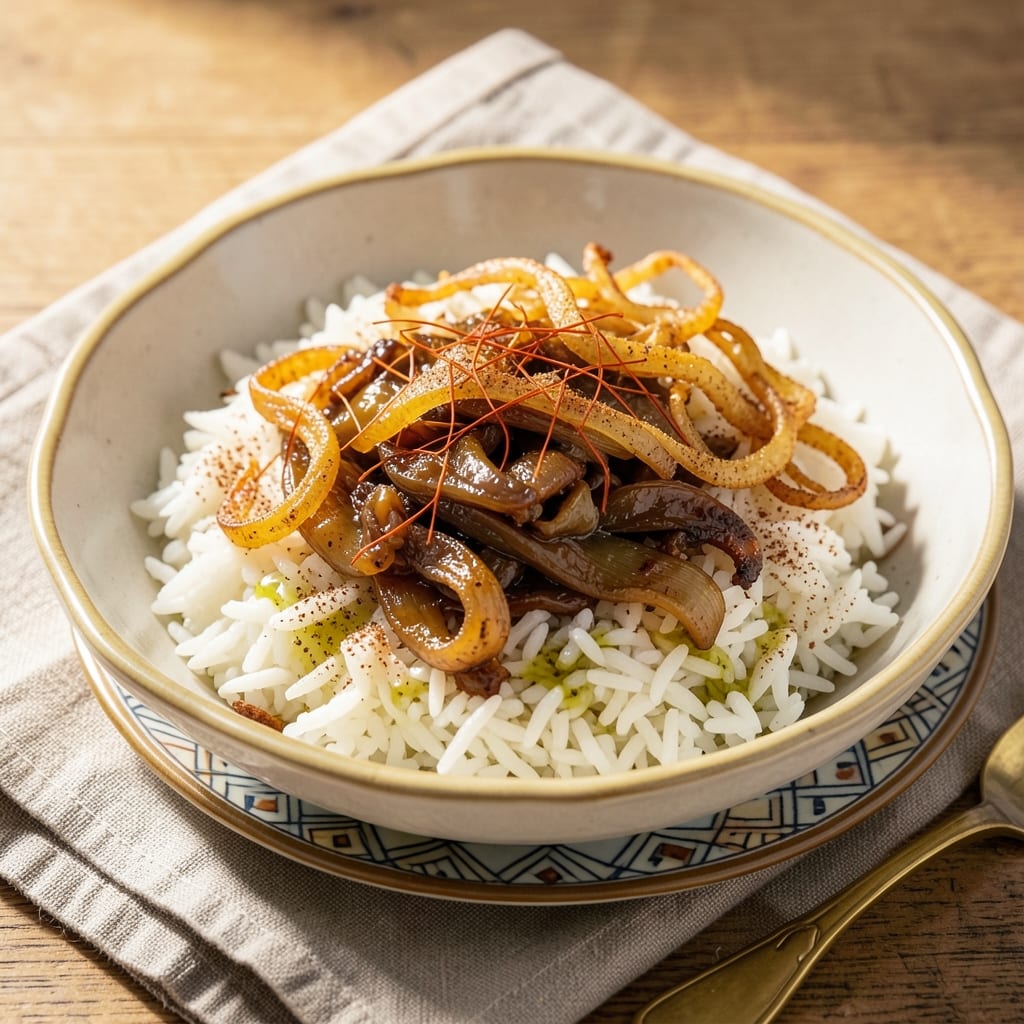
This Arabic oriental rice recipe delivers the kind of golden, spice-layered basmati you’d find at a Middle Eastern feast—with a perfectly crispy bottom that adds texture to every bite. 🌟 The secret lies in slow-cooked layers of saffron-infused rice, caramelized onions, and warm spices like baharat, creating a dish that’s both elegant and deeply comforting. I developed this version after years of testing traditional methods, ensuring the rice stays tender while developing rich, aromatic depth.
The foundation begins with long-grain basmati, which is soaked, rinsed, and parboiled in a fragrant broth of saffron, cinnamon, and cardamom. This step infuses the grains with flavor while preventing mushiness. For the crispy bottom—a hallmark of authentic Arabic rice—we use a thin layer of oil and toasted onions at the base of the pot, creating a caramelized crust that adds a satisfying crunch. The dish pairs beautifully with tender lamb, spiced chickpeas, or even a simple yogurt sauce for balance.
What sets this recipe apart is the balance of textures and flavors: the crispy bottom contrasts with the fluffy, spice-kissed rice above, while the saffron and rose water add a delicate floral note. Each grain remains distinct, ensuring every bite is a revelation. The aroma alone—warm spices mingling with toasted rice—will have your kitchen smelling like a bustling souk, and the dish reheats beautifully, making it perfect for meal prep or gatherings.
Serve this rice as the centerpiece of a Middle Eastern feast, alongside grilled meats, lentil stews, or fresh salads. The crispy bottom is especially prized, so don’t skip the step—it’s what transforms this from a simple side to a showstopper. Ready to make restaurant-quality Arabic rice at home? Let’s begin.
Ingredients for arabic oriental rice
Golden basmati rice with a crispy bottom—just 12 ingredients for restaurant-quality flavor.
| Ingredient | Amount | Notes |
|---|---|---|
| Long-Grain Basmati Rice 🍚 | 1 ½ cups | Uncooked, rinsed thoroughly |
| Yellow Onions 🧅 | 1 whole | Thinly sliced for caramelization |
| Extra-Virgin Olive Oil 🫒 | ½ cup | Light variety for delicate flavor |
| Saffron Threads 🌼 | ¼ tsp | High-quality, crushed lightly |
| Ground Cinnamon 🌿 | ¼ tsp | Freshly ground preferred |
| Ground Cardamom 🌿 | ¼ tsp | Freshly toasted for aroma |
| Baharat Spice Blend 🌶️ | 1 tbsp | Homemade or store-bought blend |
| Rose Water 🌸 | 1 tsp | Pure, food-grade quality |
| Chicken or Vegetable Broth 💧 | 2 cups | Low-sodium preferred |
| Salt 🧂 | 1 ½ tsp | Diamond Crystal kosher salt |
| Black Peppercorns 🌶️ | ½ tsp | Freshly cracked preferred |
| Fresh Lemon Juice 🍋 | 1 tbsp | From organic lemons |
The basmati is non-negotiable here. Look for Iranian or Indian varieties—they’re longer and fluffier than Pakistani basmati. Whole Foods or Middle Eastern markets have the best selection. Saffron? Buy it in tiny jars—those big bulk containers are often adulterated. Toast your whole spices (cardamom and cinnamon) in a dry pan for 30 seconds before grinding to wake up their flavors. The baharat blend is key—if you can’t find it, mix equal parts cumin, coriander, allspice, and black pepper. For the onions, yellow or red work best—white onions burn too fast during caramelization.
No saffron? Turmeric at one-third the amount gives color, though it lacks saffron’s floral depth. Short on rose water? Orange blossom water works in a pinch, but use half as much—it’s stronger. The broth matters too: homemade chicken broth deepens flavor, but vegetable broth keeps it vegetarian. The crispy bottom secret? Use light olive oil—extra-virgin can overpower. For extra richness, add a pat of unsalted butter to the oil before toasting the onions. And if you’re prepping ahead, par-cook the rice and refrigerate—it reheats beautifully with a splash of water.
This rice reheats like a dream—just add 2 tbsp water per cup and steam covered for 10 minutes. Keeps 4-5 days in the fridge, 3 months frozen. For the crispy bottom to stay crispy, reheat uncovered on low heat. Double the recipe for gatherings—it’s perfect for meal prep. Store extra portions in airtight containers with a layer of parchment paper to preserve that crispy bottom.
Why You'll Love This Recipe
- One-Pot Magic: I swear by this—just rice, onions, oil, and a pinch of cinnamon simmered together. No separate pots, no fuss. The onions caramelize right in the pan while the rice cooks, and that golden crust at the bottom? Worth every second.
- Saffron Luxury: Honestly, a tiny amount of saffron threads transforms this into something restaurant-worthy. The rice takes on this delicate, floral warmth that’s impossible to resist. (Yes, it’s pricey, but I buy in bulk and stretch it across multiple meals.)
- Weeknight to Weekend: This rice works as a base for grilled chicken, lamb kebabs, or even a simple veggie bowl. My lazy Sundays? I pile it high with roasted veggies. Weeknights? I toss in leftover shawarma. It’s my go-to neutral canvas.
- Budget-Friendly Staple: Basmati rice is cheap, onions are dirt cheap, and a little cinnamon goes a long way. I make a big batch on Sundays—it reheats beautifully, stretches across lunches, and still feels special. No takeout needed.
Step-by-step instructions for golden spice-layered basmati rice
Here's how to create that signature crispy bottom and fragrant layers—just like in authentic Middle Eastern kitchens.
🍳 Step 1: Caramelize the Onions for Deep Flavor
Heat 0.25 cup of the extra-virgin olive oil in a heavy-bottomed pot over medium-low heat. Add the thinly sliced yellow onions and cook for 15-20 minutes, stirring occasionally, until they turn a deep golden brown. This slow caramelization develops sweet, complex flavors that form the base of your rice.
I like to press down gently on the onions with a wooden spoon during the last few minutes—this helps them release their moisture and develop that perfect caramelized texture. The onions should be so dark they're almost black at the edges, with a rich, syrupy consistency. If they start to stick, add a splash of water and scrape up any browned bits from the bottom of the pot—they're packed with flavor.
🔥 Step 2: Toast the Spices for Maximum Aroma
Increase the heat to medium and add the remaining 0.25 cup extra-virgin olive oil. Swirl it around to coat the pot, then add the crushed saffron threads, ground cinnamon, ground cardamom, and baharat spice blend. Toast for 1-2 minutes until the spices become fragrant and you can smell their warm, earthy aromas filling your kitchen.
This toasting step is crucial—it awakens the spices' essential oils, which will infuse the rice with their full character. Watch carefully so they don't burn; burned spices taste bitter and ruin the delicate balance. When the spices are aromatic, immediately add the rose water and stir—this floral note will become one of the signature elements of your rice.
🥘 Step 3: Layer the Rice and Create the Crispy Bottom
Add the 1.5 cups long-grain basmati rice to the pot and stir to coat it evenly with the spiced oil. Pour in the 2 cups chicken or vegetable broth, then add the 1.5 tsp salt and 0.5 tsp black peppercorns. Bring to a gentle boil, then immediately reduce heat to low and cover tightly with a lid.
Here's the secret for that perfect crispy bottom: After covering, let the rice cook undisturbed for 10 minutes without stirring. This allows the bottom layer to form a crispy crust while the rice absorbs the liquid. I press down gently on the lid during this time to help create even pressure—this ensures the rice steams properly while the bottom gets that coveted crunch.
⏰ Step 4: Steam and Rest for Perfect Texture
After 10 minutes, remove the lid and gently fluff the rice with a fork, being careful not to break up the crispy bottom. Return the lid and let it steam for another 10-12 minutes until all the liquid is absorbed and the rice is tender. You'll know it's done when the grains are separate but still slightly firm to the bite—basmati should never be mushy.
Once cooking is complete, stir in the 1 tbsp fresh lemon juice and let the rice sit covered for 5 minutes. This resting period allows the flavors to meld and the rice to firm up slightly. The lemon juice brightens all those warm spices, cutting through their richness with a refreshing acidity that balances the dish perfectly.
🍽️ Step 5: Serve with the Crispy Bottom Intact
Transfer the rice to a serving platter, being careful to preserve that crispy bottom layer. I like to use a wide spatula to gently lift the rice while leaving the crispy crust in place. The contrast between the tender, fragrant rice and the crispy bottom is what makes this dish truly special.
Serve immediately with grilled meats, roasted vegetables, or as part of a mezze spread. The rice should be aromatic with notes of saffron, cardamom, and rose water, with each grain distinct and separate. That crispy bottom should crackle slightly when you cut into it, offering a delightful textural contrast with every bite.
Pro Tips For Making Arabic Oriental Rice
- Toast the Onions Low: I used to rush this step and end up with bitter, dark brown onions—no one wants that. Sauté them over medium-low heat for 10-12 minutes until golden and caramelized, stirring occasionally. The patience pays off: this is the flavor base for the entire dish.
- Bloom the Saffron Properly: Skip the "just toss it in" approach—saffron needs love. Crush the threads and steep them in 2 tablespoons warm water for 10 minutes before adding to the rice. This releases the color and aroma fully, giving you that signature golden hue without bitterness.
- Use Double the Water: Oriental rice isn’t your average rice—it’s all about the texture. Measure 2½ cups water per 1 cup rice (not the 1:1 ratio you’re used to). The extra liquid ensures fluffy, separate grains instead of sticky clumps, even after resting.
- Season the Oil First: Here’s where most people mess up: add cinnamon and a pinch of salt to the olive oil before cooking the onions. This infuses the oil with warmth and depth, making the whole dish taste richer. Stir it in for 30 seconds before adding onions—trust me, it matters.
Flavor customization for arabic oriental rice
Spice Level Control
Adjust the heat by tweaking the baharat blend or adding red pepper flakes. For mild versions, reduce the baharat to ½ tbsp and skip the black peppercorns. For extra heat, add ½ tsp cayenne or 1 tsp harissa when stirring in the lemon juice. I often make a spicier batch for myself and a milder one for guests—just keep the same base technique. 🌶️
Sweet Variations
Add 1 tbsp honey or 2 tbsp dried apricots (chopped) to the caramelized onions for a sweet-savory twist. For a dessert-like rice, stir in ½ cup raisins with the broth and top with toasted slivered almonds before serving. This works beautifully with spiced yogurt or a drizzle of pomegranate molasses for contrast.
Herb Infusions
Swap rose water for 1 tbsp fresh mint or cilantro (finely chopped) when adding liquid. For a Mediterranean touch, add 1 tsp dried oregano with the spices. Fresh herbs brighten the dish—just stir them in during the final resting period. I love adding chopped parsley at the end for a pop of color and freshness. 🌿
Protein Pairings
Cook ground lamb or chickpeas with the caramelized onions for a one-pot meal. For Mujadara-style rice, add ½ cup lentils to the broth. The rice absorbs flavors beautifully, making it a complete dish. I often serve this with grilled halloumi or spiced chicken thighs for a hearty meal.
Vegetarian Adaptations
Use vegetable broth and add diced zucchini or carrots to the pot with the rice. For extra richness, stir in 1 tbsp tahini with the lemon juice. This version keeps all the aromatic complexity while making it fully plant-based. I’ve even topped it with crumbled feta for a Greek-Middle Eastern fusion. 🥗
Crispy Bottom Upgrades
For an extra-crispy texture, spread 1 tbsp melted butter over the oil before adding onions. For a smoky twist, add ½ tsp smoked paprika with the spices. I’ve also used garlic-infused oil (blend 2 cloves garlic with the oil) for a deeper flavor. The crispy bottom becomes even more decadent with these tweaks. 🔥
Nutrition facts
Frequently asked questions
What type of rice is best for this Arabic spiced rice?
Use long-grain basmati rice—preferably Iranian or Indian varieties for the best texture. Pakistani basmati works too, but it's slightly shorter and may not stay as distinct. Always choose whole grain basmati, as it absorbs flavors better than pre-cooked or instant rice.
Can I make this rice without saffron?
Yes! Use ¼ tsp turmeric for color, but expect less floral aroma. For deeper flavor, add ½ tsp ground ginger with the spices. The dish will still taste amazing—saffron is more about the golden hue and delicate perfume than the base flavor.
How do I prevent the rice from becoming mushy?
Don't overcook it! Remove from heat when the rice is 80% done and let it steam covered for 5-10 minutes. Stirring too soon breaks the grains. Also, use 1.5 cups broth per 1 cup rice—too much liquid causes mushiness. The crispy bottom helps too—it creates a barrier that keeps the rice firm.
What's the best way to store leftover Arabic rice?
Cool it completely, then store in an airtight container for up to 4 days. To reheat, add 2 tbsp water per cup and steam covered for 10 minutes. For the crispy bottom, reheat uncovered on low heat or use the microwave with a damp paper towel over it. Freeze for up to 3 months—it reheats beautifully!
Can I make this rice in an Instant Pot?
Yes! Follow the same steps but use the sauté function for onions and spices. Add 1 cup broth (half the amount), cook on high pressure for 4 minutes, then let it naturally release. For crispy bottom, spread 1 tbsp oil on the bottom before cooking. The texture will be slightly different but still delicious.