
Side Dishes
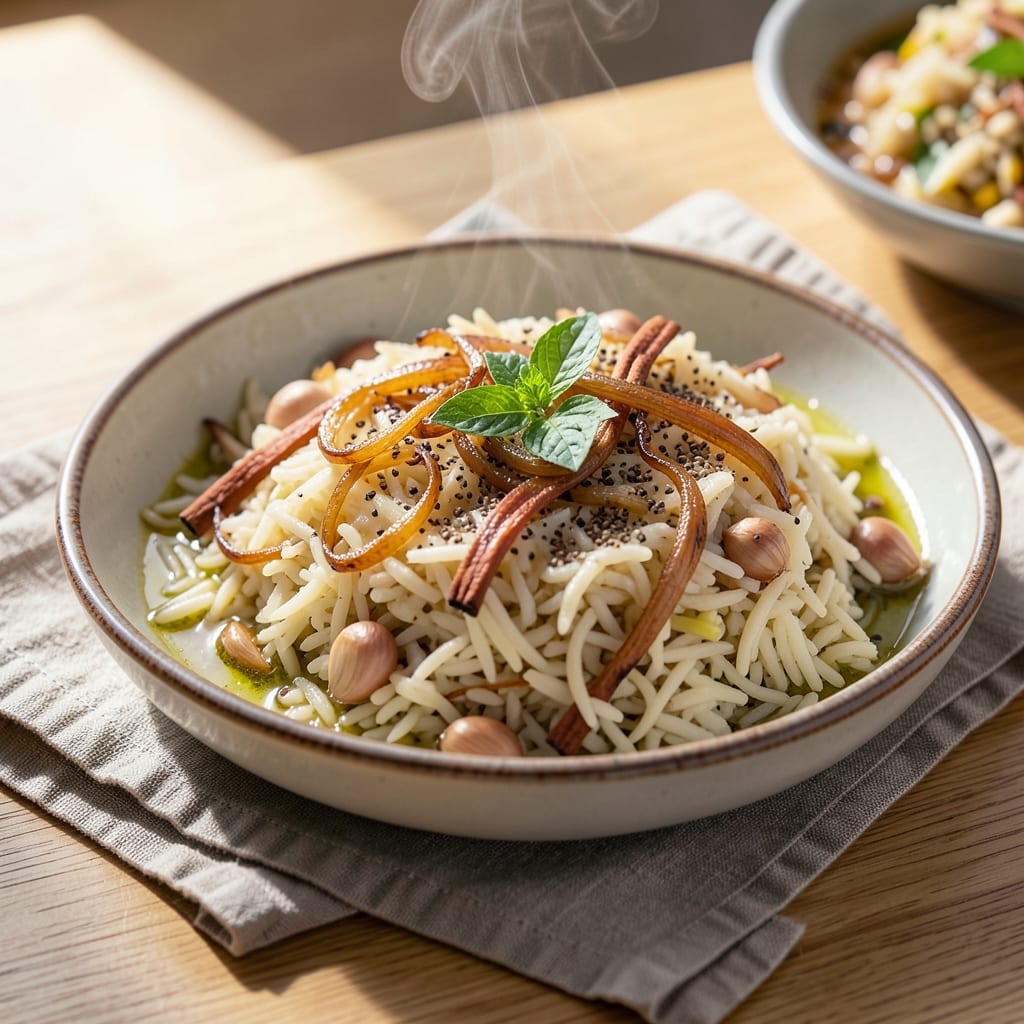
Anthony's rice pilaf recipe transforms simple grains into a fragrant, golden masterpiece with layers of toasted spice and crispy edges. This dish starts with perfectly rinsed basmati rice that absorbs flavors while maintaining its signature texture—fluffy yet firm, with a delicate crunch. The secret lies in blooming whole spices in hot oil before adding aromatics, creating a complex base that infuses every grain.
What sets this pilaf apart is the balance between technique and simplicity: rice simmers in rich broth until tender, then rests to develop its signature texture. The result is a dish that serves as both elegant side and satisfying main—ideal for family dinners or holiday tables. Each bite delivers warm, aromatic rice with subtle nutty undertones from the spices, finished with a final toast for golden perfection.
This recipe delivers restaurant-quality results with just a few essential ingredients and a methodical approach. The process begins with proper rice preparation—rinsing removes excess starch for distinct grains—before building flavor through careful sautéing. Whether paired with roasted meats or enjoyed as-is, the pilaf's versatility makes it a staple for any meal.
Optional garnishes like toasted nuts or fresh herbs elevate the dish further, while variations with dried fruits or herbs allow for endless customization. The key to success lies in patience—letting the rice rest after cooking ensures each grain remains separate and flavorful. Ready in about 45 minutes, this pilaf proves that homemade can truly outshine store-bought every time.
Ingredients for anthony's rice pilaf
Simple grains and aromatic spices create this restaurant-quality golden pilaf with crispy edges and fragrant layers.
| Ingredient | Amount | Notes |
|---|---|---|
| Long-Grain Basmati Rice 🍚 | 1 ½ cups | Uncooked, rinsed thoroughly |
| Chicken Broth 🥫 | 2 cups | Low-sodium preferred, homemade or quality store-bought |
| Extra-Virgin Olive Oil 🫒 | ½ cup | For high heat sautéing |
| Yellow Onion 🧅 | 1 whole | Medium size, finely diced |
| Garlic Cloves 🧄 | 4 cloves | Fresh, minced |
| Whole Cinnamon Sticks 🌿 | 2 pieces | For aromatic infusion |
| Bay Leaves 🍃 | 2 whole | Dried, standard size |
| Cardamom Pods 🌶️ | 4 whole | Lightly crushed |
| Salt 🧂 | 1 ½ tsp | Diamond Crystal preferred |
| Black Peppercorns 🌶️ | ½ tsp | Freshly cracked |
| Unsalted Butter 🧈 | 2 tbsp | For final toast |
| Toasted Almond Slices 🥜 | ¼ cup | For garnish, optional |
| Fresh Parsley 🌿 | ⅛ cup | Chopped, for garnish |
The rice is the foundation, so look for basmati with a long grain label—it should be plump and firm, not shriveled. Lundberg or Uncle Ben's are reliable brands, but check the package for '100% basmati' to avoid blends. The spices are where the magic happens: whole cinnamon sticks and cardamom pods give the most authentic flavor, but if you only have ground versions, toast them in the oil first. For the broth, homemade is ideal, but Swanson or Pacific Foods low-sodium options work in a pinch. Don't skip rinsing the rice—this removes excess starch for those perfect separate grains.
No chicken broth? Vegetable broth works equally well, just add a pinch of salt to compensate. Running short on cardamom? Substitute one-fourth the amount of ground cinnamon, but the texture will be slightly different. The almonds can be swapped for toasted pecans or walnuts if you prefer. Fresh parsley is ideal, but dried parsley at one-third the amount will do in a bind. For the butter toast at the end, olive oil works in a pinch, though it won't give that same rich finish. The key is patience—don't peek at the rice while it cooks, or you'll end up with uneven grains.
This pilaf tastes even better the next day as the flavors meld. Store leftovers in an airtight container for up to 4 days in the fridge, or freeze for 3 months in portion-sized containers. For reheating, add a splash of water or broth and cover tightly to restore moisture. The toasted almonds and parsley can be added fresh right before serving, or stored separately for up to 1 week in the fridge. Double the recipe—it's perfect for meal prep and freezes beautifully.
Why You'll Love This Recipe
- Here’s what sold me: that first bite where the garlic hits just right—not overpowering, but deep and savory. The olive oil caramelizes the onion and garlic into sweet, sticky bits that cling to every grain of rice. Honestly, I’ve made this for friends who aren’t big garlic fans, and they still ask for seconds.
- One-Pot Magic: I swear by this recipe because it’s literally one pot—no fancy equipment, no stress. Just toast the onion and garlic in olive oil until golden, add the rice, broth, and a pinch of salt, then let it simmer. The basmati absorbs the broth perfectly, and you’re left with fluffy, fragrant grains without a single extra dish.
- Garlic Bomb: Here’s what sold me: that first bite where the garlic hits just right—not overpowering, but deep and savory. The olive oil caramelizes the onion and garlic into sweet, sticky bits that cling to every grain of rice. Honestly, I’ve made this for friends who aren’t big garlic fans, and they still ask for seconds.
- Weeknight Workhorse: This pilaf is my go-to when I’m feeding the family or prepping meals. It’s neutral enough to pair with grilled chicken, roasted veggies, or even a simple salad, but rich enough to stand alone. I’ll be real: it’s not the prettiest dish, but the taste makes up for it—and it’s always a hit.
Step-by-step instructions for golden-grain crunch rice pilaf
This method transforms simple basmati rice into a fragrant, textured pilaf with aromatic spice layers.
Toast the Spices and Aromatics
Heat the 0.5 cup extra-virgin olive oil in a large skillet over medium heat. Add the 1 whole yellow onion and cook for 5-6 minutes until softened and translucent. The onion should release its sweetness without browning—this builds the pilaf's flavor foundation.
Add the 4 cloves garlic cloves, 2 pieces whole cinnamon sticks, 2 whole bay leaves, and 4 whole cardamom pods (lightly crushed). Stir for 1-2 minutes until fragrant, watching closely—cardamom burns quickly. The spices should perfume the kitchen with warm, earthy notes. Remove the pan from heat and set aside for now.
Sauté the Rice
Return the skillet to medium heat and add the 1.5 cups long-grain basmati rice. Stir for 2-3 minutes until the grains turn opaque and slightly translucent at the edges. This step ensures each grain develops a delicate toasted crust—critical for the pilaf's texture.
Pour in the 2 cups chicken broth and add the 1.5 tsp salt and 0.5 tsp black peppercorns. Bring to a gentle simmer, then reduce heat to low. Cover the skillet with a tight-fitting lid and cook for 15 minutes without disturbing. The rice will absorb the liquid gradually, releasing its natural starches for that signature golden crunch.
Rest and Fluff
After 15 minutes, turn off the heat and let the rice sit covered for 10 minutes. This resting period allows residual steam to finish cooking the grains evenly. Avoid lifting the lid during this time—steam escape causes uneven texture.
Once rested, remove the lid and use a fork to gently fluff the rice, separating the grains. The pilaf should be light and airy, with no sticky clumps. If the rice feels dry, sprinkle in 1 tablespoon water and fluff again. The grains should be tender but still hold their shape when pressed.
Finish with Butter and Garnish
Return the skillet to low heat and stir in the 2 tbsp unsalted butter until melted and evenly distributed. The butter adds richness and helps create a glossy finish. Taste and adjust seasoning—this is your final opportunity to balance the flavors before serving.
Transfer the pilaf to a serving dish and top with 0.25 cup toasted almond slices and 0.125 cup fresh parsley. The almonds add crunch while the parsley brightens the dish with freshness. Serve immediately while the grains are warm and the aromatics are at their peak.
Pro Tips For Making Anthony'S Rice Pilaf
- TOAST THE RICE FIRST: I used to skip this, but now I swear by it—heat your dry basmati in olive oil over medium-high for 3-4 minutes until it smells nutty and the edges turn translucent. This kills raw starch taste and gives the final dish that toasty depth you’d expect from a restaurant version.
- SWEAT THE ONION LOW: Don’t rush the onion—cook it in the same pot with a splash of broth until it’s soft and golden, not browned. I learned this the hard way: burnt bits make the whole pilaf taste bitter, and you’ll be scraping them out later (trust me, you don’t want to).
- USE COLD BROTH: Start with cold chicken broth, not hot. Pour it over the toasted rice and let it soak in for 10 minutes before bringing to a boil. This guarantees even absorption—no mushy centers or dry edges. (Yes, even if you’re impatient like me.)
- STIR ONCE AT THE END: After the rice has absorbed the broth, turn off the heat and let it sit, lid on, for 5 minutes. Then, one gentle stir with a fork—just enough to fluff. Over-stirring releases starch and turns your perfect grains into glue. My grandmother swore by this, and she was right.
Make-ahead tips for leftovers
Prep Ahead for Meal Prep
I always recommend prepping the rice base first if you're making this for a busy week. Cook the pilaf completely, then spread it on a baking sheet to cool quickly. Once cooled, transfer to an airtight container and refrigerate for up to 4 days. The flavors actually deepen overnight, making it perfect for lunches. 💫
Freezer-Friendly Strategy
For longer storage, freeze the pilaf in portion-sized containers (about 1.5 cups per container). Leave ½-inch headspace to prevent expansion cracks. When ready to eat, thaw overnight in the fridge, then reheat with 1 tablespoon water or broth per cup to restore moisture. The texture stays surprisingly good after freezing.
Spice Toast Prep
Save time by toasting your spices and aromatics ahead. In a dry skillet, toast the whole cinnamon sticks, cardamom pods, and bay leaves over low heat for 3-4 minutes until fragrant. Store in a small spice jar in your pantry for up to 2 weeks—perfect for quick pilaf assembly later. This step takes just 5 minutes but cuts 10 minutes off your cooking day.
Broth Prep Shortcut
If you're short on time, make a big batch of chicken broth while cooking. Simmer 2 lbs chicken bones with 1 onion, 2 carrots, and 2 celery stalks in 8 cups water for 2 hours. Strain and store in freezer bags—you'll have broth ready for multiple pilaf batches. I keep a quart of broth in the freezer at all times for quick rice dishes. 🥫
Garnish Assembly
Toast your almond slices in a dry skillet over medium heat for 3-4 minutes until golden. Chop the fresh parsley and store both in separate small containers in the fridge. This keeps your garnishes fresh for up to 1 week, so you can add them right before serving for maximum freshness. 🌿
Double Batch for Efficiency
Make double the recipe and store half in the fridge while keeping the other half in the freezer. This ensures you always have a ready-made side for last-minute dinners. The pilaf reheats beautifully—just add a splash of broth or water and cover tightly. I often prep this on Sunday evenings for easy weeknight meals. 💡
Nutrition facts
Frequently asked questions
Can I use jasmine rice instead of basmati?
While jasmine rice works, it won't give the same texture or flavor profile. Basmati's long grains stay distinct and absorb spices beautifully, while jasmine has a stickier texture that can make the pilaf too dense. For best results, stick with basmati—it's worth finding at most grocery stores.
How do I prevent the rice from turning mushy?
Rinse the rice thoroughly before cooking to remove excess starch, and never stir the rice while it simmers—just let it cook undisturbed for 15 minutes. The resting period after cooking is crucial too; skip it and you'll end up with sticky grains. Use a tight-fitting lid to trap steam evenly.
What's the best way to reheat leftover pilaf?
Add 1 tablespoon water or broth per cup of pilaf, cover tightly, and heat on low for 3-4 minutes in the microwave. For stovetop reheating, use a skillet with a splash of liquid and keep heat at low-medium to avoid drying out the grains. Stir gently once to redistribute moisture.
Can I make this vegetarian?
Simply substitute vegetable broth for chicken broth and add 1 teaspoon soy sauce or ½ teaspoon smoked paprika to enhance umami flavor. The spices will still shine through beautifully—just ensure your broth has enough depth to carry the dish.
Why does my pilaf taste bland?
Under-seasoned broth or skipping the spice-toasting step are common culprits. Always taste the broth before adding rice, and make sure your spices are fresh—ground spices lose potency quickly. For extra depth, add a pinch of sugar to the broth while simmering to balance flavors.