
Main Courses
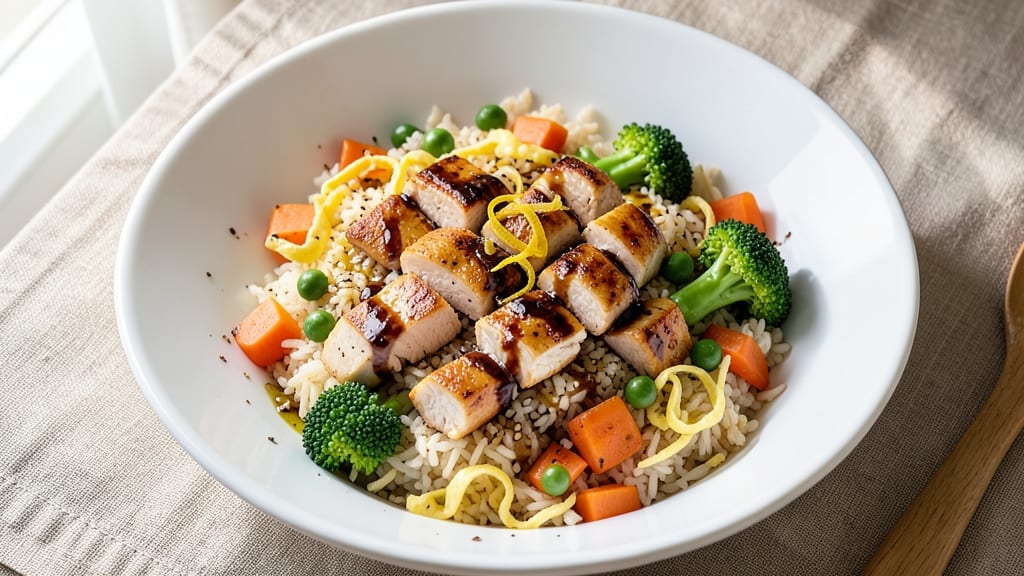
This chicken fried rice recipe with frozen vegetables transforms weeknight dinners into restaurant-quality meals in under 30 minutes. The secret lies in perfectly crispy eggs, tender chicken, and frozen vegetables that develop deep flavor without wilting—no fancy techniques required.
I designed this method to cut prep time while keeping every bite packed with texture and savory depth.
What sets this version apart is the one-pan approach, where you stir-fry chicken and vegetables simultaneously while keeping the rice warm. The sauce—garlic, ginger, and soy—infuses everything evenly, creating that signature umami punch.
A runny yolk from a fried egg on top adds richness, while sesame oil finishes with an aromatic kick. It’s the kind of dish that tastes like you spent hours cooking, but actually comes together faster than takeout.
By using frozen vegetables, you skip chopping and still get vibrant, tender-crisp results. The key is high heat and quick cooking to release moisture without turning the veggies mushy. This recipe balances tradition with modern convenience—keeping the soul of classic fried rice while making it accessible for busy schedules.
The crispy edges on the chicken and eggs are the real game-changer, delivering that satisfying crunch in every bite.
Perfect for meal prep or a quick family dinner, this fried rice delivers restaurant-quality flavor with minimal effort. The crispy egg topping isn’t just for looks—it adds a luxurious finish that makes the dish feel special.
Let’s get started on a recipe that proves homemade can be faster and better than takeout.
Ingredients for chicken fried rice recipe with frozen vegetables
Fourteen ingredients, one pan, restaurant-quality fried rice in 30 minutes.
| Ingredient | Amount | Notes |
|---|---|---|
| Day-Old Cooked White Rice 🍚 | 4 cups | Cold, unseasoned preferred |
| Boneless Chicken Breast 🍗 | 1 ½ lb | Cut into 1-inch pieces |
| Frozen Mixed Vegetables 🥕 | 2 cups | Peas, carrots, corn blend |
| Large Eggs 🥚 | 4 whole | Room temperature for crispy edges |
| Low-Sodium Soy Sauce 🍶 | ½ cup | Kikkoman preferred |
| Sesame Oil 🫒 | 1 tbsp | Toasted, for aroma |
| Garlic Cloves 🧄 | 4 cloves | Minced, fresh preferred |
| Fresh Ginger 🌿 | 1 tbsp | Grated, or 1 tsp ground |
| Vegetable Oil 🫒 | 2 tbsp | High smoke point |
| Green Onions 🧅 | ¼ cup | Sliced, for garnish |
| Toasted Sesame Seeds 🌾 | 1 tbsp | For garnish |
| Salt 🧂 | ½ tsp | Adjust to taste |
| Black Pepper 🌶️ | ¼ tsp | Freshly ground |
| White Pepper 🌶️ | ¼ tsp | Optional, for classic touch |
The rice is non-negotiable here—day-old, cold rice fries up perfectly without turning mushy. Trader Joe's sells pre-cooked rice in the freezer section if you're short on time, but homemade works best. For the chicken, boneless breast stays juicier than thigh, but cut it into even 1-inch pieces so it cooks uniformly. Frozen veggies are a game-changer: no chopping, no waste, and they develop that tender-crisp texture when cooked quickly. The Kikkoman soy sauce has the right balance of salt and umami—avoid reduced-sodium versions unless you're doubling the amount.
No sesame oil? Toasted peanut oil works in a pinch, though the flavor won't be identical. Fresh ginger is ideal, but ground ginger at half the amount gets you close if you're in a hurry. The eggs are the star—room temperature is key for those crispy edges, but if they're cold, just let them sit out for 10 minutes. For extra crunch, lightly toast the sesame seeds in a dry pan before adding to the dish. The white pepper is optional but adds that classic fried rice depth—skip it if you prefer black pepper's sharper bite.
This reheats beautifully—just add a splash of water and stir. Keeps for 4-5 days in the fridge, freezes for 3 months if portioned in airtight containers. For meal prep, double the batch and store components separately: rice, chicken, veggies, and sauce. Reheat each element individually before combining to maintain texture. The crispy egg topping is best added fresh, but you can fry extra eggs ahead and reheat them quickly in a dry pan.
Why You'll Love This Recipe
- No Chopping Chaos: I swear by frozen veggies here—just toss the bag straight in, no peeling or dicing. The peas, carrots, and corn thaw as they cook, blending right into that savory, umami-rich sauce.
- Savory Crispy Magic: That seared chicken breast? It stays juicy but develops a golden crust that cuts through the soft rice. Add a fried egg on top, and you’ve got layers of texture—crispy, creamy, and chewy—all in one bite.
- Leftover Hero: This dish begs to be made extra. The flavors actually improve the next day, and reheating? Just a quick stir in a skillet with a splash of water. My lunchbox is full for days after one batch.
- Budget Meal Powerhouse: Day-old rice, budget chicken breasts, and a bag of frozen veggies—this feeds four for under $10. Honestly, it’s my go-to when I need to stretch groceries without sacrificing taste. The soy sauce keeps it flavorful without breaking the bank.
Step-by-step instructions for chicken fried rice with frozen vegetables
Master this one-pan technique for perfectly crispy edges and tender chicken every time.
Prep the Chicken and Eggs for Maximum Flavor
Cut the 1.5 lb boneless chicken breast into 1-inch pieces—keep them uniform for even cooking. In a bowl, whisk together the 4 whole large eggs with the 0.5 tsp salt, 0.25 tsp black pepper, and 0.25 tsp white pepper. Let the eggs sit at room temperature for 5 minutes—this ensures crispy edges when scrambled later.
While the eggs rest, mince the 4 cloves garlic and grate the 1 tbsp fresh ginger. The freshness here matters—pre-minced garlic or powdered ginger won't give the same depth of flavor. Set these aside with the chicken pieces in a separate bowl. This prep work keeps everything organized and ready for quick cooking.
Stir-Fry Chicken and Aromatics for Deep Flavor
Heat 2 tablespoons vegetable oil in a large skillet or wok over medium-high heat until shimmering. Add the chicken pieces in a single layer and cook undisturbed for 3-4 minutes until the edges turn golden brown and the chicken is no longer pink in the center. This initial sear locks in juices and builds flavor.
Push the chicken to one side of the pan and add the minced garlic and grated ginger. Stir for 30 seconds until fragrant—you'll smell that fresh, zesty aroma. This is where the magic happens: the garlic shouldn't brown, just perfume the pan. If it starts to darken, reduce heat slightly. Add the 2 cups frozen mixed vegetables and stir-fry for 3-4 minutes until heated through but still vibrant in color.
Scramble Eggs and Combine with Rice
Push the chicken and vegetable mixture to one side of the pan again, then add a thin layer of oil if needed. Pour in the egg mixture and let it sit for 10 seconds before gently scrambling with a spatula. Cook until just set but still slightly runny—soft curds are ideal for fried rice texture. Here's the thing: overcooked eggs make dry rice.
Add the 4 cups day-old cooked white rice, breaking up any clumps with your spatula. Drizzle in the 0.5 cup low-sodium soy sauce and 1 tablespoon sesame oil, then mix everything together. Let it cook for 2-3 minutes until the rice is heated through and the edges start to crisp slightly. The rice should be hot but still slightly sticky—not dry or crunchy.
Finish with Garnishes for Perfect Presentation
Taste and adjust seasoning with additional soy sauce or salt if needed. The rice should be savory but not salty—balance is key. Remove from heat and let it sit for 1 minute to allow flavors to meld. This resting period is crucial for developing depth of flavor.
Garnish with 0.25 cup sliced green onions and 1 tablespoon toasted sesame seeds just before serving. The green onions add freshness, while the sesame seeds provide texture and aroma. Serve immediately while the rice is hot and crispy—fried rice tastes best right out of the pan.
Pro Tips For Making Chicken Fried Rice Recipe With Frozen Vegetables
- CRUMBLE CHICKEN FIRST: Frozen veggies release water like a sad sponge—drain them and pat them dry with a kitchen towel. I used to skip this, and my fried rice ended up soggy. Trust me, the extra 30 seconds saves you from a mushy disaster.
- SALT THE RICE: Day-old rice is your friend, but it’s still bland. Toss it with ½ teaspoon salt before adding anything else—this wakes up the grains and balances flavors later. I learned this the hard way after serving rice that tasted like nothing.
- STIR FAST, STOP LATE: Once the veggies hit the pan, work quickly but don’t overcrowd. Push everything to one side, add a splash of soy sauce, then let the rice crisp for 20 seconds before stirring again. This gives you those perfect golden spots without burning the veggies.
- EGG TRICK: SLIPPERY FIRST: Scramble the eggs almost fully in a separate bowl, then pour them into the pan. The residual heat will finish them while the rice absorbs their richness. I was skeptical until I tried it—now it’s non-negotiable for texture.
Best sauces and condiments for this chicken fried rice recipe with frozen vegetables
Garlic-Ginger Soy Base
This foundational sauce is where the magic happens—4 minced garlic cloves and 1 tbsp grated ginger sizzle for 30 seconds in hot oil until fragrant, never browned.
Add ½ cup low-sodium soy sauce (like Kikkoman) and let it reduce slightly by 1-2 minutes on medium heat. This balances umami without overpowering the dish. 🌶️
For extra depth, I sometimes add 1 tsp fish sauce or ½ tsp oyster sauce here—both elevate the savory profile. If you prefer a lighter touch, stick to just the soy, garlic, and ginger combo.
The key is letting the sauce simmer until it coats the back of a spoon, signaling it’s ready to marry all the components.
Sesame Oil Finishing
The 1 tbsp toasted sesame oil is added last—just before garnishing—to preserve its delicate aroma. Drizzle it over the hot fried rice and immediately toss to distribute evenly. This step adds nutty warmth that contrasts beautifully with the crispy chicken and eggs.
I keep a small bottle of La Choy sesame oil in my pantry for this purpose. 🫒
For a smoky twist, swap ½ tsp of the sesame oil with ½ tsp chili crisp (like Lao Gan Ma), then garnish with extra green onions. The heat cuts through the richness while keeping the dish balanced.
Store-bought chili crisp works in a pinch, but homemade versions with dried chilies and vinegar are even better.
Spicy Chili Oil
If you love heat, stir 1 tbsp chili oil into the soy-garlic-ginger base while it reduces. I like Ma La brand chili oil for its balanced spice level—it adds fiery red streaks and a slow-building heat.
For a milder kick, reduce to ½ tbsp and add ¼ tsp sugar to balance the acidity. This works especially well with frozen vegetables like bell peppers or broccoli. 🌶️
Pro tip: Warm the chili oil separately for 30 seconds before mixing into the sauce to infuse its flavors without overpowering. The oil should be hot but not smoking—just enough to wake up the spices. This ensures the heat distributes evenly throughout the dish.
Sweet and Tangy Twist
For a brighter, more complex sauce, add 1 tbsp rice vinegar and ½ tbsp honey to the garlic-ginger base. The acidity brightens the dish, while the honey rounds out the soy’s saltiness.
This variation works beautifully with frozen corn and peas. I often use Apple Valley organic rice vinegar for its clean, sharp flavor. 🍯
For a tangier profile, swap honey for 1 tsp soy vinegar (like Kikkoman soy vinegar), which adds a deeper umami note. The combination of sweet, salty, and tangy creates a sauce that’s far more dynamic than plain soy.
This is my go-to when serving fried rice as a main course rather than a side.
Umami Boosters
Take your sauce to the next level by adding 1 tsp mushroom powder (like Anthony’s brand) or ½ tsp dried porcini powder to the garlic-ginger base. These ingredients amplify the umami without altering the dish’s texture.
For a meatier flavor, stir in 1 tbsp miso paste (white or red) and let it dissolve into the sauce. 🍄
If you’re using miso, reduce the soy sauce slightly to ¼ cup to avoid overpowering the dish. The miso adds a rich, fermented depth that pairs exceptionally well with the crispy chicken and eggs. This variation is perfect for when you want to impress guests without extra effort.
Nutrition facts
Frequently asked questions
Can I use any frozen vegetables for this recipe?
Yes, but some work better than others! Mixed veggie blends (peas, carrots, corn) are ideal because they thaw quickly and hold their texture. Avoid frozen spinach or mushrooms—they release too much moisture and can make the rice soggy. For best results, stick to firm veggies like bell peppers, broccoli, or green beans.
Why does the recipe call for day-old rice?
Day-old rice is crucial because it's drier and absorbs flavors better than freshly cooked rice. Fresh rice releases too much steam and turns mushy when stir-fried. If you're short on time, spread freshly cooked rice on a tray and refrigerate for 1 hour before using it.
How do I get the chicken extra crispy?
Pat the chicken pieces very dry with paper towels before cooking to remove all moisture. Use a nonstick skillet or wok and heat the oil until it's smoking hot before adding the chicken. Cook undisturbed for 4-5 minutes per side, and resist the urge to move it until golden brown.
Can I make this recipe with ground chicken instead of breast?
Ground chicken works beautifully and cooks even faster. Use 1 lb instead of 1.5 lb breast, and brown it thoroughly before adding the vegetables. The texture will be slightly different but just as flavorful. For extra crispiness, press the ground chicken into small patties before cooking.
What if my fried rice turns out dry?
Add 1-2 tablespoons of water or chicken broth and stir gently over low heat for 1-2 minutes to restore moisture. If it's still too dry, mix in ½ cup of cooked rice (not day-old) to bulk it up. The key is to keep the heat medium-low when adding liquid to prevent the rice from turning mushy.