
Main Courses
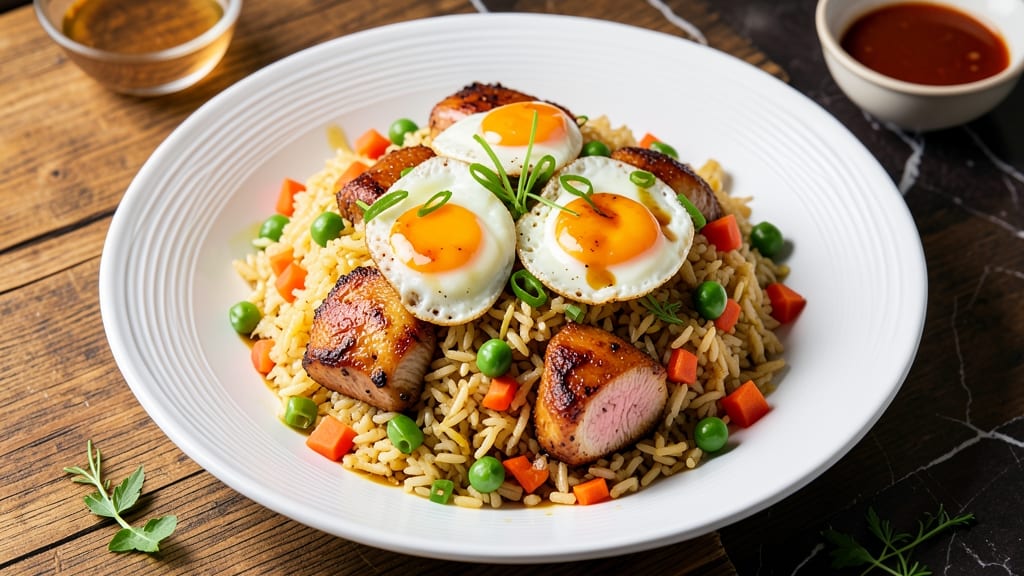
Double-cooked chicken transforms classic fried rice from good to extraordinary—juicy, flavorful bites that stay tender through every stir. The secret lies in a two-step cooking process that locks in moisture while building depth of flavor, ensuring each forkful delivers that perfect balance of crisp edges and succulent centers.
This isn't your childhood takeout version; it's restaurant-quality fried rice with a technique that elevates the dish from simple to showstopping.
Start with chicken thighs cut into bite-sized pieces, marinated in a blend of soy sauce, garlic, and ginger before being pan-fried until golden and cooked through.
Then, the magic happens when you return those same pieces to the pan with a splash of chicken broth, allowing them to steam gently and reabsorb their juices. This double-cooking method creates chicken that's impossibly tender yet still holds its shape—no dry, rubbery bits here.
The rice gets its turn next, stir-fried with day-old grains for that signature wok-hei texture, then tossed with a vibrant mix of peas, carrots, and scallions.
What you'll end up with is a dish that's visually stunning—a golden-brown medley of perfectly cooked chicken, vibrant vegetables, and fluffy rice—all bound together by a sauce that's rich yet balanced, with just the right amount of umami from soy and sesame.
The aroma alone will have everyone gathering around the table, and the first bite delivers on that promise of restaurant-quality comfort food. This recipe isn't just about fried rice; it's about mastering a technique that turns a simple weeknight meal into something memorable.
The beauty of this fried rice is its versatility—it works as a main course for a family dinner, a satisfying lunch for busy weekdays, or even as a make-ahead meal that reheats beautifully.
Customize it with your favorite vegetables, swap in shrimp or tofu for a vegetarian twist, or top it with a fried egg for extra richness. Here's how to make it, step by step, for fried rice that's worth every bite.
Ingredients for chicken for chicken fried rice
Juicy chicken thighs and simple pantry staples make this fried rice unforgettable.
| Ingredient | Amount | Notes |
|---|---|---|
| Chicken Thighs 🍗 | 1 ½ lb | Bone-in, skin-on preferred |
| Day-Old Cooked White Rice 🍚 | 4 cups | Cold rice works best |
| Large Eggs 🥚 | 2 whole | For scrambling over rice |
| Green Onions 🧅 | ½ cup | Sliced, white and green parts |
| Carrots 🥕 | 1 cup | Diced into small pieces |
| Frozen Peas 🌱 | ½ cup | Thawed before using |
| Soy Sauce 🍶 | ⅓ cup | Use light soy for color |
| Sesame Oil 🫒 | 1 tbsp | Toasted sesame oil preferred |
| Garlic Cloves 🧄 | 4 cloves | Minced for marinade |
| Fresh Ginger 🌿 | 1 tbsp | Grated, for marinade |
| Chicken Broth 💧 | ½ cup | Low-sodium preferred |
| Vegetable Oil 🫒 | ¼ cup | High smoke point |
| Salt 🧂 | 1 tsp | Adjust to taste |
| Black Pepper 🌶️ | ½ tsp | Freshly ground |
The chicken thighs are everything here—bone-in, skin-on pieces stay juicier than breasts. Trader Joe's or Costco often sell them pre-cut for convenience, but if buying whole, trim excess fat. Look for thighs with good marbling—they'll stay tender through the double-cooking process. Fresh ginger and garlic are non-negotiable for that authentic umami punch, but if you're in a pinch, powdered ginger at half the amount works. The rice? Day-old cold rice is crucial—it's drier and absorbs flavors better than fresh.
No sesame oil? Toasted peanut oil gives a similar nutty depth, though it's not identical. Short on peas? Corn or bell peppers add color and crunch. The soy sauce matters—light soy for color, dark soy for richer flavor. If you can only find one, use dark and reduce the amount to 2 tbsp. For extra richness, add a fried egg on top at the end. The chicken broth can be swapped for water in a pinch, but the umami difference is noticeable. And if your carrots are baby carrots, no need to peel—just chop them whole.
Prep ahead where you can: marinate the chicken overnight for deeper flavor. The rice can be cooked a day in advance and stored in the fridge. Chicken stays juicy for 3 days refrigerated or 3 months frozen. For best texture, reheat chicken and rice separately before combining. This dish reheats beautifully—even better the next day as flavors meld. Portion into containers for easy lunches, and keep the sesame oil separate until serving to preserve its aroma.
Why You'll Love This Recipe
- Leftover Magic: I swear by this trick—using day-old rice means no gummy texture, and those juicy chicken thighs stay tender even after reheating. Honestly, it’s my go-to for turning last night’s dinner into tonight’s lunch without breaking a sweat.
- Crispy-Creamy Balance: That first bite of perfectly fried eggs mixed with caramelized carrots and juicy chicken? It’s the kind of combo that makes you pause mid-chew. The green onions add a fresh kick, but the real star is the way the rice soaks up all the flavor like a sponge.
- Budget Meal Powerhouse: Chicken thighs are cheaper than breasts, and rice stretches forever—this feeds four for under $10. Between us, it’s the kind of dish that makes grocery day feel like a win, especially when you’re stretching meals across the week.
- One-Pan, Zero Guilt: Minimal chopping, one skillet, and 20 minutes later—you’re done. I’ll be real: it’s not the prettiest dish, but the taste makes up for it, and cleanup is just rinsing a pan. Perfect for nights when you’d rather be scrolling than slaving.
Step-by-step instructions for double-cooked chicken fried rice
Here's how to get that perfect juicy chicken and flavor-packed fried rice combo.
Marinate and Double-Cook the Chicken Thighs
In a bowl, combine the minced 4 cloves garlic cloves, 1 tbsp grated fresh ginger, 1 tbsp sesame oil, 1 tsp salt, and 0.5 tsp black pepper. Add the 1.5 lb chicken thighs and toss to coat evenly. Let them marinate for at least 30 minutes at room temperature.
Heat a large skillet over medium-high heat and add 2 tablespoons of the 0.25 cup vegetable oil. Once hot, add the marinated chicken thighs skin-side down. Cook for 5-6 minutes until the skin is golden brown and crispy. Flip and cook for another 5-6 minutes until the chicken reaches an internal temperature of 165°F. Remove from pan and set aside.
In the same skillet, add another tablespoon of vegetable oil and return the chicken to the pan. Cover and cook on low heat for 5 minutes. This double-cooking method ensures the chicken stays juicy while developing rich flavor. Cut the chicken into bite-sized pieces and set aside.
Prepare the Vegetable Mixture
In a large bowl, combine the 1 cup diced carrots, 0.5 cup thawed frozen peas, and 0.5 cup sliced green onions. Set aside while you prepare the eggs and rice.
In a separate bowl, whisk together the 2 whole large eggs with 1 tablespoon of the 0.33 cup soy sauce. This pre-seasoning ensures the eggs absorb flavor before cooking.
Scramble the Eggs and Cook the Rice
Heat a wok or large skillet over medium-high heat and add 1 tablespoon of vegetable oil. Pour in the egg mixture and scramble quickly until just set but still slightly moist. Remove from heat and set aside.
In the same wok, add 1 tablespoon of vegetable oil and stir-fry the vegetable mixture for 2-3 minutes until the carrots soften slightly. Add the 4 cups day-old cooked white rice and stir to combine. Cook for 1 minute to heat through.
Combine Everything for Perfect Fried Rice
Return the scrambled eggs to the wok with the rice mixture. Add the remaining 0.23 cup soy sauce (after reserving 1 tablespoon for later) and 0.5 cup chicken broth. Stir-fry for 2-3 minutes until everything is well combined and heated through.
Add the double-cooked chicken pieces and toss gently to distribute evenly. Cook for another 1-2 minutes until everything is heated through and the chicken is coated in the flavorful rice mixture.
Finish with Sesame Oil and Garnish
Remove from heat and drizzle with the remaining 1 tablespoon soy sauce and 1 tablespoon sesame oil. Toss gently to incorporate and let sit for 1 minute to allow the flavors to meld together.
Garnish with additional sliced green onions and serve immediately while hot. The chicken should be juicy and flavorful, the rice perfectly seasoned, and the vegetables tender-crisp. This method ensures every bite delivers maximum flavor and texture.
Pro Tips For Making Chicken For Chicken Fried Rice
- USE CUTTING BOARD FOR CHICKEN: I learned this the hard way—skipping this step makes a mess. Cut chicken thighs into 1-inch chunks on a cutting board (not over the pan) so you’re not flinging bits everywhere when you toss them into the hot wok or skillet. Trust me, your countertop will thank you later.
- DRY THOSE THIGHS WELL: No one likes soggy fried chicken, even in rice. Pat the raw chicken pieces thoroughly with paper towels—especially if they’re fresh from the fridge or packaged. Wet skin = steam = bland, rubbery chicken that won’t crisp up, no matter how much oil you use.
- STOP STIR-FRYING WHEN IT LOOKS DONE: The chicken’s done when it’s just no longer pink inside, not when it’s bone-dry and gray. Overcooking turns it into leather. Use a meat thermometer (165°F) or cut into a piece—if it’s opaque all the way through but still juicy, pull it out immediately. You’ll add it back later when everything else is hot.
- SAVE TIME WITH FROZEN CARROTS: Fresh carrots take forever to julienne, and half the time they end up mushy. Use frozen shredded carrots—they’re pre-cut, thaw quickly in the pan, and won’t turn to mush when you’re scrambling eggs. Just drain them well first, or you’ll have a soggy rice situation.
Troubleshooting this dish
Chicken Too Dry?
Overcooking is the #1 reason for dry chicken in fried rice.
The double-cooking method prevents this, but if you skipped the second step, try this fix: After the first cook, place chicken in a bowl with ¼ cup chicken broth and 1 tbsp soy sauce, then cover and let steam for 5 minutes.
This rehydrates the meat without overcooking it. 💧
Rice Too Sticky?
Freshly cooked rice releases too much starch, making fried rice gluey. Always use day-old cold rice—it's drier and absorbs flavors better. If you must use fresh rice, spread it on a tray and refrigerate for 30 minutes to dry it out.
Undercooking the rice initially also helps—it should be slightly underdone when first cooked.
Sauce Too Salty?
Too much soy sauce can overpower the dish. Start with 2 tbsp soy sauce and taste as you go. If needed, balance with 1 tsp honey or sugar to cut the saltiness. For extra depth, add ½ tsp white miso paste—it adds umami without extra salt. 🍶
Vegetables Too Crunchy?
Carrots and peas should be tender-crisp, not raw. Cut carrots into ¼-inch pieces and stir-fry them for 2-3 minutes before adding rice. For peas, use fresh or thawed frozen (never straight from the freezer).
If your veggies are still too firm, add 1 tbsp water or broth to the pan and cover for 1 minute to steam them gently.
Fried Rice Too Bland?
Flavor fades when reheating. Boost taste by adding 1 tsp toasted sesame oil and ½ tsp fish sauce (or extra soy sauce) when reheating. For extra richness, stir in 1 tbsp butter or olive oil at the end.
A splash of chicken broth while cooking also helps carry flavors throughout the dish.
Chicken Not Juicy Enough?
If your chicken lost moisture, the fix is simple: After cooking, place pieces in a bowl with 2 tbsp chicken broth and 1 tsp cornstarch, then microwave for 30 seconds.
The cornstarch helps thicken the juices back into the meat. For next time, marinate the chicken for at least 1 hour—this keeps it moist during cooking. 🍗
Nutrition facts
Frequently asked questions
Why use chicken thighs instead of breasts for fried rice?
Chicken thighs stay juicier and more flavorful during the double-cooking process. Their higher fat content keeps them moist even after stir-frying, while breasts can dry out. The skin also adds crispy texture and extra richness when seared properly.
Can I substitute boneless chicken breasts?
Yes, but with adjustments: cut breasts into 1-inch cubes and marinate for at least 1 hour to prevent dryness. Cook at medium heat (not high) and reduce cooking time to 4-5 minutes per side. For extra moisture, add 1 tbsp honey to the marinade.
How do I prevent the rice from turning mushy?
Always use day-old cold rice—it's drier and absorbs flavors better. Spread freshly cooked rice on a tray and refrigerate for 30 minutes if needed. Also, stir-fry at high heat for 1-2 minutes max after adding rice to prevent sogginess.
What's the best way to reheat leftover fried rice?
Reheat in a skillet with 1 tbsp oil over medium heat for 2-3 minutes, adding 1 tbsp chicken broth to restore moisture. For microwave reheating, cover with a damp paper towel and heat in 30-second bursts, stirring between each.
Can I make this vegetarian?
Swap chicken for 1 cup cubed tofu (pressed and pan-fried) or 1.5 cups mushrooms (sautéed with soy sauce). For extra protein, add 1 cup edamame or 1 cup chickpeas. Keep the double-cooking method for best texture—just reduce cooking time to 3-4 minutes.