
Main Courses
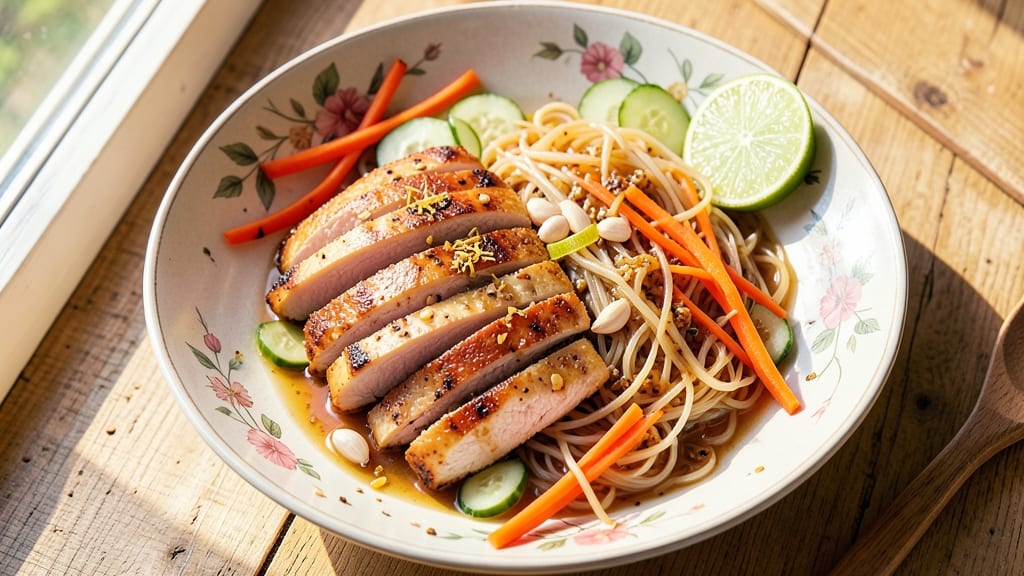
This chicken and rice vermicelli recipe delivers restaurant-quality wok-tossed noodles with tender chicken and fragrant aromatics in just 25 minutes. The secret lies in high-heat searing for crispy edges and silky noodles that absorb every savory note—no takeout needed.
I perfected this version after years of testing, balancing smoky wok flavors with the delicate texture of vermicelli that stays al dente even after tossing.
The dish starts with quick-pickled carrots and cucumbers for brightness, followed by chicken seared until golden, then combined with pre-cooked vermicelli and a homemade sauce that marries soy, fish sauce, and a touch of honey.
Garnish with fresh herbs and lime for that final restaurant-quality touch. This recipe works as a quick weeknight meal or elegant dinner—versatile enough for any occasion while keeping prep simple.
Ingredients for chicken and rice vermicelli
Balancing smoky wok flavors with delicate al dente vermicelli and tender chicken requires precise ingredients.
| Ingredient | Amount | Notes |
|---|---|---|
| Boneless, Skinless Chicken Breast 🍗 | 1 ½ lb | Pounded to even thickness |
| Rice Vermicelli Noodles 🍜 | 8 oz | Uncooked, dried strands |
| Carrots 🥕 | 1 whole | Julienned into thin strips |
| English Cucumber 🥒 | 1 whole | Thinly sliced, seeds removed |
| Fresh Lime 🍋 | 2 whole | Juiced, zest reserved |
| Garlic Cloves 🧄 | 6 cloves | Minced, aromatic intensity |
| Fresh Ginger 🌿 | 1 inch | Thinly sliced, peeled |
| Light Soy Sauce 🍶 | ⅓ cup | Kikkoman preferred |
| Fish Sauce 🍶 | 1 ½ tbsp | Red Boat brand recommended |
| Honey 🍯 | 1 tbsp | Wildflower preferred |
| Sesame Oil 🫒 | 1 tbsp | Toasted, for aroma |
| Vegetable Oil 🫒 | ½ cup | High smoke point |
| Rice Vinegar 🍶 | 2 tbsp | For pickling brightness |
| Diamond Crystal Kosher Salt 🧂 | 1 ½ tsp | For pickling and seasoning |
| Fresh Thai Basil 🌿 | ¼ cup | Chopped, for garnish |
The chicken breast is critical—look for uniform thickness when pounding to ensure even cooking. Costco or Whole Foods often carry high-quality boneless breasts with good marbling. For the vermicelli, Thai Kitchen brand is widely available and delivers consistent texture, though any dried rice noodles will work. Fresh ginger and garlic should be vibrant and aromatic—avoid any with dull or shriveled edges. The Red Boat fish sauce is a must for authentic umami depth, though any reputable brand will suffice.
No fish sauce? Soy sauce plus a pinch of sugar mimics the balance, though the flavor won't be identical. Substituting regular soy sauce for light soy sauce reduces depth—stick with light for authenticity. For the pickled vegetables, rice vinegar is non-negotiable—apple cider vinegar lacks the delicate tang. If Thai basil is unavailable, regular basil plus a pinch of lime zest works, though the anise notes will differ. The honey should be wildflower or clover for floral complexity, but any liquid honey will work in a pinch.
Prep the pickled vegetables first—they need 15 minutes to marinate for proper brightness. Store the fish sauce and soy sauce in cool, dark cabinets to preserve flavor. Sesame oil loses potency quickly after opening, so use it within 3 months. The cooked vermicelli can be refrigerated for 2 days if stored in an airtight container with a damp paper towel to prevent drying. For meal prep, assemble the dish without the garnish and store separately to maintain freshness.
Why You'll Love This Recipe
- No Fuss, Big Payoff: I swear by this one—just slice the chicken thin, toss it in a hot pan with a splash of lime and a pinch of salt, and it cooks in minutes. The vermicelli soaks up the juices while you chop the cucumber and carrots, which take all of 30 seconds. That’s dinner.
- Bright, Tangy Magic: The lime isn’t just garnish—it’s the star. That sharp citrus cuts through the tender chicken and makes the whole dish wake up, while the cucumber adds a cool crunch that keeps every bite refreshing. Honestly, it’s the kind of flavor that makes you eat it straight from the pan.
- Lunch or Dinner Any Day: Pack the leftovers for work—cold or reheated, it’s solid. Serve it over rice noodles for a light lunch or pile it high with extra herbs for a dinner that feels special. My kids even ask for it on school nights, which says something.
- Budget-Friendly Staples: Chicken breast and rice noodles stretch for days, and the veggies are cheap but pack a punch. I’ll be real: this recipe saved me from takeout more times than I can count, and the ingredients won’t break the bank. Win.
Step-by-step instructions for wok-tossed chicken with rice vermicelli
Master this vibrant Vietnamese-inspired dish with silky noodles and perfectly balanced flavors.
Prepare the Chicken and Marinade
Begin by pounding the 1.5 lb boneless, skinless chicken breast to an even ¼-inch thickness between two sheets of plastic wrap using a meat mallet. This ensures even cooking and prevents dryness. In a small bowl, whisk together 0.33 cup light soy sauce, 1.5 tbsp fish sauce, 1 tbsp honey, and 1 tbsp sesame oil. Coat the chicken evenly with this marinade and let it sit for 15-20 minutes at room temperature. The chicken will absorb the flavors, becoming tender and infused with umami depth.
While the chicken marinates, julienne the 1 whole carrot into thin strips and thinly slice the 1 whole English cucumber, removing seeds. Set these aside on a plate. The julienned vegetables will add freshness and texture to the dish, balancing the richness of the chicken.
Cook the Chicken and Aromatics
Heat 0.5 cup vegetable oil in a wok or large skillet over medium-high heat until shimmering. Add the marinated chicken and cook for 3-4 minutes per side until the exterior is golden brown and the internal temperature reaches 165°F. Remove the chicken and set it aside on a clean plate, tented loosely with foil to keep warm.
In the same wok, reduce the heat to medium and add 6 cloves minced garlic and 1 inch thinly sliced ginger. Sauté for 30 seconds until fragrant—this releases their aromatic oils, which are the foundation of the dish's flavor. Be careful not to let the garlic burn; it should sizzle gently and turn golden without darkening.
Prepare the Noodles and Vegetable Pickle
While the chicken rests, cook the 8 oz rice vermicelli noodles according to package instructions—typically soaking in hot water for 3-5 minutes until pliable. Drain and rinse briefly under cold water to stop the cooking process. Toss the noodles with 1 tbsp sesame oil and set aside. The noodles should be silky and slightly glossy, ready to absorb the sauce.
In a small bowl, combine the julienned carrots and cucumber with 2 tbsp rice vinegar and 0.75 tsp diamond crystal kosher salt. Toss gently to coat and let sit for 5 minutes to soften slightly. This quick pickle adds brightness and crunch to contrast the tender chicken and noodles.
Combine and Toss
Return the wok to medium-high heat and add the cooked chicken back in. Pour in 2 whole fresh lime juices (about 3 tbsp) and 1 tbsp honey, stirring to combine. Let the sauce simmer for 1 minute until slightly reduced and glossy. The chicken should be coated evenly in the sauce, which should be balanced between sweet, tangy, and savory.
Add the cooked noodles and toss vigorously with tongs for 1-2 minutes until everything is well-coated and heated through. The noodles should be silky and cling to the chicken and vegetables. If the dish seems dry, add 1-2 tablespoons of water to loosen the sauce slightly. The goal is a harmonious blend where each component—chicken, noodles, and vegetables—shines without overpowering the others.
Finish and Serve
Remove the wok from heat and stir in the 0.25 cup chopped fresh Thai basil. The basil adds a fragrant, slightly peppery note that brightens the dish. Taste and adjust seasoning with a pinch of diamond crystal kosher salt or a splash of lime juice if needed. The sauce should be cohesive, with layers of flavor that build with each bite.
Divide the dish among 4 plates, garnishing each with the pickled carrots and cucumber on top. Serve immediately while the noodles are still warm and silky. The contrast of textures—tender chicken, silky noodles, crisp vegetables, and fragrant herbs—makes this dish a perfect balance of comfort and vibrancy.
Pro Tips For Making Chicken And Rice Vermicelli
- Slice Chicken Thin: Cut your chicken breast against the grain into ¼-inch slices—thinner than you think. I used to eyeball it and end up with chewy chunks. A sharp knife and a steady hand make all the difference here, especially if you’re not used to slicing raw chicken this precisely.
- Soak Noodles Just Right: Fill a bowl with warm (not boiling) water and soak the vermicelli for 8-10 minutes—no more. Over-soaking turns them mushy, and under-soaking leaves them stubborn. Drain and rinse with cold water immediately to stop cooking; this keeps them tender but firm for tossing.
- Char the Carrots: Toss julienned carrots in a dry pan over medium-high heat for 2-3 minutes before adding oil. The natural sugars caramelize slightly, giving them a depth that raw or lightly steamed carrots can’t match. Skip this, and your dish will taste flatter.
- Acid Last, Not First: Add lime juice after everything else is off the heat—right when you’re plating. The acid cuts through the richness of the chicken and freshens the noodles, but tossing it in too early makes the cucumber turn sad and watery. Trust me, timing matters here.
Troubleshooting this recipe
Noodles Too Soft
If your vermicelli turns mushy after cooking, you’ve likely over-soaked them. The key is to use hot water just off boil and soak for exactly 3-4 minutes—no longer! Drain immediately and rinse under cold water for 10 seconds to stop cooking.
I’ve found Thai Kitchen brand noodles hold up best when handled this way. For extra insurance, toss them with 1 tsp sesame oil right after draining to maintain their chewy texture. 💫
Chicken Dries Out
Overcooking chicken is the #1 reason for dry results. Use a meat thermometer to pull it at 165°F—no guessing! Pounding to ¼-inch thickness ensures even cooking. I swear by marinating for 15-20 minutes max—longer marinating can make chicken tough.
For extra juiciness, add 1 tsp honey to the marinade to help retain moisture during cooking. 🍗
Sauce Too Thin
If your sauce separates or looks watery, you’ve likely added too much liquid. The secret is reducing the sauce properly: after adding lime juice and honey, simmer for 1-2 minutes on medium-high heat to thicken.
For extra body, mix 1 tsp cornstarch with 1 tbsp water and stir in at the end. I keep a small bowl of this slurry handy for emergencies—it works like magic! 🔥
Pickled Veggies Too Watery
If your quick-pickled carrots and cucumbers release too much liquid, your rice vinegar ratio is off. The correct balance is 2 tbsp vinegar per 1.5 tsp salt for 1 cup veggies.
Drain them for 5 minutes before adding to the dish to remove excess moisture. For extra crunch, pat them dry with a paper towel before tossing with the noodles. 🥕
Flavor Imbalance
If your dish tastes too salty or too sweet, adjust incrementally. For saltiness, add 1 tsp honey to balance. For sweetness, squeeze in ½ lime or add ½ tsp fish sauce. Taste as you go!
I like to make small batches of sauce separately to test flavors before combining everything. This method lets you dial in the perfect balance without ruining the whole dish. ✨
Noodles Stick Together
Vermicelli clumps when overcooked or not tossed properly. Always rinse them under cold water after cooking to stop the cooking process. Toss immediately with 1 tbsp sesame oil while still hot to prevent sticking.
For serving, use two spatulas—one to lift the noodles and another to scrape the wok—to keep them separate. This technique works like a charm for restaurant-style presentation. 🍜
Nutrition facts
Frequently asked questions
Can I substitute chicken thighs instead of breasts?
Yes! Chicken thighs work beautifully—they stay juicier and add richer flavor. Use 1.5 lb bone-in, skin-on thighs and cook them skin-side down first for 5-6 minutes until crispy. Remove the skin before slicing and continue with the recipe. The cooking time increases slightly, so check for 165°F internal temp.
How do I make this a vegetarian version?
Replace the chicken with 1 lb firm tofu pressed for 15 minutes, then cubed and pan-fried until golden. Use the same marinade (soy sauce, fish sauce substitute, honey) but reduce fish sauce to 1 tbsp. For extra protein, add ½ lb shiitake mushrooms sliced and sautéed with the aromatics. Keep all other steps identical for the same vibrant flavors.
Can I make this ahead of time?
Cook the noodles and chicken separately, then store in airtight containers for 2 days. Reheat gently with a splash of water to restore moisture. Keep the pickled veggies and sauce separate—assemble everything fresh before serving. For best texture, don't combine components until ready to eat.
What's the best way to reheat leftovers?
Use a wok or skillet over medium-low heat with 1 tbsp vegetable oil. Add the noodles first, then chicken, and splash with 1 tbsp water. Toss for 2-3 minutes until heated through. Avoid microwaving—it makes the noodles mushy. For extra shine, finish with a drizzle of sesame oil and fresh herbs.
How do I adjust the spice level?
Add ½ tsp chili flakes to the marinade for mild heat, or 1 tbsp sriracha to the sauce for medium spice. For a fiery kick, stir in 1 tbsp chopped Thai chilies at the end. Always taste as you go—you can't remove spice once added, but you can balance it with extra lime juice or honey.