
Main Courses
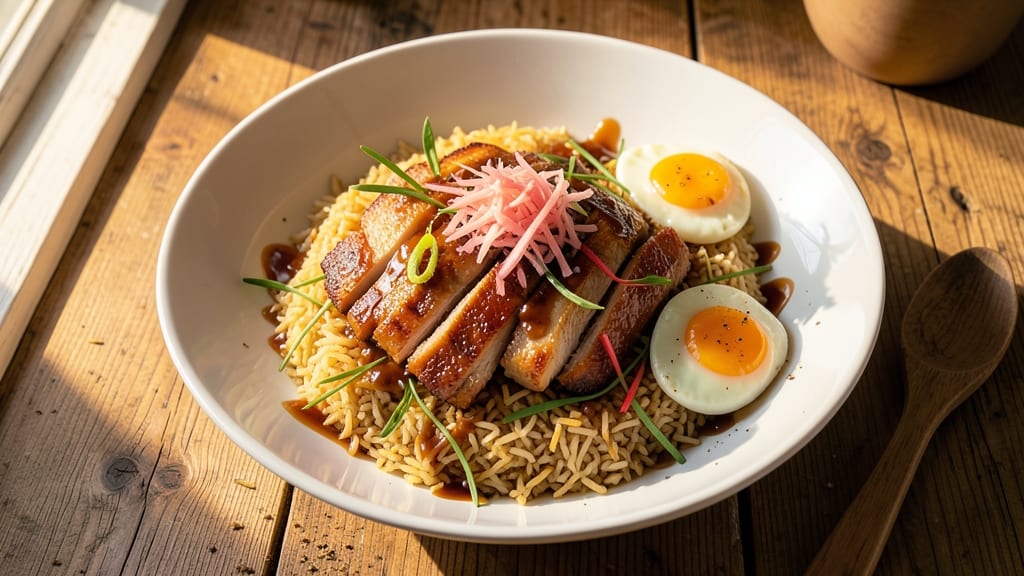
This char siu pork fried rice recipe transforms leftover roasted pork into a fragrant, textured dish where crispy five-spice edges meet smoky-sweet bites. The secret lies in proper char siu preparation—marinating overnight with honey, hoisin, and aromatic spices—before achieving that signature caramelized bark through precise oven roasting.
What sets this version apart is capturing authentic wok hei (breath of the wok) by stir-frying over high heat with day-old rice, creating that signature smoky aroma while keeping the pork's signature sweetness intact.
The result is a restaurant-quality fried rice where every bite delivers perfect texture contrast and balanced seasoning.
Ingredients for char siu pork fried rice
Transform char siu pork into aromatic fried rice with these carefully balanced ingredients.
| Ingredient | Amount | Notes |
|---|---|---|
| Char Siu Pork 🥩 | 1 ½ cups | Leftover roasted, diced into 1/2-inch pieces |
| Day-Old Jasmine Rice 🍚 | 3 cups | Cold and separated for texture |
| Char Siu Marinade 🍯 | ½ cup | Reserved from overnight marinade |
| Scallions 🧅 | ½ cup | Green and white parts, thinly sliced |
| Fresh Ginger 🧄 | 1 ½ tbsp | Finely minced, peeled |
| Eggs 🥚 | 2 large | Fresh, beaten |
| Soy Sauce 🍶 | 2 tbsp | Light or all-purpose |
| Oyster Sauce 🦪 | 1 tbsp | High-quality, thick consistency |
| Sesame Oil 🌰 | 1 tsp | Toasted, for aroma |
| Vegetable Oil 🫒 | 2 tbsp | High smoke point for stir-frying |
| Five-Spice Powder 🌶️ | ½ tsp | Authentic blend for depth |
| Salt 🧂 | ½ tsp | Kosher or sea salt |
| Black Pepper 🌶️ | ¼ tsp | Freshly ground |
The char siu pork must have that signature caramelized bark—look for deep reddish-brown edges when selecting leftovers. Whole Foods or Asian markets often carry pre-made char siu with superior texture. If making your own, marinate overnight with honey, hoisin, and five-spice powder for authentic flavor. The day-old jasmine rice is non-negotiable; freshly cooked rice turns mushy when stir-fried. Spread cooked rice on a tray to cool and dry out completely before using. For the ginger, freshly grated delivers the brightest flavor—pre-minced ginger loses potency quickly.
No char siu marinade left? Substitute with 1 tbsp hoisin plus 1 tsp soy sauce for similar umami depth. Scallions can be swapped for green onions or chives, though scallions provide the best balance. Eggs should be room temperature for even cooking—crack them into a bowl first. The vegetable oil is crucial; avocado or peanut oil handle high heat better than olive oil. For five-spice powder, Lao Gan Ma or Penzeys brands offer the most authentic blend. If you can't find it, mix 1/4 tsp cinnamon, 1/4 tsp cloves, and pinch of fennel seeds as a substitute.
Store day-old rice in an airtight container to maintain texture. The fried rice reheats beautifully—3-4 minutes in a steamer basket restores crispiness. Char siu pork leftovers keep for 3-4 days in the fridge; freeze any unused portions for up to 3 months. For meal prep, portion fried rice into individual containers with a small pat of butter on top to prevent sticking. The dish tastes even better the next day as flavors meld further.
Why You'll Love This Recipe
- One-Pan Magic: I swear by this—just toss everything into one skillet. The char siu marinade’s sticky-sweet depth caramelizes right into the rice while you chop scallions, no extra bowls needed.
- Sweet-Savory Crunch: That first bite? The crispy char siu bits mixed with day-old rice’s perfect texture—plus a hit of fresh ginger—wakes up your taste buds like a Sunday brunch. Honestly, I’ve never met fried rice this addictive.
- Lunchbox Hero: Between us, this is my go-to for meal prep. Pack it cold or reheat it—still tastes like you slaved over it. My kids grab it for school lunches, and my husband sneaks seconds when he thinks I’m not looking.
- Budget Win: Char siu pork stretches across three meals easy. Use leftovers in wraps, ramen, or even a quick stir-fry. I’ve fed four people for under $10 with this—no guilt, just flavor.
Step-by-step instructions for char siu pork fried rice
This method transforms cold rice and smoky char siu into a restaurant-quality dish with crispy edges and layered flavors.
Prepare the Char Siu Pork and Aromatics
Pat the 1.5 cups char siu pork dry with paper towels to remove excess moisture—this ensures it crisps beautifully during stir-frying. In a small bowl, combine the 0.5 cup char siu marinade with 0.5 tsp five-spice powder and 0.25 tsp black pepper. Toss the char siu pork in this mixture until evenly coated. Set aside while you prepare the aromatics.
Mince the 1.5 tbsp fresh ginger using a microplane or sharp knife—you want a fine paste, not chunks. Thinly slice the 0.5 cup scallions, separating the green and white parts (save the greens for garnish later). These aromatics will infuse the fried rice with bright, fresh flavor that cuts through the richness of the char siu.
Scramble the Eggs for Creamy Texture
Crack the 2 large eggs into a bowl and beat them vigorously with a fork until the yolks and whites are fully combined. Heat 1 tbsp vegetable oil in a 14-inch wok or large skillet over medium-high heat until shimmering. Pour in the eggs and let them sit undisturbed for 5-7 seconds—this creates a firm, slightly crispy base.
Using a spatula, gently push the eggs from the edges toward the center, creating soft, silky curds. Once the eggs are 80% set (still slightly runny in the center), remove them from the wok and set aside. The residual heat will finish cooking them as you work. Keep the wok hot for the next step—you want to maintain that high heat for proper wok hei.
Stir-Fry the Aromatics and Char Siu
Add the remaining 1 tbsp vegetable oil to the wok and swirl to coat the surface. Increase heat to high and add the minced fresh ginger. Stir-fry for 10-15 seconds until fragrant—you should smell a sharp, citrusy aroma. Immediately add the white parts of the scallions and cook for another 15 seconds while stirring constantly.
Now add the char siu pork and toss everything together for 30 seconds. The pork should begin to sizzle and release its smoky sweetness. This quick sear intensifies the flavors without overcooking the pork. Remove the mixture from the wok and set it aside with the eggs—keeping everything separate prevents overmixing and maintains texture.
Cook the Rice with Umami Sauces
Return the wok to high heat and add the 3 cups day-old jasmine rice, breaking up any clumps with your spatula. Stir-fry for 1-2 minutes until the rice grains become translucent at the edges. This step reactivates the starches in the rice, creating a slightly sticky texture that holds the sauce.
Pour in the 2 tbsp soy sauce, 1 tbsp oyster sauce, and 0.5 tsp salt. Stir vigorously for 30-45 seconds until the rice absorbs the sauces and develops a glossy sheen. The rice should be evenly coated but still slightly separate—this ensures each grain remains distinct. If the rice appears too dry, add 1-2 tablespoons of water and stir quickly.
Combine and Finish with Sesame Oil
Return all the char siu pork, eggs, and reserved scallion greens to the wok. Toss everything together for 1-2 minutes until the rice is heated through and the char siu is evenly distributed. The dish should look vibrant with pockets of crispy pork and creamy eggs nestled among the rice grains.
Remove the wok from heat and drizzle in the 1 tsp sesame oil. Toss gently once more to distribute the oil evenly—this adds a nutty aroma and rich finish. Taste and adjust seasoning if needed; you may need a touch more soy sauce for balance. Serve immediately, garnished with extra scallion greens for freshness and color contrast. The rice should be hot, with each bite delivering a perfect balance of smoky char siu, creamy eggs, and aromatic rice.
Pro Tips For Making Char Siu Pork Fried Rice
- CHOP GINGER THIN: I learned this the hard way—thick slices of ginger just sit there like chewy rocks. For this dish, slice it paper-thin (almost translucent) so it infuses flavor without overpowering. A sharp knife and steady strokes work best—no need to go crazy, just consistent.
- STIR-FRY IN BATCHES: Your wok’s too small? Don’t crowd the rice. Cook the char siu pork first, then set it aside. Fry the rice in two separate heaps, spreading it thin so it gets that perfect toasted edge. Overloading = steamed rice, not fried rice.
- USE COLD RICE: Day-old rice is non-negotiable, but don’t skip cooling it properly. Spread freshly cooked rice on a tray and refrigerate for 30 minutes before using. Cold rice absorbs the marinade better and won’t turn mushy when you stir-fry.
- SAVE THE MARINADE: That leftover char siu marinade isn’t trash—it’s liquid gold. After removing the pork, strain it and toss your rice in it before frying. The extra umami and sweetness cut through the rice’s dryness and make the dish taste like it simmered all day.
Make-ahead tips for leftovers
Prep Ahead Strategy
Start by making your char siu pork the day before—this is where the magic begins. Marinate the pork overnight with honey, hoisin, and five-spice powder, then roast it until the edges develop that signature caramelized bark.
Store leftovers in an airtight container in the fridge for up to 4 days. The flavors deepen as the marinade absorbs into the meat, giving you that authentic restaurant taste. 🥩
Rice Prep Essentials
Cook your jasmine rice a day ahead and spread it on a tray to cool completely—this prevents soggy fried rice. Store in an airtight container at room temperature. For extra insurance, refrigerate the rice overnight; the cold temperature helps maintain texture.
When ready to cook, let it sit at room temperature for 10 minutes before stir-frying. 🍚
Egg Prep Shortcut
Beat your eggs the night before and store them in the fridge in a small container. When ready to cook, simply take them out 15 minutes before stir-frying to bring to room temperature.
This ensures even cooking and that perfect silky texture. I like to add a pinch of salt to the eggs while beating them—it helps balance flavors later. 🥚
Sauce Pre-Mixing
Combine all your sauces—soy sauce, oyster sauce, and sesame oil—in a small bowl the night before. Store in the fridge, and when ready to cook, just grab and pour.
This saves time and ensures your sauces are ready when you need them. For extra convenience, pre-measure everything into small containers labeled with their purpose. 🍶
Garnish Prep
Slice your scallions and store the white and green parts separately in small containers. The greens should be reserved for garnishing at the very end to keep them fresh and vibrant.
Mince the ginger and store it in a tiny container in the fridge—it'll keep for 3-4 days this way. Freshly minced ginger makes all the difference in flavor! 🧅
Reheating Leftovers
This fried rice reheats beautifully—just pop it in a steamer basket over boiling water for 3-4 minutes or microwave it for 1-2 minutes with a splash of water. For best results, store leftovers in individual portions with a small pat of butter on top to prevent sticking.
The dish actually tastes better the next day as flavors meld further. ❄️
Nutrition facts
Frequently asked questions
Can I substitute store-bought char siu pork for homemade?
Yes, but choose carefully! Look for pre-made char siu with that signature caramelized bark and deep reddish-brown color. Brands like Golden Gate or T&T Supermarket often carry high-quality versions. If using store-bought, pat it dry thoroughly before stir-frying to maintain crispiness.
What's the best way to prevent soggy fried rice?
Use day-old, cold jasmine rice that's been spread on a tray to dry out completely. Freshly cooked rice releases too much moisture when stir-fried. Also, break up any clumps before adding to the wok and cook over high heat for just 1-2 minutes—this reactivates the starches without steaming the rice.
How do I make this recipe vegetarian?
Replace the char siu pork with marinated tofu or tempeh (use soy sauce, five-spice powder, and a touch of maple syrup). For extra umami, add 1 tbsp mushroom powder to the rice. Keep the eggs but ensure they're vegan if needed. The stir-frying technique remains the same—just adjust cooking times slightly for tofu.
Why does my fried rice turn out mushy?
This usually happens from one of three issues: using fresh rice (too much moisture), not cooking over high enough heat, or stirring too gently. Always use cold day-old rice, maintain high heat throughout, and stir vigorously to separate the grains. If needed, add just 1 tsp water to the wok while cooking to help bind the rice.
Can I make this with frozen char siu pork?
Yes, but thaw it completely first in the fridge overnight. Pat it very dry with paper towels to remove all moisture—this is critical for achieving crispy edges. For extra insurance, sear the pork in the wok for 30-45 seconds before adding to the rice to restore some crispiness. The texture won't be identical to fresh, but it'll still taste delicious.