
Main Courses
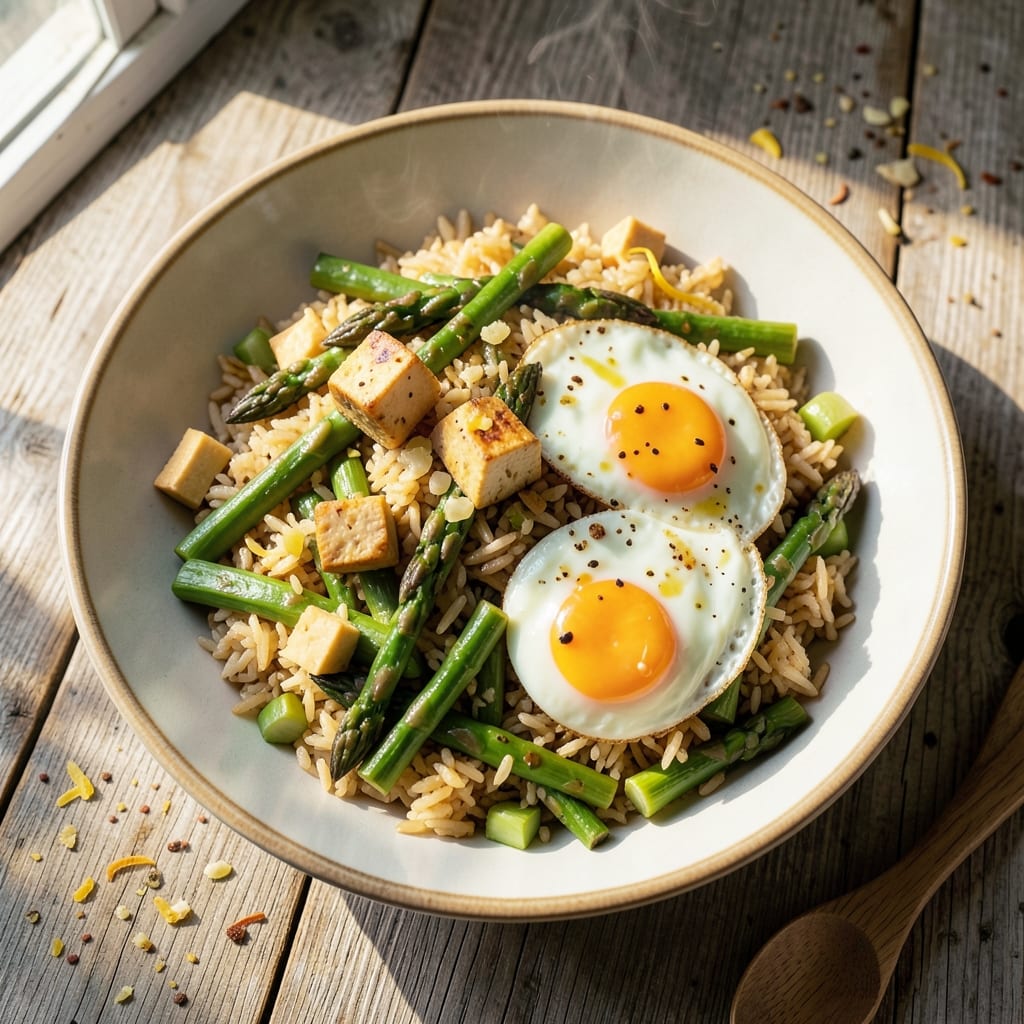
This asparagus fried rice recipe transforms simple ingredients into a vibrant dish with crispy edges and bright green asparagus spears that add freshness to every bite. The key lies in perfectly timing the asparagus—sautéed just until tender-crisp to maintain that satisfying texture contrast against the fluffy rice. I developed this version after realizing how often asparagus gets overcooked in fried rice, turning it mushy instead of adding the fresh crunch it deserves.
The foundation starts with day-old rice—cold rice releases less moisture when stir-fried, ensuring your fried rice stays separate and crispy rather than turning into a sticky mass. We'll use a simple seasoning blend of garlic, ginger, and soy sauce for depth, then fold in the asparagus at the perfect moment to preserve its vibrant color and crisp texture. The result is a dish that balances hearty rice with delicate asparagus, creating a satisfying meal that's both restaurant-quality and easy to replicate at home.
What makes this recipe stand out is the attention to texture—each bite delivers a mix of tender rice, crispy asparagus tips, and the occasional satisfying crunch from toasted rice grains. The asparagus maintains its bright green color thanks to a quick blanching step before stir-frying, ensuring it stays vibrant rather than turning dull. This technique transforms a simple vegetable into the star of the dish while keeping the preparation straightforward and foolproof.
For added protein, consider scrambling eggs or adding cubed tofu at the end—both options absorb the flavors beautifully without overpowering the asparagus. The dish serves equally well as a light lunch or a satisfying dinner, and leftovers reheat perfectly, making it ideal for meal prep. Let's create this bright, flavorful fried rice that proves home cooking can deliver restaurant-quality results.
Ingredients for asparagus fried rice
Day-old rice, vibrant asparagus, and aromatic seasonings create restaurant-quality fried rice with crispy edges.
| Ingredient | Amount | Notes |
|---|---|---|
| Day-Old Jasmine Rice 🍚 | 4 cups | Cold, uncooked rice preferred |
| Fresh Asparagus Spears 🌱 | 1 lb | Thin to medium stalks, trimmed |
| Large Eggs 🥚 | 2 whole | Optional for added protein |
| Extra-Firm Tofu 🧇 | ½ lb | Cubed, optional protein |
| Garlic Cloves 🧄 | 4 cloves | Minced for aromatic base |
| Fresh Ginger 🌿 | 1 tbsp | Grated, for depth of flavor |
| Low-Sodium Soy Sauce 🍶 | ⅓ cup | For umami depth |
| Sesame Oil 🫒 | 1 tbsp | Toasted for nutty aroma |
| Vegetable Oil 🫒 | ½ cup | High smoke point preferred |
| Green Onions 🧅 | ¼ cup | Sliced, for fresh finish |
| Salt 🧂 | 1 tsp | Diamond Crystal preferred |
| Black Pepper 🌶️ | ½ tsp | Freshly ground for heat |
| White Pepper 🌶️ | ¼ tsp | For subtle heat |
| Toasted Sesame Seeds 🌾 | 1 tbsp | For garnish and crunch |
The asparagus is non-negotiable for this dish—look for bright green stalks with tightly closed tips at Whole Foods or your local farmers' market. Thin stalks cook faster and maintain crispness better than thick ones. If using thick spears, trim them to even lengths. The day-old rice is crucial—fresh rice releases too much moisture, turning your fried rice into a sticky mess. I always use jasmine rice for its fragrant, slightly floral notes, but basmati works too. For the garlic and ginger, buy fresh and grate them yourself—pre-minced versions lose potency quickly. If you're short on time, frozen asparagus works in a pinch, but thaw and pat it dry thoroughly to avoid excess moisture.
No eggs? Scrambled tofu cubes add protein without overpowering the dish. Swap the soy sauce for coconut aminos if you prefer a lighter flavor, but reduce to 2 tablespoons—it's saltier. The sesame oil should be toasted, not regular cooking sesame oil—Kadoya or La Choy are reliable brands. For the green onions, use only the white and pale green parts for sautéing, reserving the bright green tops for garnish. If you're vegetarian but want extra protein, crumbled tempeh works beautifully—marinate it in soy sauce and sesame oil before adding. The white pepper is key for that restaurant-quality touch—black pepper alone can't replicate its subtle earthiness.
Store leftover fried rice in an airtight container for up to 4 days—it reheats beautifully. For freezing, portion into single servings and freeze for up to 3 months. The asparagus loses crispness when reheated, so I recommend making this fresh or freezing without the asparagus, adding it fresh when reheating. To keep your rice from drying out, sprinkle a light mist of water over it before storing. The sesame seeds should be toasted in a dry pan for 30 seconds before adding to the dish—this enhances their nutty flavor dramatically.
Why You'll Love This Recipe
- One-Pan Magic: I swear by this trick—just one skillet handles everything. The asparagus chars in the same pan where the tofu crisps, and the eggs get that perfect runny yolk without extra dishes. Honestly, I’ve never cleaned up faster.
- Garlic-Tofu Crunch: Between us, that crispy tofu with minced garlic? It’s the star. The asparagus adds a fresh bite, and the eggs tie it all together—creamy, savory, and just a little umami. My husband grabs seconds before I even finish serving.
- Lunchbox Hero: This is my go-to for meal prep—packs perfectly cold or reheats like a dream. The day-old rice stays firm, the asparagus holds its shape, and the tofu keeps its texture. (Yes, even on a Tuesday night when I’m running late.)
- Budget Brightener: Fresh asparagus and eggs feel fancy, but they’re actually cheap protein boosters. Tofu stretches further than meat, and jasmine rice fills you up without breaking the bank. Leftovers? Even better—tastes just as good the next day.
Step-by-step instructions for asparagus fried rice
This method delivers perfectly crispy edges and vibrant green asparagus in every bite.
Prep the Protein and Vegetables
Begin by pressing the 0.5 lb extra-firm tofu between two paper towels for 10 minutes to remove excess moisture. Cut it into ½-inch cubes—smaller pieces will cook more evenly and absorb flavors better. In a separate bowl, whisk the 2 whole large eggs with 0.5 tsp black pepper and 0.25 tsp white pepper until fully combined.
Trim the tough ends from the 1 lb fresh asparagus spears and cut them into 1-inch pieces. For the aromatics, mince the 4 cloves garlic and grate the 1 tbsp fresh ginger using a fine grater. These ingredients will form the flavor base of your fried rice, so take your time with the prep—precise cuts ensure even cooking and maximum flavor extraction.
Cook the Tofu and Asparagus
Heat 0.25 cup vegetable oil in a wok or large skillet over medium-high heat until shimmering. Add the tofu cubes in a single layer and cook undisturbed for 3-4 minutes until golden brown on all sides. Remove the tofu with a slotted spoon and set aside on a paper towel-lined plate to drain excess oil.
In the same pan, add another 0.25 cup vegetable oil and increase heat to high. Add the asparagus pieces and stir-fry for 2-3 minutes until bright green and just tender-crisp. The asparagus should retain its vibrant color—overcooking will turn it limp. Remove the asparagus and set it aside with the tofu.
Scramble the Eggs and Build the Sauce Base
Return the pan to medium-high heat and add the remaining 0.25 cup vegetable oil. Pour in the egg mixture and let it sit undisturbed for 5-10 seconds before gently stirring with a spatula. Continue cooking until the eggs are just set but still slightly runny—this texture ensures they'll blend seamlessly into the rice without becoming rubbery.
Add the minced garlic and grated ginger to the pan, stirring for 30 seconds until fragrant. Pour in the 0.33 cup low-sodium soy sauce and 1 tbsp sesame oil, scraping up any browned bits from the bottom of the pan. This deglazing step captures all the flavor that would otherwise be lost, creating a rich umami base for your fried rice.
Combine and Stir-Fry the Rice
Add the 4 cups day-old jasmine rice to the pan, breaking up any clumps with your spatula. Stir-fry vigorously for 2-3 minutes until the rice is heated through and begins to develop crispy edges. The rice should release from the pan easily—if it sticks, add a splash of water and continue stirring.
Return the cooked tofu and asparagus to the pan along with the 0.25 cup sliced green onions. Toss everything together for another 1-2 minutes until the green onions are wilted and the asparagus is heated through. Season with the remaining 1 tsp salt and adjust to taste—this is where you can balance flavors if needed.
Finish and Serve Immediately
Remove the fried rice from heat and transfer it to a serving platter. Garnish with the 1 tbsp toasted sesame seeds, pressing them lightly into the surface for maximum crunch. The sesame seeds not only add texture but also enhance the nutty aroma that complements the bright flavors of the asparagus and soy sauce.
Serve immediately while still hot—fried rice is best enjoyed right out of the pan. The combination of crispy rice edges, tender asparagus, and perfectly set eggs creates a harmonious balance of textures and flavors. For an extra touch, drizzle with a bit more sesame oil before serving to elevate the aroma and tie all the components together.
Pro Tips For Making Asparagus Fried Rice
- Trim Asparagus Properly: Snip the woody ends at a 45-degree angle—about an inch from the base—using a sharp knife. I learned this the hard way: blunt scissors leave jagged edges that turn to mush when stir-fried, and you’ll end up with a bowl full of stringy bits instead of crisp spears. ---
- Scramble Eggs First: Push your eggs to one side of the pan and scramble them low and slow until just set, then mix everything in. After burning three batches, I finally figured out that high heat for eggs in fried rice makes them rubbery—this way, they stay creamy and soak up the flavors. ---
- Press Tofu Dry: Wrap the extra-firm tofu in a clean towel, place a heavy skillet on top, and let it sit for 10 minutes. Sounds weird, but it works: the excess water steams out, so your tofu doesn’t turn to mush when it hits the pan. No one wants soggy tofu in fried rice. ---
- Use Cold Rice: Grab that day-old rice straight from the fridge—no need to thaw it. Cold rice releases less moisture when stir-fried, so your dish stays crisp instead of turning into a gluey mess. (Yes, even if you’re impatient like me.)
Dietary considerations for this dish
Gluten-Free Adaptations
This fried rice recipe is naturally gluten-free when using tamari or gluten-free soy sauce—Kikkoman Gluten-Free Tamari is my go-to brand. Simply swap the regular soy sauce for an equal amount of tamari, and you’ll maintain the same umami depth without gluten. Always double-check labels, as some brands may process soy sauce in facilities with gluten cross-contamination. 🌱
Vegetarian Protein Swaps
For extra protein without meat, crumbled tempeh or extra-firm tofu work beautifully. Press the tofu for 15 minutes to remove moisture, then cube and pan-fry until golden. Marinate the tempeh in 1 tbsp soy sauce + 1 tsp sesame oil for 10 minutes before cooking. Both options add heartiness while keeping the dish plant-based.
Low-Sodium Options
If you're watching sodium, reduce the soy sauce to 2 tablespoons and boost flavor with 1 tbsp coconut aminos (like Annie Chun’s). Add a pinch of white miso paste (½ tsp) for depth—it dissolves easily and adds a subtle savory note. Finish with extra green onions and sesame seeds to enhance freshness without extra salt. ✨
Nut-Free Considerations
Sesame seeds and sesame oil are the only nut-based ingredients here, but they’re not actual nuts—so this recipe is technically nut-free. If you’re avoiding sesame due to allergies, replace the oil with avocado oil and omit the seeds. Garnish with toasted pumpkin seeds (1 tbsp) instead for a safe, crunchy alternative.
Allergen-Friendly Prep
For cross-contamination safety, use separate utensils and pans for this recipe if your kitchen handles common allergens. Wipe down surfaces with a damp cloth before prepping. If eggs are a concern, swap them for silken tofu—blend ½ cup silken tofu + 1 tsp cornstarch** until smooth, then cook like scrambled eggs. This keeps the dish allergen-conscious while maintaining texture. 💪
Nutrition facts
Frequently asked questions
Why does the recipe call for day-old rice instead of fresh rice?
Fresh rice releases too much moisture when stir-fried, turning your fried rice into a sticky mess. Day-old rice has already released its excess moisture and develops slightly drier edges, which is essential for achieving those perfect crispy bits. Plus, the grains separate more easily, giving you that authentic wok-hei texture.
Can I use frozen asparagus instead of fresh?
You can, but with a few adjustments! Thaw the asparagus completely and pat it very dry with paper towels to remove excess moisture. Then, stir-fry it for just 1-2 minutes (instead of 2-3) to prevent it from turning mushy. For best results, use fresh asparagus when possible—it maintains that vibrant green color and crisp texture.
How do I prevent my fried rice from turning out mushy?
Three key factors: use day-old rice, avoid overcrowding your pan, and cook in batches if needed. Also, make sure your oil is hot enough before adding the rice—it should sizzle when it hits the pan. Finally, stir-fry vigorously for 2-3 minutes maximum to develop crispy edges without overcooking.
What's the best way to reheat leftover asparagus fried rice?
Reheat in a dry skillet over medium-high heat with just a splash of water or oil to prevent drying. Add the rice in a single layer and stir constantly for 3-4 minutes until heated through. For the asparagus, add it fresh when reheating—it won't maintain crispness when reheated from cold.
Can I make this recipe without eggs or tofu?
For a completely plant-based version, simply omit the eggs and tofu entirely. The asparagus and seasonings will still provide plenty of flavor. If you want extra protein, consider adding ½ cup chopped mushrooms or ½ cup shredded cabbage—both absorb flavors well and add texture.