
Main Courses
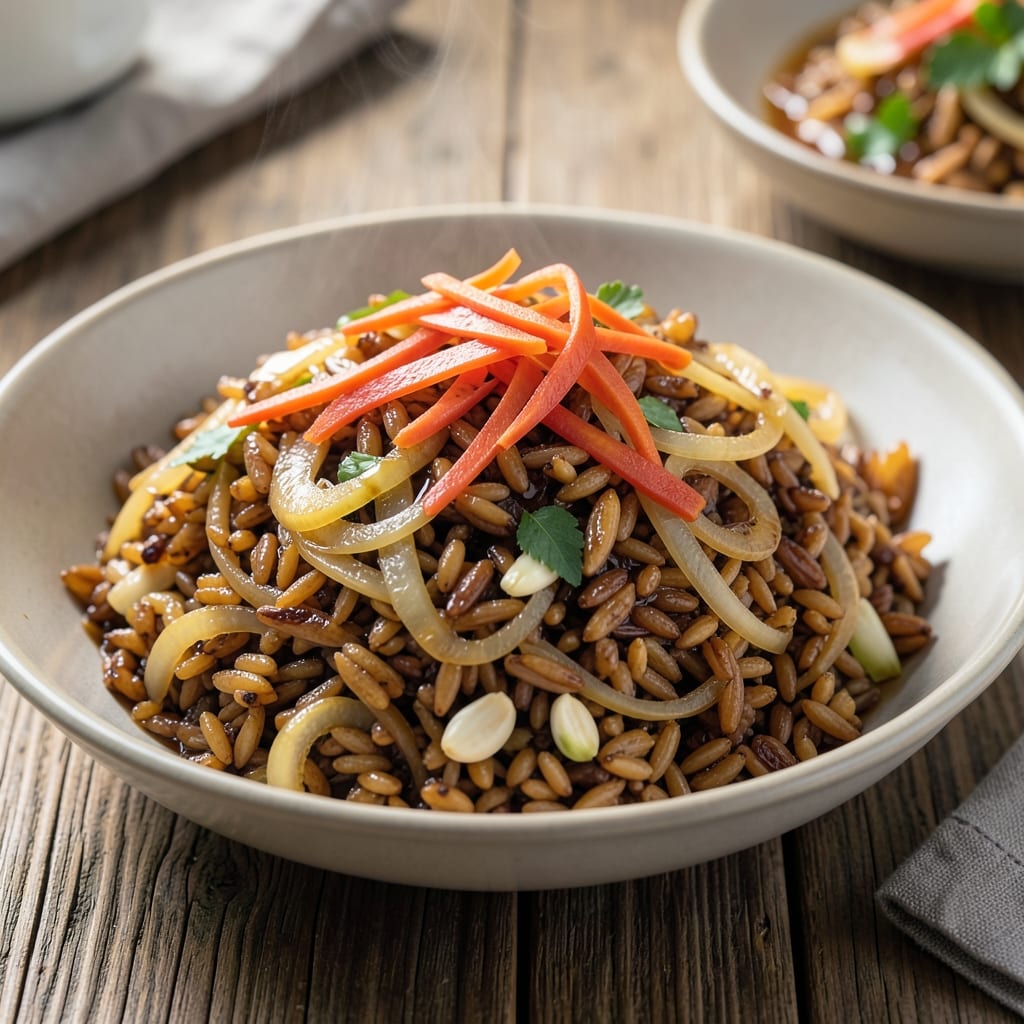
This Asian wild rice recipe transforms ordinary grains into a nutty, toasted masterpiece with crispy edges that elevate any meal. The secret lies in a simple yet transformative technique—sautéing the rice until golden before simmering it in aromatic broth. I developed this method after years of experimenting with Asian-inspired dishes, and it never fails to impress. What sets this recipe apart is its ability to balance texture and flavor effortlessly. The rice achieves that perfect crispy exterior while maintaining a tender, fluffy interior, all thanks to a precise cooking method that mimics traditional Asian rice dishes. The nutty undertones deepen with each bite, making it a standout side or even a hearty main course when paired with proteins. The result is a dish that’s both restaurant-quality and surprisingly simple to prepare. With just a few key ingredients—wild rice, aromatic vegetables, and a flavorful broth—you’ll create a side that’s packed with texture and depth. The crispy edges add a satisfying crunch, while the nutty rice absorbs all the savory flavors around it. Perfect for serving alongside grilled meats, stir-fried vegetables, or even as a standalone dish with a drizzle of soy-glazed sauce. Let’s get started on creating this flavorful, textured wild rice that will become a staple in your kitchen.
Ingredients for asian wild rice
Transform ordinary grains into restaurant-quality wild rice with crispy edges and nutty depth.
| Ingredient | Amount | Notes |
|---|---|---|
| Wild Rice Blend 🌾 | 1 cup | Uncooked, long-grain preferred |
| Yellow Onion 🧅 | 1 whole | Thinly sliced, white and yellow parts |
| Garlic Cloves 🧄 | 4 cloves | Minced finely for aromatic base |
| Fresh Ginger 🌿 | 1 tbsp | Finely grated, aromatic kick |
| Vegetable Oil 🫒 | 2 tbsp | High smoke point preferred |
| Low-Sodium Chicken Broth 💧 | 2 cups | Homemade or quality store-bought |
| Soy Sauce 🍶 | 1 tbsp | Light or dark, to taste |
| Sesame Oil 🫒 | 1 tsp | Toasted, for nutty aroma |
| Honey 🍯 | 1 tbsp | For subtle sweetness balance |
| Green Onion 🧅 | 2 whole | Thinly sliced, for garnish |
| Toasted Sesame Seeds 🌰 | 1 tbsp | For crunchy texture finish |
| Kosher Salt 🧂 | ½ tsp | Diamond Crystal preferred |
| Black Pepper 🌶️ | ¼ tsp | Freshly ground for heat |
The wild rice blend is non-negotiable here—Lundberg or Uncle Ben's blends work best for that perfect mix of textures. For the onions and garlic, freshly sliced is key; pre-chopped gets soggy during sautéing. Whole Foods or Trader Joe's carry excellent quality rice blends, and their bulk sections often have organic options. Ginger loses potency fast, so buy fresh and grate it right before cooking. The vegetable oil should have a high smoke point—avocado or grapeseed oil are ideal for that crispy edge without burning.
No chicken broth? Vegetable broth or even mushroom broth works beautifully—just boost the soy sauce slightly for umami. Fresh ginger too pungent? Substitute with 1/2 tsp ground ginger, but you'll lose that fresh aroma. Short on sesame oil? Toasted peanut oil at half the amount mimics the nuttiness. The honey can be swapped for maple syrup or agave if preferred. For a deeper flavor, add 1 tsp fish sauce to the broth, but omit if avoiding seafood. Pre-sliced green onions? Use the white and light green parts only for the best texture contrast.
Wild rice keeps well in an airtight container for 5-6 days in the fridge, though it's best within 3 days for peak texture. Freezes beautifully for up to 3 months—portion into single servings before freezing. Reheat gently in a skillet with a splash of broth to restore crispiness. For meal prep, cook a double batch and store components separately: rice, veggies, and sauce. Assemble just before serving to maintain that crispy edge you worked so hard to achieve.
Why You'll Love This Recipe
- One-Pot Magic: I swear by this—just toss everything in one pan, stir, and walk away. The wild rice blend handles itself while the ginger and garlic infuse the oil with that warm, spicy aroma that makes my kitchen smell like a bustling Bangkok street. No fancy techniques, no stress.
- Umami Bomb: That crispy edge on the onions and garlic? Chef’s kiss. The fresh ginger adds a bright kick, and the wild rice soaks up all the flavor like a sponge. It’s not just tasty—it’s the kind of dish that makes you go back for seconds without even thinking.
- Meal Prep MVP: Between us, this is my go-to for lunches all week. Cook a big batch, portion it out, and reheat with a splash of soy sauce or sesame oil. Honestly, I make it twice a month just to have it ready—whether it’s for a lazy Tuesday or a last-minute potluck.
- Budget-Friendly Staple: Wild rice blend is pricier than white rice, but a single bag lasts me forever. Onions, garlic, and ginger are pantry basics, and vegetable oil doesn’t break the bank. Plus, leftovers taste just as good the next day—sometimes even better, if you ask me.
Step-by-step instructions for Asian wild rice with crispy edges
Here's how to transform simple wild rice into a nutty, toasted masterpiece with perfect texture and flavor balance.
Toast the Wild Rice for Nutty Depth
Heat a large skillet over medium-high heat and add the 2 tablespoons vegetable oil. Once the oil shimmers, add the 1 cup wild rice blend and spread it evenly in the pan. Toast the grains for 3-4 minutes, stirring constantly with a wooden spoon, until they turn a rich golden brown color and release an intense nutty aroma.
This toasting step is critical—it develops the rice's natural nutty flavors and prevents a mushy texture. You'll know it's ready when the grains look toasted and smell deeply aromatic. Remove the rice from the pan and set it aside temporarily—we'll return to it later.
Sauté the Aromatic Base
In the same skillet (no need to clean it—the toasted rice bits add flavor), add the 1 whole yellow onion and 4 cloves garlic cloves that have been minced finely. Cook over medium heat for 4-5 minutes until the onion becomes translucent and the garlic releases its fragrant oils.
Next, add the 1 tablespoon fresh ginger that's been finely grated. Cook for another 30 seconds until the raw ginger aroma transforms into something warm and inviting. This aromatic base forms the flavor foundation for your wild rice—don't rush this step or the flavors won't develop properly.
Build the Flavorful Broth Mixture
Pour in the 2 cups low-sodium chicken broth and bring to a gentle simmer. Stir in the 1 tablespoon soy sauce, 1 tablespoon honey, 0.5 teaspoon kosher salt, and 0.25 teaspoon black pepper. The mixture should smell complex—savory from the soy, sweet from the honey, and aromatic from the spices.
Return the toasted wild rice to the skillet and stir to combine with the broth mixture. The liquid should just cover the rice—if it looks too dry, add a splash of water. Bring to a full boil, then immediately reduce heat to low and cover with a tight-fitting lid. Simmer for 35-40 minutes until the rice is tender and all the liquid has been absorbed.
Finish with Umami and Texture
Once the rice is tender, uncover the skillet and stir in the 1 teaspoon sesame oil. This final touch adds a nutty depth that complements the toasted rice perfectly. Taste and adjust seasoning if needed—you may want to add a bit more soy sauce for saltiness or honey for sweetness.
Remove from heat and let the rice sit covered for 5 minutes. This resting period allows the flavors to meld completely. Finally, stir in the 2 whole green onions that have been thinly sliced and the 1 tablespoon toasted sesame seeds for that essential crunchy finish and visual appeal.
Achieve the Perfect Crispy Edges
For the signature crispy edges, transfer the rice to a large baking sheet and spread it in an even layer. Broil on high heat for 2-3 minutes, watching carefully to prevent burning. You want the top edges to develop a beautiful golden-brown crispness while keeping the interior tender.
Serve immediately while the edges are still crisp. The contrast between the nutty toasted rice, tender interior, and crispy edges creates a textural experience that's hard to resist. The umami from the soy sauce, sweetness from the honey, and nutty aroma from the sesame oil all come together in perfect harmony.
Pro Tips For Making Asian Wild Rice
- TOAST THE RICE FIRST: Wild rice blend soaks up flavors like a sponge, but it’s even better when you dry-toast it in oil for 2–3 minutes before adding liquid. I learned this the hard way—skipping it leaves the rice bland, no matter how much soy sauce you throw in. Use medium heat and stir often, or it’ll burn faster than you think.
- MINCE GINGER FINE: Fresh ginger is non-negotiable here, but don’t just chop it roughly—aim for a paste-like texture with a microplane or the flat side of your knife. Too many chunks mean you’ll taste them instead of the subtle, warming depth they’re supposed to add. (Yes, even if you’re impatient like me.)
- DON’T SKIP THE SIMMER: After adding broth or water, bring the rice to a boil, then immediately reduce to the lowest possible simmer. Wild rice needs time—about 45 minutes—to plump up properly. I used to walk away after 30, only to end up with undercooked grains. Cover it and let it do its thing.
- SAUTÉ ONIONS LOW AND SLOW: Onions are the base, so treat them gently—cook them on low heat for 8–10 minutes until soft and translucent, not browned. Rushing this step makes the dish taste raw and unfinished. If they stick, add a splash of water and scrape the bottom; it’s the thing that matters most for flavor.
Flavor customization for this recipe
Spicy Kick
Transform this dish into a fiery delight by adding 1-2 teaspoons of gochujang (Korean chili paste) to the broth mixture. For extra heat, stir in ½ teaspoon of red pepper flakes during the final step. If you love Thai flavors, swap the soy sauce for 1 tablespoon of fish sauce and add 1 teaspoon of sambal oelek for a smoky-spicy punch. 🌶️
Sweet & Tangy Twist
Brighten the dish with a 1-tablespoon splash of rice vinegar and 1 teaspoon of sesame seeds toasted in the pan with the rice. For a tropical twist, add ½ cup of diced pineapple to the final stir, balancing the nutty rice with sweet-tart flavors. A drizzle of honey-sriracha glaze (mix 1 tbsp honey with ½ tsp sriracha) elevates it to restaurant-level.
Umami Bomb
Deepens the savory profile by adding 1 tablespoon of miso paste (white or red) to the broth. For extra richness, stir in 1 tablespoon of hoisin sauce or ½ cup of shredded rotisserie chicken at the end. A sprinkle of toasted shiitake mushrooms adds an earthy, meaty depth that pairs perfectly with the crispy edges. 💫
Herbaceous Freshness
Incorporate fresh herbs like 1 tablespoon of chopped cilantro or Thai basil for a bright, aromatic finish. For a Middle Eastern touch, add 1 teaspoon of ground cumin and top with toasted pomegranate seeds for a sweet-tart contrast. A squeeze of lime juice at the end brightens the dish and cuts through the richness.
Creamy Luxury
Add ¼ cup of coconut milk to the broth for a velvety texture, then finish with 1 tablespoon of toasted coconut flakes. For a Japanese-inspired twist, stir in 1 tablespoon of mirin and top with soft-boiled quail eggs for a luxurious presentation. The creamy element balances the crispy edges beautifully.
Smoky Charred Depth
For a smoky flavor, add ½ teaspoon of smoked paprika to the broth and finish with 1 tablespoon of toasted sesame seeds. For extra char, sear the rice in a cast-iron skillet until deeply browned before simmering. A drizzle of chipotle-infused oil (mix 1 tbsp oil with ½ tsp adobo sauce) adds a smoky heat that complements the nutty rice perfectly. ⚡
Nutrition facts
Frequently asked questions
Can I substitute regular rice for wild rice in this recipe?
While you can use regular rice, wild rice is essential for the authentic nutty flavor and chewy texture. For a similar texture, try brown rice or black rice, but expect a milder flavor. If you must use white rice, toast it longer (5-6 minutes) to develop depth, but it won't match wild rice's natural nuttiness.
How do I prevent the rice from becoming mushy?
To maintain perfect texture, never overcook the rice. After simmering for 35-40 minutes, check for doneness—grains should be tender but still firm. If using a lid, ensure it's tight-fitting to trap steam. For extra insurance, spread the rice on a baking sheet after cooking and broil for 2-3 minutes to crisp the edges.
What's the best way to reheat leftover wild rice?
Reheat gently in a skillet over low heat with 1 tablespoon of broth or water per cup of rice, stirring constantly. Cover for 3-4 minutes to restore moisture, then broil for 1-2 minutes to revive crispy edges. Microwaving works but may make the rice gummy—avoid it if possible.
Can I make this recipe vegetarian?
Replace the chicken broth with vegetable or mushroom broth, and add 1 tablespoon of soy sauce or 1 teaspoon of miso paste for umami. For extra protein, stir in ½ cup of edamame or ½ cup of baked tofu at the end. The crispy edges and nutty flavor remain intact.
Why does my rice smell burnt but isn't browned?
This happens when wild rice burns from overheating during toasting. Reduce heat to medium-low and stir more frequently—burnt rice releases bitter smoke. For future batches, toast in batches if needed, and keep the pan moving constantly. The rice should smell nutty, not acrid.