
Main Courses
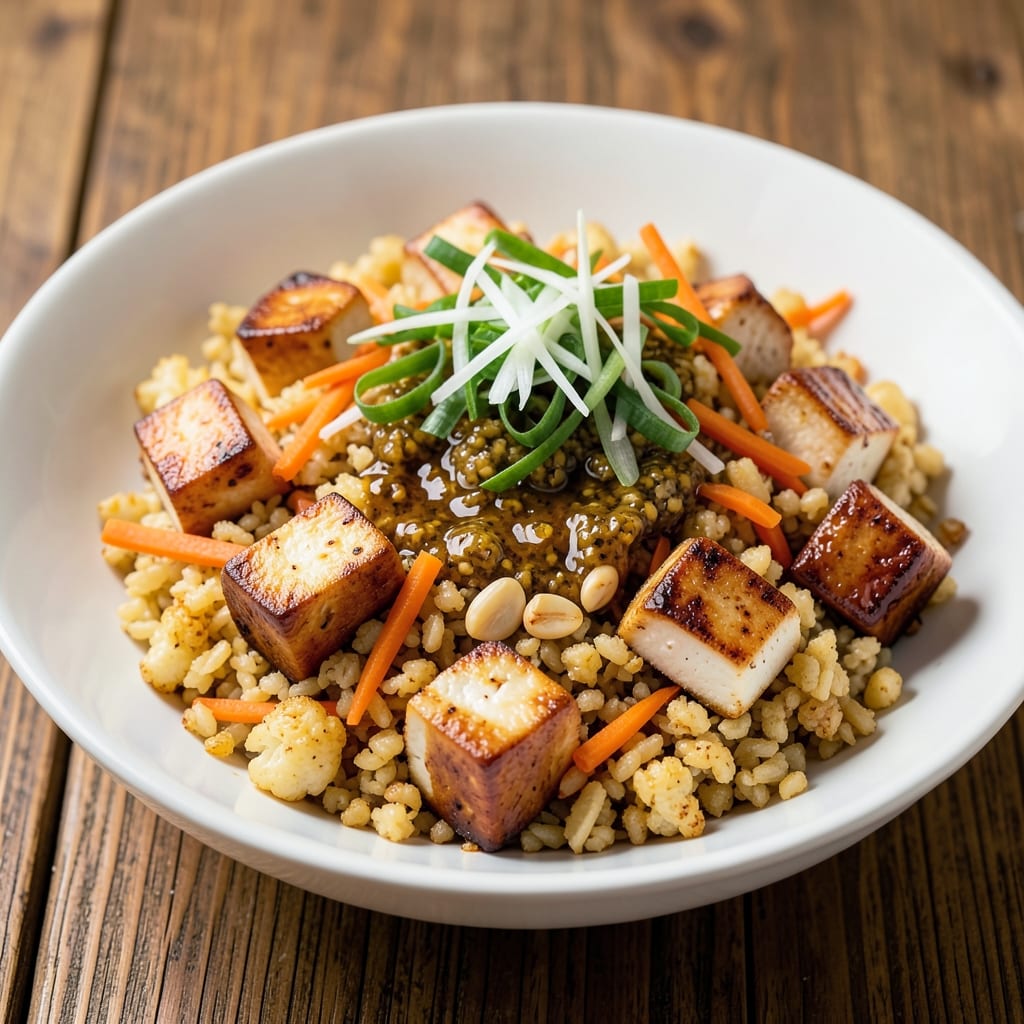
This vegan Asian cauliflower fried rice transforms simple ingredients into a restaurant-worthy dish with bold flavors and satisfying texture. 🌱 The secret lies in perfectly wok-tossed cauliflower rice that mimics traditional fried rice while keeping it light and nutritious—no eggs or dairy needed. I developed this recipe after realizing how easily cauliflower rice could replace rice while delivering the same addictive crunch and savory depth.
What sets this apart is the balance of textures—crispy cauliflower florets, tender stir-fried vegetables, and optional tofu for protein—all coated in a fragrant garlic-ginger-soy sauce. The dish comes together in just 20 minutes with minimal prep, making it ideal for weeknight dinners or meal prep. Sesame oil adds a nutty aroma, while fresh green onions and sesame seeds elevate the plating to look as impressive as it tastes.
The result is a vibrant, flavor-packed dish that satisfies cravings without the heaviness of traditional fried rice. Each bite delivers a mix of crisp, chewy, and umami-rich elements, with the cauliflower absorbing all the savory goodness. It’s the kind of meal that feels indulgent yet aligns perfectly with plant-based eating—proof that vegan food can be both nutritious and deeply satisfying.
Perfect for serving as a main course or side, this recipe scales easily for crowds. Garnish with extra sesame seeds or chili flakes for heat, and serve with steamed bok choy or edamame for a complete vegan feast. Let’s get cooking!
Ingredients for asian cauliflower fried rice
Transform simple vegan ingredients into a restaurant-style cauliflower fried rice with bold textures and savory depth.
| Ingredient | Amount | Notes |
|---|---|---|
| Fresh Cauliflower Rice 🥬 | 4 cups | Freshly riced or store-bought frozen |
| Extra-Firm Tofu 🍱 | ½ lb | Pressed and cubed |
| Carrots 🥕 | 1 whole | Julienned into matchsticks |
| Fresh Green Onions 🧅 | ¼ cup | Thinly sliced, white and green parts |
| Fresh Ginger 🌿 | 1 tbsp | Grated finely |
| Garlic Cloves 🧄 | 4 cloves | Minced finely |
| Sesame Oil 🫒 | 1 tbsp | Toasted for aroma |
| Tamari or Soy Sauce 🍶 | ¼ cup | Gluten-free tamari preferred |
| Toasted Sesame Seeds 🌾 | 1 tbsp | For garnish |
| Vegetable Oil 🫒 | 2 tbsp | High smoke point |
| Salt 🧂 | ½ tsp | Kosher or sea salt |
| Black Pepper 🌶️ | ¼ tsp | Freshly ground |
| Red Chili Flakes 🔥 | ½ tsp | Adjust to taste |
| Peas 🌱 | ½ cup | Frozen or fresh |
| Lime 🍋 | 1 whole | Juiced for brightness |
The cauliflower rice is the star—freshly riced delivers the best texture, but frozen works too. Look for organic cauliflower at Whole Foods or Trader Joe's for vibrant color and cleaner taste. Extra-firm tofu holds up best when pressed—wrap it in a towel, place a heavy pan on top for 15 minutes. The tamari adds depth, so gluten-free tamari is ideal for those avoiding gluten. Fresh ginger and garlic? Buy pre-minced from the refrigerated section to save time, but fresh is always better if you've got it.
No sesame oil? Toasted peanut oil works in a pinch, though the flavor will differ slightly. Swap peas for corn or bell peppers if you prefer. The lime juice can be bottled, but freshly squeezed adds a bright pop. For extra protein, add edamame or chopped mushrooms. If you're short on time, skip the tofu and double the veggies—this dish is all about flexibility. The red chili flakes can be omitted for a milder version, but I recommend keeping them for that restaurant-style kick.
Store cooked cauliflower rice in an airtight container for 4 days—it reheats beautifully with a splash of water. Freeze portions for up to 3 months by spreading on a tray first, then transferring to a bag. For meal prep, make a big batch and portion into containers with the sauce on the side. Garnish with extra sesame seeds and green onions right before serving to keep everything fresh and vibrant.
Why You'll Love This Recipe
- No Rice? No Problem: I keep a bag of frozen cauliflower rice in my freezer—just microwave and toss. No chopping, no soaking, no fuss. The tofu gets pressed and pan-fried in minutes while I dice the carrots (or grab pre-shredded if I’m lazy), and the ginger? A quick grating while the wok heats up. Honestly, it’s the kind of meal that feels like a hug when you’re too tired to think.
- Umami Bomb Combo: Between the crispy tofu edges, the fresh ginger’s zing, and the green onions’ sharp bite, this dish packs a flavor punch without a single drop of soy sauce. The cauliflower soaks up the sesame oil and garlic like a sponge, while the carrots add just enough sweetness to balance everything. I’ll be real: my husband steals my plate before I even finish mine.
- Lunchbox Hero: This is my go-to for meal prep—it reheats beautifully and keeps its texture for days. Pack it in bento boxes for work or school, or freeze portions for those nights when takeout feels like too much effort. (Yes, even on a Tuesday night.) The tofu stays firm, the veggies don’t turn mushy, and the ginger keeps it tasting fresh, not stale.
- Budget Meal, Big Payoff: I spend about $10 for enough ingredients to feed my family four times over. Cauliflower rice is cheaper than regular rice, tofu is a protein powerhouse, and carrots and ginger last for weeks. Plus, the leftovers? They’re my secret weapon for busy mornings—I just reheat and eat. Not the prettiest, but the taste makes up for it every time.
Step-by-step instructions for wok-tossed Asian cauliflower fried rice
Master this vibrant stir-fry technique for perfectly textured cauliflower rice with bold umami flavors.
🍳 Step 1: Prepare and Press the Tofu
Begin by pressing the 0.5 lb extra-firm tofu to remove excess moisture. Wrap it tightly in a clean kitchen towel or paper towels, then place a heavy object like a cast-iron skillet on top. Let it press for 15-20 minutes while you prep other ingredients. This step is crucial—it prevents soggy tofu that ruins your crispy fried rice texture.
Once pressed, cut the tofu into ½-inch cubes using a sharp chef's knife. Toss the cubes with 0.25 tsp black pepper and set aside. The pepper will infuse into the tofu as it cooks, adding subtle depth to each bite. Keep the tofu at room temperature while you prep the remaining vegetables.
👨🍳 Step 2: Prep All Vegetables and Aromatics
Julienne the 1 whole carrot into ¼-inch matchsticks using a mandoline or sharp knife. Thinly slice the 0.25 cup fresh green onions, separating the white and green parts. Finely grate the 1 tbsp fresh ginger and mince the 4 cloves garlic until you can barely see the pieces—this ensures they dissolve into the rice without becoming chewy.
For the 4 cups fresh cauliflower rice, if using frozen, thaw it completely first. If using fresh, rice it using a food processor or the fine holes of a box grater. Pat it completely dry with paper towels to remove all moisture—this prevents steaming instead of crisping during cooking. The texture should be completely dry to the touch.
🔥 Step 3: Cook the Tofu Until Golden
Heat 1 tablespoon vegetable oil in a wok or large skillet over medium-high heat until shimmering. Add the tofu cubes in a single layer, leaving space between them. Cook undisturbed for 3-4 minutes until the bottoms develop a deep golden brown crust. This is your signal to flip—don't walk away, as tofu burns quickly.
Flip the tofu and cook another 2-3 minutes until evenly browned. Remove the tofu and set aside on a plate. Leave the rendered oil in the pan—it's packed with flavor. If the oil isn't completely browned, add another ½ tablespoon vegetable oil to maintain high heat for the next steps.
🍳 Step 4: Stir-Fry Aromatics and Vegetables
Add the remaining 1 tablespoon vegetable oil to the wok. When hot, add the minced garlic and grated ginger, stirring constantly for 30 seconds until fragrant but not browned. Immediately add the carrot matchsticks and ½ cup peas, stirring vigorously for 2-3 minutes until the carrots soften slightly but retain their crisp texture.
Push the vegetables to one side of the wok and add the 0.25 cup fresh green onions, white parts first. Stir for 1 minute until softened, then add the 0.5 tsp red chili flakes and 0.25 cup tamari or soy sauce. Toss everything together for 1 minute to coat the vegetables evenly with the sauce.
🥘 Step 5: Combine and Finish with Sesame Oil
Add the 4 cups cauliflower rice and the cooked tofu back to the wok. Using tongs, stir-fry everything together over high heat for 4-5 minutes until the cauliflower rice is tender but still slightly crisp in spots. The rice should absorb the flavors while maintaining its texture—this is where the magic happens.
Turn off the heat and immediately drizzle in the 1 tablespoon sesame oil and juice of the 1 whole lime. Toss everything together one final time to distribute the flavors evenly. Garnish with 1 tablespoon toasted sesame seeds and the remaining green onion tops. Serve immediately while the rice is hot and the tofu is crispy.
Pro Tips For Making Asian Cauliflower Fried Rice
- CRISP THE TOFU FIRST: I learned this the hard way—when I toss in tofu straight from the package, it turns into a sad, mushy blob. Press it for 10 minutes, slice into ½-inch cubes, then pan-fry in 1 tablespoon of oil until golden on all sides before adding to the rice. That crispy texture is what makes the dish sing.
- SALT THE CAULIFLOWER: Fresh cauliflower rice releases water like a faucet left running. Toss it with ½ teaspoon of salt as soon as you pulse it, let sit for 5 minutes, then drain and pat dry. This cuts down on splattering and keeps your rice from turning into a soggy mess.
- STOP STIRRING BEFORE IT’S DONE: I used to watch the rice like a hawk, stirring constantly, and ended up with a pile of mush. Once the rice is 80% cooked, walk away. Let it sit uncovered for 30 seconds—it’ll finish cooking from residual heat while you prep the rest. Overworking it kills the texture.
- GINGER NEEDS A GRATE: Sounds weird, but it works: finely grate the ginger (no need to peel) and let it sit for 10 minutes before adding to the pan. The juice softens the flavor, and the texture blends seamlessly into the rice. Pre-minced ginger? Skip it—it’s a shortcut that weakens the dish.
Regional styles of this recipe
Japanese Teriyaki Twist
For a Japanese-inspired version, swap the tamari for 3 tablespoons teriyaki sauce (look for a vegan version like Annie Chun's) and add 1 tablespoon mirin when combining with the cauliflower rice. Garnish with ½ cup thinly sliced shiitake mushrooms sautéed in 1 teaspoon sesame oil for extra umami depth. Serve with a side of miso soup for a complete Japanese vegan meal. 🍶
Thai Green Curry Fusion
Transform this into a Thai-inspired dish by adding ½ cup coconut milk and 1 tablespoon green curry paste (like Maesri) to the wok after cooking the tofu. Stir in ½ cup sliced bell peppers and ½ cup chopped bamboo shoots for authentic Thai flavors. Top with fresh cilantro and lime wedges for serving. This version works beautifully with jasmine rice on the side for a balanced meal. 🌶️
Korean Bibimbap Style
Give it a Korean twist by adding 1 tablespoon gochujang (Korean chili paste) to the sauce mixture and topping with ¼ cup kimchi (chopped finely) and 1 fried egg (optional for vegan version, omit). Serve in a bowl with a drizzle of sesame oil and extra sesame seeds on top. The spicy, tangy kimchi adds a complex flavor that pairs perfectly with the crispy cauliflower. 🔥
Vietnamese Lemongrass Version
Infuse your dish with Vietnamese flavors by adding 1 stalk lemongrass (bruised and chopped) and 1 tablespoon fish sauce (use vegan fish sauce like Red Boat) to the sauce. Stir in ½ cup shredded cabbage and ½ cup sliced scallions for freshness. Garnish with fresh mint and cilantro for an aromatic finish. Serve with a side of rice paper rolls for a full Vietnamese-inspired meal. 🌿
Singapore Chili Crisp Topping
For a Singaporean-inspired dish, stir-fry 2 tablespoons chili crisp (like Lee Kum Kee) in 1 teaspoon oil until fragrant, then drizzle it over the finished fried rice. Add ½ cup chopped water chestnuts for crunch and ½ cup sliced bell peppers for sweetness. Garnish with extra green onions and sesame seeds. This bold, spicy-sweet topping takes the dish to the next level. 🌶️
Malaysian Laksa-Inspired
Create a Malaysian-inspired version by adding 1 tablespoon sambal oelek and ½ cup coconut milk to the sauce. Stir in ½ cup shredded carrots and ½ cup chopped kaffir lime leaves (optional but adds amazing aroma). Top with crushed peanuts and fresh cilantro. Serve with a side of sambal for extra heat. The combination of coconut and chili creates a rich, aromatic dish that's deeply satisfying. 🥥
Nutrition facts
Frequently asked questions
Can I use frozen cauliflower rice instead of fresh?
Yes! Frozen cauliflower rice works perfectly—just thaw it completely first and pat it very dry with paper towels. This prevents steaming during cooking. For extra crispiness, spread it on a baking sheet and toast in the oven at 400°F for 5 minutes before stir-frying.
What's the best way to make this dish spicier?
Boost the heat by adding 1 extra teaspoon of red chili flakes during stir-frying, or mix in 1 tablespoon of gochujang (Korean chili paste) with the tamari. For a smoky kick, stir in ½ teaspoon of smoked paprika at the end. Garnish with sliced jalapeños or a drizzle of sriracha for serving.
How do I prevent the cauliflower rice from turning mushy?
Mushiness happens when the cauliflower absorbs too much moisture. Always pat it completely dry before cooking, and use a high-heat wok or skillet for quick searing. Cook in small batches if needed, and avoid overcrowding the pan. The rice should be tender but still hold its shape—about 4-5 minutes of stir-frying.
Can I make this recipe without tofu?
Skip the tofu and add ½ cup chopped mushrooms or extra vegetables like bell peppers, snap peas, or corn for texture. For protein, stir in ½ cup chickpeas (drained and rinsed) or ½ cup edamame. The dish will still be hearty and flavorful—just adjust cooking times slightly for denser ingredients.
How long can I store leftovers?
Store cooked cauliflower fried rice in an airtight container in the fridge for 4-5 days. Reheat gently in a skillet or microwave with a splash of water to restore crispiness. For freezing, spread portions on a tray first, then transfer to a bag for up to 3 months. Thaw overnight in the fridge before reheating.