
Main Courses
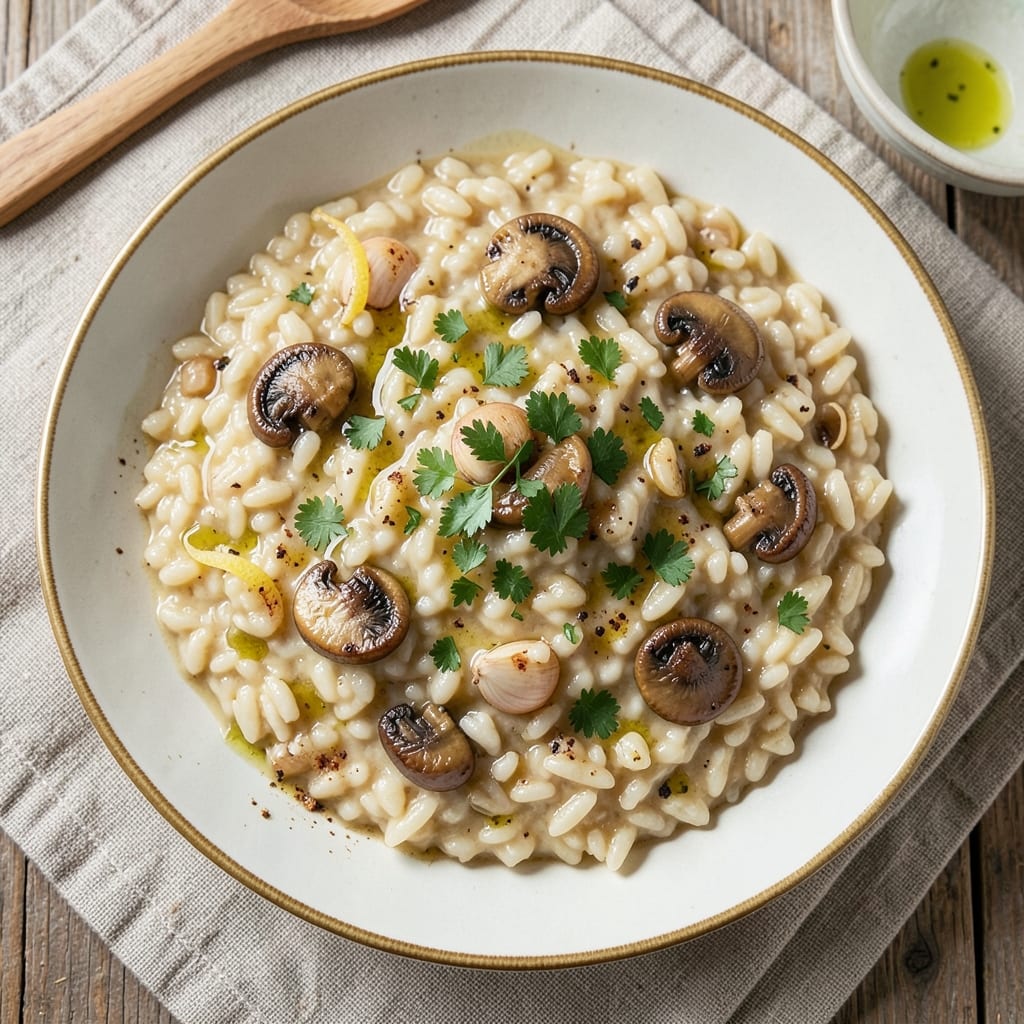
The arborio rice mushroom risotto recipe delivers restaurant-quality creaminess in just 30 minutes, transforming simple ingredients into a velvety masterpiece. The secret lies in the risotto method—slowly adding broth to toasted arborio rice while stirring continuously, which releases starch for that signature silky texture. This vegetarian-friendly version highlights earthy mushrooms and rich umami flavors, making it a standout main course for any occasion.
Arborio rice is the star here, chosen for its high starch content that creates the signature creamy consistency. Sautéing mushrooms first builds deep, savory notes that form the base of the dish, while white wine deglazes the pan and adds brightness. The key to perfect risotto is patience—adding broth gradually and stirring often ensures each grain absorbs flavor without becoming mushy.
By the final step, you'll have a dish that's impossibly creamy yet still al dente, with mushrooms that melt into the rice while maintaining their earthy essence. The finishing touches of butter and parmesan elevate the flavor to new heights, creating a balance of richness and depth that's hard to resist. This risotto is elegant enough for dinner parties but simple enough for a weeknight meal.
For extra sophistication, consider garnishing with fresh thyme or a drizzle of truffle oil, though neither is required. The recipe scales perfectly for small gatherings, and leftovers reheat beautifully with a splash of broth. Let's create this velvety masterpiece step by step.
Ingredients for arborio rice mushroom risotto
Earthy mushrooms, creamy arborio rice, and rich umami flavors transform into velvety perfection.
| Ingredient | Amount | Notes |
|---|---|---|
| Arborio Rice 🍚 | 1 ½ cups | Unrinsed for optimal starch release |
| Cremini Mushrooms 🍄 | 16 oz | Sliced into 1/4-inch pieces |
| Shallots 🧅 | 2 whole | Minced, about 2 tbsp total |
| Garlic Cloves 🧄 | 4 cloves | Finely minced, about 1 tbsp |
| Dry White Wine 🍷 | ½ cup | Sauvignon Blanc or Pinot Grigio |
| Vegetable Broth 💧 | 4 cups | Low-sodium preferred, warm |
| Unsalted Butter 🧈 | 4 tbsp | Cold, cut into small cubes |
| Parmesan Cheese 🧀 | ½ cup | Freshly grated, fine texture |
| Extra-Virgin Olive Oil 🫒 | 2 tbsp | For initial sautéing |
| Fresh Thyme Leaves 🌿 | ¼ cup | Chopped, optional garnish |
| Diamond Crystal Kosher Salt 🧂 | 1 ½ tsp | Adjust to taste throughout |
| Freshly Ground Black Pepper 🌶️ | ½ tsp | Cracked over finished risotto |
The arborio rice is non-negotiable—its high starch content creates the signature creamy texture. Look for short-grain varieties with a slightly translucent center when raw, indicating optimal starch levels. Whole Foods or specialty grocery stores carry premium arborio rice, though most supermarkets stock reliable brands like Lundberg. Avoid pre-rinsed rice; the starch coating is essential for that luxurious finish. For mushrooms, cremini or baby bella work best—their meaty texture holds up during sautéing without turning to mush. Trader Joe's often has pre-sliced mushrooms, but fresh is ideal. If using dried mushrooms, soak them first and use the soaking liquid in the broth for extra depth.
No white wine? Substitute with additional vegetable broth—just reduce the total broth by 4 oz. For a richer flavor, add 1 tsp of white miso paste to the broth. Fresh thyme is ideal, but dried thyme at one-third the amount works in a pinch. The shallots can be swapped for 1 small red onion, finely minced, though shallots impart a more delicate sweetness. If you're short on time, pre-minced garlic and shallots from the refrigerated section save steps. For the Parmesan, grate it yourself—pre-grated cheese contains anti-caking agents that prevent proper melting. Penzeys or Whole Foods carry excellent aged Parmigiano-Reggiano at a reasonable price.
Risotto reheats beautifully—simply add a splash of warm vegetable broth and stir gently over low heat. Store leftovers in an airtight container for up to 3 days in the refrigerator. For longer storage, portion into freezer-safe containers and freeze for up to 3 months. The butter and Parmesan should be added fresh when reheating to maintain their richness. Garnish with extra thyme or a drizzle of truffle oil for added sophistication, though neither is necessary. Leftovers can be repurposed into risotto fritters or stuffed into portobello mushrooms for a creative twist.
Why You'll Love This Recipe
- No-Fuss Technique: I swear by this method—just toast the shallots and mushrooms until they’re golden, then let the Arborio rice soak up the wine and broth in one pot. No fancy stirring schedule, no stress. The rice does all the work while you sip your coffee.
- Earthy Umami Magic: That first bite? The mushrooms caramelize into something rich and meaty, while the Arborio rice turns into creamy clouds—no butter bombs here, just deep, savory flavor from the wine and garlic. Honestly, it’s the kind of dish that makes you close your eyes.
- Weeknight to Dinner Party: Same recipe, zero extra effort. I make it for lazy Tuesdays (just add a fried egg on top) or impress guests by serving it in bowls with a sprinkle of parsley. The wine deglazing step saves me from buying expensive stock—clever, right?
- Leftovers That Lie: The risotto actually tastes better the next day—crispy on the edges, still creamy inside. I portion it into containers and reheat with a splash of water; no one ever guesses it’s yesterday’s dinner. My wallet and my family thank me.
Step-by-step instructions for creamy arborio risotto with wild mushrooms
Master this classic Italian technique with precise timing and gentle stirring for restaurant-quality risotto.
🍳 Step 1: Sauté Aromatics Until Fragrant
Heat the 2 tablespoons extra-virgin olive oil in a heavy-bottomed saucepan over medium heat. Add the 2 whole shallots and 4 cloves garlic cloves (already minced), cooking for 3-4 minutes until the shallots become translucent and the garlic releases its aroma without browning.
This foundational step develops the base flavor. I like to watch for the moment when the shallots soften enough to lose their sharp bite—you'll see them turn from opaque to nearly clear. Add the 16 oz sliced cremini mushrooms at this point, spreading them evenly in the pan. Cook for 5-6 minutes until they release their moisture and begin to brown slightly at the edges.
🍳 Step 2: Toast the Arborio Rice Until Nutty
Push the mushrooms to one side of the pan and add 2 tablespoons unsalted butter to the empty space. When the butter foams, add the 1.5 cups unrinsed Arborio rice and stir vigorously for 1-2 minutes until the grains become translucent at the edges and develop a slight golden hue.
This toasting process, called "risottatura," is critical—it removes the surface starch that would otherwise make the rice mushy. You'll notice the rice starts to look almost glassy when properly toasted. Stir constantly during this step to ensure even color development throughout all the grains.
🍷 Step 3: Deglaze with Wine and Simmer
Pour in the 0.5 cup dry white wine and stir immediately, scraping up any browned bits from the bottom of the pan. Let the mixture simmer gently until the wine has completely evaporated—this should take about 2-3 minutes. You'll see the rice begin to absorb the liquid and the surface will look dry again.
Here's where the magic begins—the wine's acidity helps break down the rice's outer layer, creating that signature creamy texture. The moment the wine disappears completely, you're ready for the next addition. This is also when you'll want to start your 4 cups vegetable broth warming in a separate pot if it's not already.
⏰ Step 4: Add Broth Gradually and Stir Constantly
Begin adding the warm vegetable broth ½ cup at a time, stirring gently but continuously with a wooden spoon. Each addition should be followed by 3-4 minutes of simmering until the liquid is nearly absorbed before adding the next portion. The risotto should maintain a gentle simmer throughout this process—never let it boil vigorously.
I find it helpful to keep a timer going for 18-20 minutes total for this step. You'll know you're on track when the rice begins to look creamy and al dente—it should have a slight bite in the center when you taste it. The key is patience; rushing this process will result in a gummy texture rather than the velvety consistency we're after.
🧀 Step 5: Finish with Butter, Cheese, and Herbs
When the rice is al dente and has absorbed most of the broth, remove the pan from heat. Stir in the remaining 2 tablespoons unsalted butter and 0.5 cup freshly grated Parmesan cheese until fully melted and incorporated. The mixture should look luxuriously creamy with a glossy sheen.
Season generously with the 1.5 teaspoons diamond crystal kosher salt and 0.5 teaspoon freshly ground black pepper, then fold in the 0.25 cup chopped fresh thyme leaves. Let the risotto rest for 1-2 minutes off the heat to allow the starches to fully set. Serve immediately, garnished with additional Parmesan and thyme if desired.
Pro Tips For Making Arborio Rice Mushroom Risotto
- TOAST THE RICE FIRST: Heat your pan until it’s actually hot—drop in the Arborio rice and let it sizzle for 30 seconds before adding liquid. I used to rush this, and the rice would just sit there like wet oatmeal. That initial toast builds flavor and prevents gummy texture. (Yes, even if you’re impatient like me.)
- SAUTE MUSHROOMS UNTIL DRY: Cook the creminis until all moisture evaporates—no slippery pans, no half-finished edges. A crowded pan steams them; give them space and 5-7 minutes on medium-high to develop depth. My grandmother swore by this, and she was right: dry mushrooms mean rich, umami-packed risotto, not sad, waterlogged bites.
- ADD WINE IN TWO STEPS: Pour half the white wine, stir until fully absorbed, then add the rest. The first splash loosens the shallots and garlic; the second ensures the rice gets properly deglazed. I learned this the hard way—skipping this means wine just pools at the bottom, and your risotto tastes like it’s missing something.
- STIR LESS, CHECK OFTEN: Let the rice sit undisturbed for 10 seconds between stirs. Constant stirring releases starch too fast, and your risotto turns gluey. Instead, give it a quick swirl every 30 seconds, then let it rest. Sounds weird, but it works: the rice absorbs liquid better, and the final texture is al dente perfection—not mushy.
Storing and reheating this recipe
Refrigerator Storage
Let your risotto cool completely before transferring to an airtight container—I prefer glass because it preserves texture better than plastic. Store in the refrigerator for up to 3 days, though I recommend eating within 2 days for peak creaminess. The starches continue to work even when cold, so the texture remains velvety if stored properly. Always leave ½ inch headspace to prevent condensation from making the rice soggy. 🧊
Freezer-Friendly Tips
For longer storage, portion risotto into freezer-safe containers or heavy-duty zip-top bags, leaving 1 inch headspace for expansion. Freeze for up to 3 months—the butter and cheese will separate slightly but re-emulsify beautifully when reheated. I like using quart-sized silicone molds because they're easy to thaw and portion. Label with the date to track freshness. ❄️
Stovetop Reheating
This is my preferred method—it restores that restaurant-quality texture. Place your refrigerated risotto in a heavy-bottomed saucepan and add 2-3 tablespoons warm vegetable broth per cup of risotto. Heat over low-medium heat, stirring gently every 30 seconds until warmed through (165°F internal temp). The broth helps redistribute the starches and prevents drying. Finish with a pat of cold butter and extra Parmesan for that fresh-from-the-pan feel. 🔥
Microwave Revival
For quick reheating, transfer risotto to a microwave-safe dish and cover loosely with a damp paper towel. Heat on 50% power in 1-minute intervals, stirring between each, until warmed. Add 1-2 tablespoons broth if it looks dry. The damp towel prevents drying while allowing steam to escape. I find this works best for single servings—just be gentle with the stirring to avoid breaking the grains. ⚡
Broth Boost Method
If your risotto has lost some creaminess after storage, the broth boost technique saves the day. Stir in 2 tablespoons warm broth per cup of risotto and let sit for 5 minutes before reheating. The extra starch from the broth helps restore that signature velvety mouthfeel. This works particularly well for freezer-thawed risotto, which can sometimes become slightly grainy. 💫
Garnish Refresh
Always finish reheated risotto with fresh garnishes to elevate the flavor. A sprinkle of Parmesan, a pat of cold butter, or a few chopped thyme leaves make all the difference. For extra richness, drizzle with truffle oil or a squeeze of lemon juice—both cut through any reheating dryness. Serve immediately with a side of roasted asparagus or a simple arugula salad to complement the earthy mushrooms. 🌿
Nutrition facts
Frequently asked questions
Why does arborio rice work best for risotto?
Arborio rice is specifically bred for risotto because its high starch content releases gradually when cooked, creating that signature creamy texture. The short, plump grains absorb liquid perfectly while maintaining their shape. Other rice varieties like basmati or jasmine lack this starch profile and won't achieve the same velvety consistency.
Can I substitute cremini mushrooms for wild mushrooms?
Cremini mushrooms work perfectly—they have a meaty texture and rich umami flavor that pairs beautifully with arborio rice. For extra depth, consider adding a pinch of dried porcini powder (½ teaspoon) to the broth if you want that wild mushroom essence. Fresh wild mushrooms can be pricey, but cremini delivers excellent results at a fraction of the cost.
What's the secret to getting creamy risotto without it being mushy?
The key is patience and technique: add broth gradually (½ cup at a time) and stir constantly (but gently) to prevent breaking the rice. The rice should always be al dente when finished—it should have a slight bite in the center. Overstirring or adding too much broth too quickly releases too much starch at once, creating a gluey texture.
Can I make this risotto in a slow cooker?
While possible, it's not recommended for this recipe. Risotto requires precise control over heat and liquid absorption that's difficult to achieve in a slow cooker. The texture becomes inconsistent, and the rice may not develop that signature creamy mouthfeel. For best results, stick to stovetop cooking with gentle heat. If you're short on time, try the 30-minute stovetop method instead.
How do I prevent my risotto from drying out?
Keep the risotto at a gentle simmer (never boiling) and always have a fresh batch of warm broth ready. If it looks dry before finishing, add 1-2 tablespoons broth at a time. The final butter and cheese addition should be done off the heat to lock in moisture. For extra insurance, cover the pan loosely with a lid while cooking to retain steam.