
Main Courses
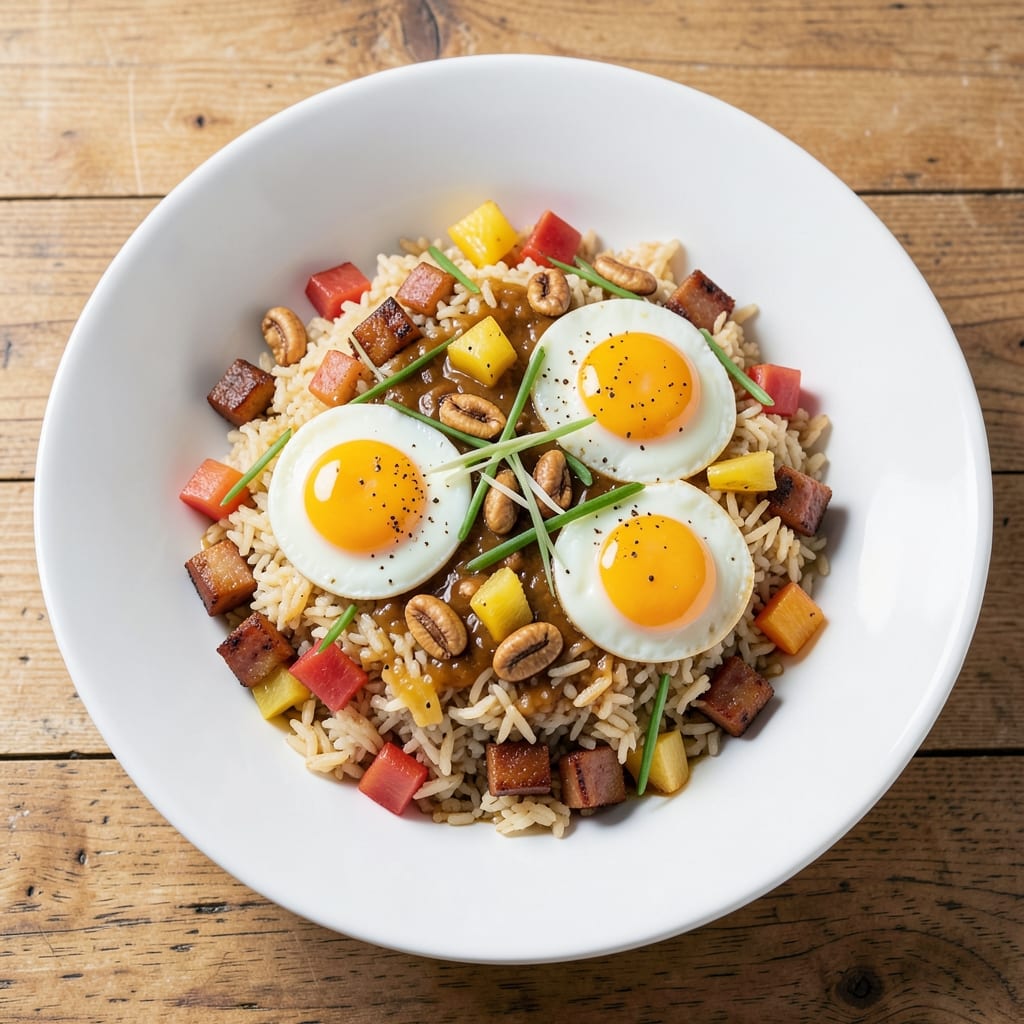
This adobo fried rice recipe Hawaii blends Filipino comfort with local flavors for a dish that’s equal parts nostalgic and innovative. The secret? A rich, soy-based adobo sauce infused with Hawaiian teriyaki and a touch of Spam—because nothing says Aloha like crispy pork and caramelized rice in one pan. I perfected this version after years of testing, balancing smoky-sweet adobo with the island’s tropical vibe.
The technique is simple but transformative: stir-fry day-old rice until golden, then fold in tender Spam, scrambled eggs, and a sauce that’s equal parts umami and sweet. Fresh pineapple chunks add a bright contrast, while toasted macadamia nuts bring a buttery crunch. The result? A dish that’s hearty enough for a meal but light enough for a picnic—just like Hawaii itself.
What makes this recipe special is how it bridges cultures without compromise. The adobo’s deep, savory notes marry perfectly with teriyaki’s glossy sheen, while Spam—Hawaii’s beloved staple—ties it all together. Serve it with miso soup and seaweed salad for a full island-inspired spread, or let it shine as the star of your dinner table.
Whether you’re craving Filipino flavors with a local twist or just love a good fried rice, this dish delivers restaurant-quality results in under 30 minutes. The best part? Every bite tells a story—of adobo’s roots, Hawaii’s creativity, and the joy of food that brings people together.
Ingredients for adobo fried rice recipe hawaii
Pantry staples meet Hawaiian teriyaki and Filipino adobo for this nostalgic yet innovative fried rice.
| Ingredient | Amount | Notes |
|---|---|---|
| Day-Old Jasmine Rice 🍚 | 4 cups | Cold and dry for crispy texture |
| Spam (Diced) 🥓 | 1 cup | Hawaiian-style, cut into bite-sized pieces |
| Large Eggs 🥚 | 3 whole | Scrambled for texture contrast |
| Fresh Pineapple Chunks 🍍 | 1 cup | Small dice for bright contrast |
| Roasted Macadamia Nuts 🌰 | ½ cup | Toasted until golden |
| Green Onions 🧅 | ¼ cup | Thinly sliced, white and green parts |
| Adobo Sauce 🍶 | ½ cup | Homemade or store-bought Filipino |
| Hawaiian Teriyaki Sauce 🍯 | ¼ cup | Sweet and savory balance |
| Vegetable Oil 🫒 | 3 tbsp | High smoke point for stir-frying |
| Garlic Cloves 🧄 | 3 cloves | Minced for aromatic base |
| Salt 🧂 | 1 tsp | Kosher or sea salt |
| Black Pepper 🌶️ | ½ tsp | Freshly ground for warmth |
| Soy Sauce 🥫 | 1 tbsp | For extra umami depth |
The Spam is non-negotiable here—Hawaii’s beloved staple adds that salty, smoky crunch that ties everything together. Grab the Hawaiian-style Spam from the deli section (it’s slightly sweeter) or use regular Spam if that’s what you’ve got. The day-old rice is key—fresh rice turns mushy, but leftover rice from last night’s dinner works perfectly. If you’re making this fresh, cook extra rice and refrigerate it overnight. For the macadamia nuts, Costco or Trader Joe’s have the best prices, and toasting them in a dry pan for 3-4 minutes brings out their buttery flavor. The pineapple should be fresh, not canned—local Hawaiian pineapple if you can find it, or any sweet, ripe variety.
No adobo sauce? Mix soy sauce, vinegar, and a touch of sugar for a quick substitute. Teriyaki missing? Honey plus a splash of Worcestershire gets you close. Short on pineapple? Mango or papaya works in a pinch (though pineapple’s acidity cuts through the richness). The eggs don’t need to be perfect—scrambled just until set, then cut into small pieces. If you’re feeling fancy, use duck eggs for extra richness, but regular eggs work fine. The garlic can be pre-minced from a jar, but fresh is always better if you’ve got the time. And if you’re out of green onions, chives or scallions do the trick.
This dish tastes even better the next day—honestly, the flavors meld into something magical after a night in the fridge. Store leftovers in an airtight container for up to 4 days, or freeze for 3 months. I like to portion mine into containers with a side of miso soup—makes for easy lunches all week. The macadamia nuts keep for months in a sealed bag, so buy extra. Pineapple? Use within 5 days of cutting, or freeze the chunks for up to 6 months. The Spam stays fresh for weeks in the fridge, so you can stock up.
Why You'll Love This Recipe
- One-Pan Magic: I swear by this—no chopping boards, no extra pans. Toss in the cold rice, Spam, and pineapple, then stir-fry until the macadamia nuts get that golden crunch. Honestly, the only mess is the good kind (the kind that means it’s actually cooked).
- Sweet-Savory Balance: That salty Spam meets the bright pineapple? Pure magic. The eggs add richness, while the roasted macadamia nuts bring a buttery crunch that ties it all together—like a party in your mouth where everyone’s invited.
- Leftover Hero: Between us, this tastes better the next day. The flavors meld, the rice gets that perfect texture, and you’ve got a ready-to-go lunch for the week. I’ve reheated mine three times and never gotten tired of it.
- Budget-Friendly Luxury: Spam, rice, eggs—these are pantry staples that won’t break the bank. The pineapple and macadamias feel fancy, but they stretch far. It’s the kind of dish that makes you feel like you’re treating yourself, even when you’re just feeding the family.
Step-by-step instructions for adobo fried rice Hawaii
Here's how to turn simple ingredients into a flavor-packed plate that balances Filipino adobo with Hawaiian comfort food.
Prep Ingredients for Maximum Flavor
Start by dicing the 1 cup Spam (Diced) into bite-sized pieces—this ensures even cooking and melty pockets of flavor. Crack the 3 whole Large Eggs into a bowl and whisk lightly with 1 tsp Salt and 0.5 tsp Black Pepper. For the pineapple, cut the 1 cup Fresh Pineapple Chunks into small, even dice so they cook quickly without turning mushy.
Toast the 0.5 cup Roasted Macadamia Nuts in a dry skillet over medium heat for 3-4 minutes until golden and fragrant. This adds a rich crunch that balances the dish. Thinly slice the 0.25 cup Green Onions, keeping the white and green parts separate for garnish. Mince the 3 cloves Garlic Cloves finely—they'll form the aromatic base of your fried rice.
Scramble the Eggs and Set Aside
Heat 1 tbsp Vegetable Oil in a wok or large skillet over medium-high heat. Pour in the egg mixture and let it sit undisturbed for 5-10 seconds until the edges start to set. Gently push the eggs around with a spatula until they're just set but still slightly runny—this creates that perfect creamy texture. Remove the eggs and set them aside on a plate.
Don't overcook the eggs or they'll turn rubbery. You want them soft enough to cut through with a fork but firm enough to hold their shape. Keep them warm while you cook the rest of the ingredients.
Stir-Fry Aromatics and Spam
Add the remaining 2 tbsp Vegetable Oil to the same wok and heat over high heat until shimmering. Toss in the 3 cloves Garlic Cloves and stir for 10-15 seconds until fragrant but not browned—burnt garlic adds bitterness. Add the 1 cup Spam (Diced) and stir-fry for 2-3 minutes until it's heated through and slightly crispy around the edges.
Here's where the magic happens: add 0.5 cup Adobo Sauce and 0.25 cup Hawaiian Teriyaki Sauce, along with 1 tbsp Soy Sauce. Stir well and let the sauce simmer for 1 minute to meld the flavors. This combination gives you that perfect balance of tangy, sweet, and umami that defines this dish.
Combine All Ingredients and Cook Through
Add the 4 cups Day-Old Jasmine Rice, breaking up any clumps with your spatula. Stir-fry for 3-4 minutes, letting the rice absorb the flavors from the sauce. When the rice is mostly heated through, add the 1 cup Fresh Pineapple Chunks and toss everything together for another 2 minutes. The pineapple should soften slightly but still retain its texture.
Now return the scrambled eggs to the wok and gently fold everything together. Sprinkle the 0.5 cup Roasted Macadamia Nuts over the top and toss one last time. Cook for 1-2 minutes until the nuts are warmed through and everything is well combined. Taste and adjust seasoning if needed—you might want to add a pinch more salt or a splash of teriyaki sauce for balance.
Garnish and Serve Immediately
Transfer the fried rice to serving plates and garnish with the sliced 0.25 cup Green Onions, reserving some for garnish. Serve immediately while the rice is hot and the flavors are at their peak. The contrast of crispy nuts, creamy eggs, sweet pineapple, and savory spam makes every bite exciting.
This dish is all about balance—crunchy, creamy, sweet, and salty all in one plate. The key is keeping everything moving in the wok so nothing gets overcooked. Serve with extra pineapple on the side if you're feeling extra tropical!
Pro Tips For Making Adobo Fried Rice Recipe Hawaii
- CRISP THE SPAM FIRST: I learned this the hard way—cooking diced Spam straight in the rice makes it greasy and soggy. Sear the Spam in a dry pan for 2-3 minutes until the edges crisp and the fat renders out. Then toss it with the rice; the texture stays firm and the flavor pops.
- USE COLD PINEAPPLE: Fresh pineapple gets mushy when fried with hot rice. Pat the chunks dry, then chill them for 10 minutes before adding them to the pan. This keeps the texture bright and slightly chewy—no one wants a watery fried rice.
- SCRAMBLE EGGS SEPARATELY: Scrambling eggs in the rice pan turns them rubbery. Instead, scramble them in a small bowl with a splash of water (just enough to make them fluffy) and fold them in at the very end. They’ll stay tender and silky.
- TOAST THE MACADAMIAS: Store-bought roasted macadamias taste bland next to the bold flavors here. Lightly toast them in the same pan as the Spam (just 30 seconds) to deepen their nuttiness. Sprinkle them on last so they stay crunchy.
Regional styles of this recipe
Filipino Roots
This dish traces back to Filipino adobo, a classic stew made with vinegar, soy sauce, and meat. In Hawaii, Filipino immigrants adapted it by incorporating Spam—a post-WWII staple—and local flavors like pineapple. The adobo sauce here uses soy-based umami and Hawaiian teriyaki for a fusion twist that keeps the dish's soul intact while feeling fresh. The technique of stir-frying day-old rice is pure Filipino comfort food, but the macadamia nuts and pineapple make it distinctly Hawaiian. 🌶️
Local Hawaiian Twist
Hawaii's love affair with Spam is legendary, and this dish leans into that tradition by using diced Spam as the star protein. The pineapple chunks add a bright, tropical acidity that cuts through the richness of the adobo and teriyaki, while toasted macadamia nuts bring a buttery crunch that’s quintessentially island-inspired. Even the green onions—common in both Filipino and Hawaiian cuisine—tie the flavors together beautifully. 🌺
Teriyaki Fusion
The Hawaiian teriyaki sauce is the secret weapon here, blending sweet and savory notes that complement the tangy adobo. Unlike traditional Filipino adobo (which relies on vinegar), this version uses a soy-teriyaki base for a smoother, glossier finish. The teriyaki’s caramelized depth pairs perfectly with the Spam’s saltiness, creating a harmony that’s both nostalgic and innovative. For an extra touch, I sometimes add a splash of local Hawaiian honey to the teriyaki for a floral sweetness. 🍯
Spam’s Cultural Role
Spam isn’t just an ingredient here—it’s a cultural icon in Hawaii. After WWII, Spam became a dietary staple, and it’s now a beloved part of local dishes like Spam musubi and loco moco. In this fried rice, the Spam adds salty, smoky depth that balances the dish’s sweet and tangy elements. For authenticity, use Hawaiian-style Spam (slightly sweeter), but regular Spam works in a pinch. The key is to dice it small so it cooks evenly and melts into the rice. 🥓
Modern Adaptations
This recipe keeps the spirit of traditional adobo fried rice while adding modern twists. For a vegan version, swap Spam for tofu or tempeh and use coconut aminos instead of soy sauce. If you’re short on time, pre-cooked rice (like microwaveable packs) works, though day-old rice is ideal for texture. For extra crunch, I sometimes add fried shallots or crushed wasabi peas at the end. The dish also reheats beautifully, making it perfect for meal prep. 💡
Serving Traditions
In Hawaii, this fried rice is often served as part of a lūʻau-style spread, paired with miso soup, seaweed salad, or garlic butter shrimp. For a casual meal, plate it with steamed bok choy and a side of pickled ginger. The dish is hearty enough for a main course but light enough for a picnic—just like Hawaii itself. Garnish with extra green onions and a sprinkle of sesame seeds for a pop of color and texture. 🍽️
Nutrition facts
Frequently asked questions
Can I make this recipe with regular Spam instead of Hawaiian-style?
Yes! Regular Spam works perfectly fine—it just won't have that slight sweetness of the Hawaiian version. The key is to dice it small and evenly so it cooks through completely. For extra flavor, add an extra ½ teaspoon of brown sugar to the teriyaki sauce to mimic the Hawaiian touch.
What’s the best way to use day-old rice if I don’t have any?
Cook extra rice when making your main meal, then refrigerate it overnight. If you're short on time, spread freshly cooked rice on a tray and refrigerate for 2 hours to dry it out. For a quick fix, use pre-cooked microwaveable rice packs—just follow package instructions and let it cool completely before stir-frying.
Can I make this recipe without pineapple?
Swap the pineapple for diced mango, papaya, or even bell peppers for a different flavor profile. If you want to keep it savory, try shredded carrots or snap peas instead. The pineapple adds brightness, but the dish still works without it—just adjust the teriyaki sauce slightly (add ½ teaspoon more sugar if using a milder vegetable).
How do I store and reheat leftovers?
Store leftovers in an airtight container in the fridge for up to 4 days. To reheat, microwave for 1-2 minutes with a splash of water to restore moisture, then stir-fry in a pan for 2-3 minutes to revive the crispy texture. For best results, reheat only what you need—this dish tastes best fresh from the wok!
What’s the secret to getting that perfect crispy texture?
The crispiness comes from three things: day-old rice (never fresh!), high heat in the wok, and constant stirring. Use high-heat oil (like avocado or vegetable oil) and keep the flame at medium-high. Work quickly—once the rice starts sizzling, it’s ready to eat! For extra crunch, add fried shallots or crushed nuts at the end.