
Main Courses
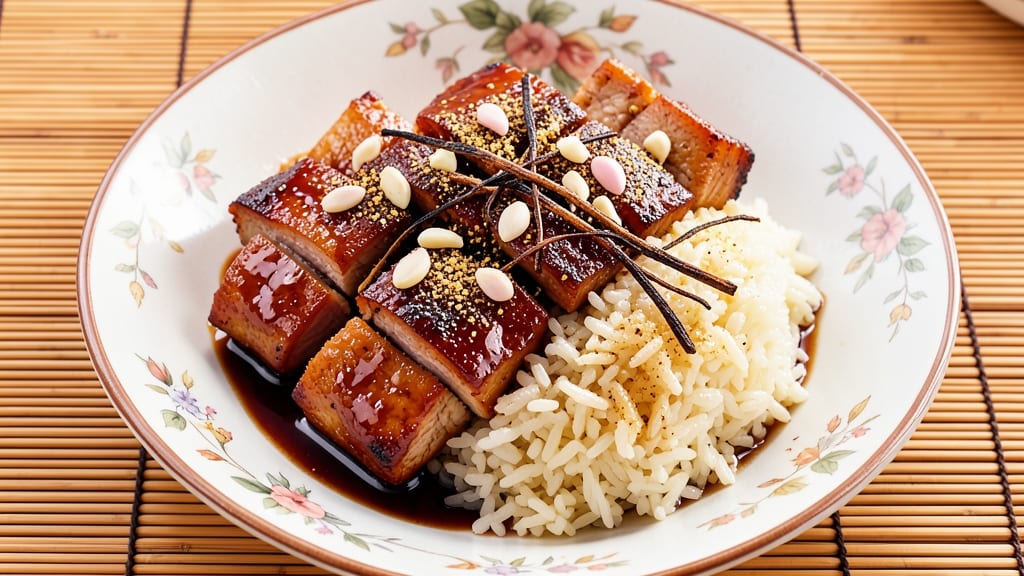
This Chinese sticky rice with pork recipe brings together two beloved elements of Cantonese cuisine: tender, caramelized pork bites and fragrant, slightly chewy jasmine rice.
The secret lies in slow-braising the pork until it's melt-in-your-mouth tender while developing deep, savory-sweet flavors from soy sauce, five-spice powder, and a touch of brown sugar.
The dish begins with pork shoulder cut into bite-sized pieces, marinated and then braised until the meat falls apart easily. Meanwhile, glutinous jasmine rice steams to perfect tenderness, absorbing just enough of the rich pork braising liquid to become fragrant without becoming soggy.
This balance creates the signature texture contrast that makes the dish so satisfying.
What you'll end up with is a complete meal where each bite delivers tender pork with sticky, caramelized edges and every grain of rice infused with porky aroma.
The dish is traditionally served with pickled vegetables or a simple cucumber salad to cut through the richness, but modern versions often include steamed greens or a drizzle of chili oil for added complexity.
The beauty of this recipe is its versatility—it can be prepared ahead of time and tastes even better the next day as flavors meld. Whether you're serving it for a family dinner or a special occasion, this dish delivers restaurant-quality results with homemade authenticity. Let's get started with the preparation.
Ingredients for chinese sticky rice with pork
Pork shoulder and jasmine rice form the heart of this dish, balanced by aromatic spices and sweet-savory braising.
| Ingredient | Amount | Notes |
|---|---|---|
| Pork Shoulder 🐖 | 1 ½ lb | Cut into 1-inch cubes |
| Jasmine Rice 🍚 | 1 ½ cups | Uncooked, long-grain preferred |
| Soy Sauce 🍶 | ½ cup | Light or dark variety |
| Brown Sugar 🍯 | ¼ cup | Packed firmly |
| Five-Spice Powder 🌶️ | 1 tbsp | Authentic Chinese blend |
| Garlic Cloves 🧄 | 6 cloves | Minced finely |
| Fresh Ginger 🌿 | 1 tbsp | Grated finely |
| Green Onions 🧅 | 4 whole | White and green parts separated |
| Sesame Oil 🫒 | 1 tbsp | Toasted sesame oil preferred |
| Vegetable Oil 🫒 | 2 tbsp | High smoke point |
| Water 💧 | 2 ½ cups | Room temperature |
| Salt 🧂 | 1 tsp | Kosher or sea salt |
| Black Pepper 🌶️ | ½ tsp | Freshly ground |
| Hoisin Sauce 🍶 | 1 tbsp | Optional for depth |
The pork shoulder is the star—look for well-marbled cuts at Costco or your local butcher. A 1.5 lb piece gives you plenty of tender bites. Cutting it into even 1-inch cubes ensures consistent cooking. For five-spice powder, Penzeys or Asian markets carry authentic blends. Jasmine rice should be long-grain and labeled 'fragrant'—Thai Kitchen or Lotus Foods brands work well. The brown sugar should be packed firmly to avoid measuring errors.
No five-spice powder? Mix 1/2 tsp each of cinnamon, cloves, fennel, star anise, and black pepper for a DIY version. Substitute hoisin sauce with an extra 1 tbsp soy sauce plus 1 tsp sesame paste. Fresh ginger can be swapped for 1/2 tsp ground ginger, though fresh adds better aroma. Green onions can be replaced with 1 tbsp chopped scallions if needed. For sesame oil, Kadoya or La Choy brands are widely available and affordable.
Pork cubes can be prepped ahead and refrigerated for 1 day or frozen for 3 months. Cooked pork stays delicious for 3-4 days in the fridge, while rice reheats best when kept separate. To serve, combine equal parts rice and pork, drizzle with sesame oil, and garnish with green onions. The dish tastes even better the next day as flavors meld—double the batch for leftovers.
Why You'll Love This Recipe
- I’ll be real: this makes amazing leftovers. Pack the rice and pork in containers, and it’s a weeknight win—no reheating dry rice here. Even my picky son grabs it for school lunches (though he always "forgets" to bring it back).
- One-Pot Magic: Between us, this dish is ridiculously hands-off. You toss the pork shoulder with soy, sugar, and five-spice, let it slow-cook while you prep the rice—no flipping, no fuss. The rice gets sticky just from steaming in the same pot? That’s my kind of lazy genius.
- Sweet-Savory Crunch: Honestly, the pork shoulder becomes dangerously tender with that caramelized crust, while the rice soaks up just enough soy and sugar to be addictive. The five-spice powder? It’s like a warm hug in every bite—earthy, slightly sweet, with a crackle you’ll crave.
- Lunchbox Hero: I’ll be real: this makes amazing leftovers. Pack the rice and pork in containers, and it’s a weeknight win—no reheating dry rice here. Even my picky son grabs it for school lunches (though he always "forgets" to bring it back).
Step-by-step instructions for Chinese sticky rice with pork
This method delivers perfectly caramelized pork bites and fragrant, tender jasmine rice every time.
Prepare the Pork and Seasoning
Cut the 1.5 lb pork shoulder into 1-inch cubes and place them in a large bowl. In a separate small bowl, combine 0.5 cup soy sauce, 0.25 cup brown sugar, 1 tbsp five-spice powder, 0.5 tsp black pepper, 6 cloves minced garlic, and 1 tbsp grated fresh ginger. Pour this marinade over the pork and toss gently to coat evenly.
Cover the bowl and refrigerate for at least 30 minutes (or up to 2 hours for deeper flavor). This resting time allows the pork to absorb the marinade fully, ensuring tender, flavorful bites. If you're short on time, proceed after 15 minutes, but the longer marinade yields better results.
Cook the Pork Until Caramelized
Heat 2 tbsp vegetable oil in a large skillet over medium-high heat. Add the marinated pork in a single layer, leaving space between each piece. Cook undisturbed for 4-5 minutes until the pork develops a deep golden-brown crust on the bottom. This crust is crucial—it traps moisture and adds depth of flavor.
Once the bottoms are browned, stir the pork gently and continue cooking for another 3-4 minutes. The pork should be 80% cooked through at this stage—it will finish cooking later. Remove the pork from the skillet and set it aside on a plate, leaving the rendered fat in the pan.
Prepare and Cook the Jasmine Rice
Rinse the 1.5 cups jasmine rice under cold water until the water runs clear, then drain well. In the same skillet (with the pork fat still in it), add the rice and stir to coat it evenly in the fat. This step enhances the rice's natural aroma and prevents sticking.
Pour in 2.5 cups room-temperature water, then add 1 tsp salt. Bring to a boil over high heat, then immediately reduce the heat to low. Cover the skillet tightly with a lid and let the rice simmer for 15 minutes. Avoid peeking or stirring—this disrupts the cooking process and can lead to uneven texture.
Finish the Pork and Combine
Return the pork to the skillet with the rice and stir gently to combine. Add 1 tbsp hoisin sauce and 1 tbsp toasted sesame oil, then cover and cook for another 5 minutes on low heat. This allows the pork to finish cooking while absorbing the remaining flavors.
Remove the skillet from heat and let it sit covered for 5 minutes. This resting period ensures the rice steams evenly and the pork juices redistribute, preventing dryness. Fluff the rice gently with a fork, then transfer it to a serving dish.
Garnish and Serve
Slice the 4 whole green onions into ¼-inch rings and scatter them over the rice. Drizzle with any remaining sesame oil from the skillet and serve immediately. The rice should be tender with a slight stickiness, and the pork should be caramelized outside with juicy, flavorful meat inside.
For best results, serve this dish while warm, as the flavors meld together beautifully. Pair it with a simple cucumber salad or steamed greens to balance the richness.
Pro Tips For Making Chinese Sticky Rice With Pork
- CRISP THE PORK FIRST: I learned this the hard way—skipping the initial sear means your pork ends up greasy and underflavored. Cut the shoulder into 1-inch chunks, pat them dry, then hit a screaming-hot wok with 1 tablespoon oil per side for 2-3 minutes until golden. That crust locks in juices and builds the foundation for the five-spice later.
- SOAK THE RICE IN SALTED WATER: Jasmine rice needs a head start to avoid gummy sticky rice. Rinse it once, then soak in cold water with a pinch of salt (½ teaspoon per cup) for 20 minutes. Drain well—this prevents the rice from turning mushy when you steam it later with the pork’s rendered fat.
- LOWER THE HEAT FOR STEAMING: After browning the pork and adding the rice, don’t blast it on high. Reduce to medium-low and let it cook uncovered for the first 5 minutes—this lets the alcohol in the soy sauce evaporate without burning. Cover only when you see the rice bubbling, then switch to low for 20 minutes.
- USE DOUBLE THE FAT: The recipe might call for 1 tablespoon oil, but trust me: add another. The pork renders fat, but you need extra to crisp the edges of the rice and create that signature caramelized crust. After browning the pork, add 2 tablespoons total—enough to coat the bottom when you stir in the rice.
Flavor customization for this recipe
Sweet-Savory Balance
Adjust the sweetness by tweaking the brown sugar—reduce to 2 tbsp for less sweetness or increase to ¼ cup for deeper caramelization. For a tangy twist, add 1 tbsp rice vinegar to the marinade.
I find 1 tsp extra soy sauce enhances umami without overpowering the pork's natural flavor. 🍯
Spice Level Control
For mild heat, skip the five-spice powder and use ½ tsp cinnamon instead. Craving spice? Add ½ tsp chili flakes or 1 tsp gochujang to the marinade. Fresh Sichuan peppercorns (½ tsp) add a tingling kick—lightly toast them first for extra aroma. 🌶️
Umami Boosters
Swap hoisin sauce for 1 tbsp oyster sauce or 1 tsp fish sauce to deepen savory notes. A splash of 1 tbsp coconut aminos (½ tsp) adds a subtle nutty depth.
For a vegetarian-friendly version, replace pork with mushroom stems (2 cups) and use 1 tbsp miso paste in the marinade. 🍄
Regional Twists
Cantonese Style: Use light soy sauce and less sugar (2 tbsp) for a more delicate flavor. Hainanese Version: Add ½ tsp star anise to the marinade and serve with pickled mustard greens. For a Sichuan-inspired take, include 1 tsp doubanjiang (chili bean paste) in the rice cooking liquid. 🗺️
Texture Variations
For extra crispy pork, broil for 2-3 minutes after the final cooking step. Prefer softer rice? Increase water to 2¾ cups and simmer for 18 minutes.
To make it sticky like mochi, use ½ cup glutinous rice mixed with 1 cup jasmine rice—steam for 20 minutes. 💫
Modern Upgrades
Add ½ cup pineapple chunks to the marinade for a tropical twist—they caramelize beautifully. For a cheesy version, sprinkle ¼ cup shredded mozzarella on top during the final 5 minutes of cooking. A drizzle of sriracha honey (1 tbsp) adds a sweet-spicy finish perfect for sharing. 🍍
Nutrition facts
Frequently asked questions
Can I use regular rice instead of jasmine rice for this dish?
Jasmine rice is ideal because its natural fragrance and slightly sticky texture complement the pork beautifully. However, you can substitute with long-grain white rice if needed—just increase the water by ¼ cup and simmer for 20 minutes instead of 15. The flavor will be similar, but the aroma won't be as pronounced.
How do I prevent the pork from drying out during cooking?
The key is to cook the pork in two stages: first searing for crust, then finishing gently with the rice. Avoid overcrowding the pan when browning—cook in two batches if needed. Also, cover the skillet during the final 5-minute cook to trap moisture.
What's the best way to make this dish ahead of time?
Prepare the pork completely and refrigerate it for up to 3 days or freeze for 3 months. The rice should be cooked fresh, but you can steam it ahead and reheat with a splash of water. Rewarm everything together in the skillet over low heat for 5-10 minutes, adding a little water if needed.
Can I make this recipe without five-spice powder?
Create your own blend with ½ tsp each of cinnamon, cloves, fennel seeds, and black pepper, plus a pinch of star anise. For a simpler version, just use 1 tsp cinnamon—it'll still taste delicious, though less complex. The dish won't lose its signature sweet-savory balance.
What's the secret to perfectly sticky rice?
The magic happens with the pork fat in the pan and proper water ratio. Use 2.5 cups water for 1.5 cups rice, and don't stir while cooking. The rice should absorb all the water in 15 minutes—if not, add 2 tbsp more water and cook another 5 minutes.