
Salads
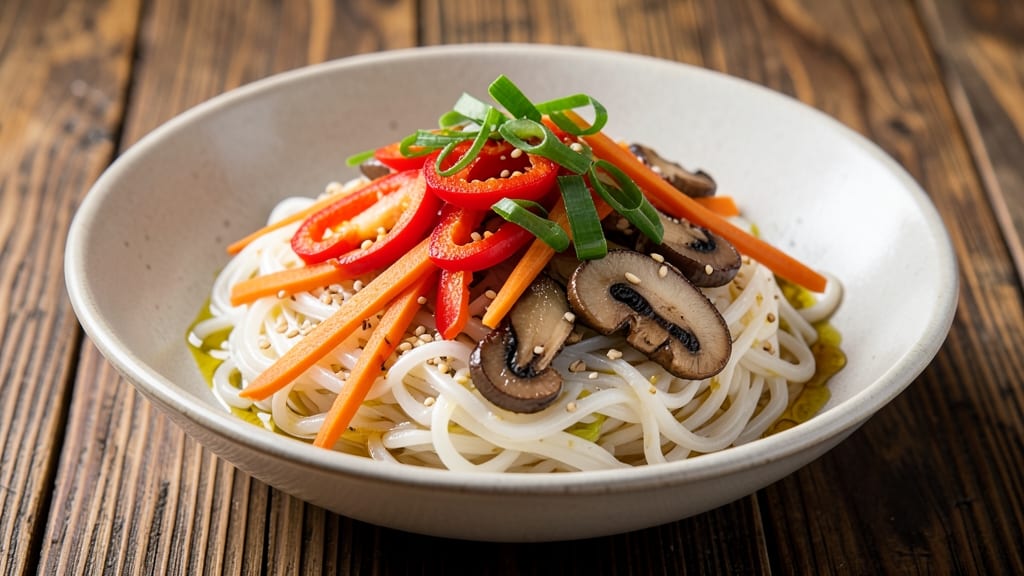
This Chinese rice noodles with vegetables recipe delivers restaurant-quality freshness in just 20 minutes—no takeout needed. The secret lies in perfectly cooked rice noodles tossed with vibrant vegetables and a bright, savory sauce that balances umami and freshness.
I developed this dish to capture the simplicity of street-style Chinese noodle bowls while keeping it adaptable for any taste preference.
With a wok-tossed technique, the noodles stay tender yet firm, while the vegetables retain their crispness. The sauce—made with soy sauce, rice vinegar, sesame oil, and a touch of chili—adds depth without overpowering.
Whether you prefer it light and fresh or rich and aromatic, this dish adapts effortlessly to your cravings while keeping prep simple and results impressive.
Ingredients for chinese rice noodles with vegetables
Fresh vegetables and aromatic sauces transform simple rice noodles into restaurant-style freshness.
| Ingredient | Amount | Notes |
|---|---|---|
| Rice Noodles 🍜 | 8 oz | Flat, medium-width preferred |
| Fresh Bell Peppers 🌶️ | 2 whole | Red or green, sliced thin |
| Baby Carrots 🥕 | 12 whole | Julienned or thinly sliced |
| Shiitake Mushrooms 🍄 | 8 whole | Stems removed, sliced thin |
| Green Onions 🧅 | 4 whole | White and green parts separated |
| Sesame Oil 🫒 | 1 tbsp | Toasted for aroma |
| Rice Vinegar 💧 | 3 tbsp | Seasoned preferred |
| Low-Sodium Soy Sauce 🍶 | 2 tbsp | Kikkoman preferred |
| Chili Garlic Sauce 🌶️ | 1 tbsp | Adjust for heat preference |
| Toasted Sesame Seeds 🌰 | 1 tbsp | For garnish |
| Vegetable Oil 🫒 | 2 tbsp | High smoke point |
| Garlic Cloves 🧄 | 4 cloves | Minced for aromatics |
| Fresh Ginger 🌿 | 1 inch | Peeled, julienned |
| Lime Juice 🍋 | 1 tbsp | Freshly squeezed |
| Salt 🧂 | ½ tsp | Diamond Crystal preferred |
The rice noodles are the foundation—rice noodles from Asian markets or the international aisle stay chewier than supermarket brands. Look for medium-width (about 0.125 inches) and soak them in warm water for exactly 10 minutes before draining. The bell peppers and carrots should be vibrant, not limp. Trader Joe's has great pre-sliced veggies if you're short on time, but fresh julienned carrots add that authentic crunch. For mushrooms, shiitake is ideal—their meaty texture holds up to wok-tossing. If you can't find them, cremini mushrooms work in a pinch.
No sesame oil? Toasted peanut oil gives a similar nutty depth, though sesame's aroma is unmatched. Short on chili garlic sauce? Mix 1 tbsp sriracha with 1 tsp honey (or agave for vegan) and 1 tsp minced garlic. The rice vinegar should be seasoned—plain vinegar tastes harsh. For extra umami, swap half the soy sauce for vegetable bouillon powder dissolved in 1 tbsp hot water. Fresh ginger is non-negotiable here—it brightens the dish. If you've got dried, use half the amount and double the garlic for punch.
Prep all veggies first—they cook fast in a wok. Store unused noodles in a sealed container with a damp paper towel for 3-4 days. The sauce keeps for 5 days in the fridge, but the noodles soften over time. For leftovers, reheat with a splash of water to revive texture. Freeze cooked noodles for up to 2 months—just add extra sauce when reheating. The dish tastes even better the next day as flavors meld.
Why You'll Love This Recipe
- No-Soaking Needed: I swear by this trick—just boil the rice noodles for 2 minutes, then toss them straight into the pan with the veggies. They soften perfectly while everything else cooks, and honestly? It cuts my prep time in half.
- Umami Bomb Combo: Those shiitake mushrooms and green onions? Absolute magic. The mushrooms add this deep, earthy richness while the onions bring a fresh finish—like a little flavor party in every bite.
- Lunchbox Hero: Between us, this is my go-to for meal prep. Pack the noodles cold or reheated, and they hold up like a champ. My kids actually eat their veggies when they’re hidden in these noodles (shhh, don’t tell them it’s healthy).
- Budget-Friendly Crunch: Bell peppers and carrots stretch so far, and shiitake mushrooms—even dried—add serious flavor without breaking the bank. I’ve made this for four people for under $10, and it’s still crave-worthy.
Step-by-step instructions for wok-tossed rice noodles
Ready to transform simple vegetables into a vibrant, restaurant-quality dish in minutes?
Prepare the Vegetables for Perfect Texture
Start by slicing the 2 whole fresh bell peppers into thin strips—about ¼-inch thick—so they cook quickly and retain their crispness. For the 12 whole baby carrots, julienne them into matchstick-sized pieces or slice them thinly on the diagonal for even cooking. Remove the stems from the 8 whole shiitake mushrooms and slice them into ¼-inch thick pieces, keeping them uniform for consistent doneness.
Separate the 4 whole green onions into white and green parts. The whites will cook in the wok for flavor, while the greens will be reserved for garnish. Peel the 1-inch fresh ginger and julienne it into fine matchsticks—this will infuse the dish with bright, zesty flavor. Minced garlic is fine, but julienned ginger gives a more aromatic release when cooked. Keep all prepped vegetables in separate piles to assemble efficiently.
Cook the Vegetables in Stages for Maximum Flavor
Heat a wok or large skillet over high heat until it’s smoking hot. Add the 2 tablespoons vegetable oil and swirl to coat the surface. Add the 12 julienned baby carrots first—they take the longest to cook—and stir-fry for 2 minutes until they begin to soften but still retain a slight crunch. Remove them to a plate and set aside.
In the same wok, add the 8 sliced shiitake mushrooms and stir-fry for 3 minutes until they release their moisture and turn golden brown. Add the 2 sliced bell peppers and cook for another 2 minutes until they soften slightly but still hold their shape. Finally, add the 1-inch julienned ginger and 4 minced garlic cloves, stirring for 30 seconds until fragrant. The mushrooms and peppers should be tender-crisp at this stage—if they’re too soft, they’ll turn mushy in the final toss.
Cook the Rice Noodles Al Dente
While the vegetables cook, bring a large pot of water to a boil. Add the 8 oz rice noodles and cook for 1 minute less than the package instructions—rice noodles continue cooking when tossed with hot vegetables. Drain immediately in a colander and rinse briefly under cold water to stop the cooking process. Shake off excess water and toss the noodles with 1 tablespoon sesame oil to prevent sticking.
Here’s the thing—rice noodles cook faster than you think, and overcooking turns them mushy. The 1-minute less rule ensures they’re al dente when tossed with the hot vegetables. If they’re still slightly firm, they’ll soften perfectly in the wok without turning to paste.
Combine Everything for the Perfect Sauce
Return the cooked vegetables to the wok and add the drained rice noodles. Pour in the 2 tablespoons low-sodium soy sauce, 3 tablespoons rice vinegar, 1 tablespoon chili garlic sauce, and 1 tablespoon lime juice. Toss everything vigorously with tongs for 1-2 minutes until the noodles are fully coated and heated through. The sauce should cling to the noodles and vegetables, creating a glossy, flavorful finish.
Taste and adjust seasoning—add a pinch of ½ teaspoon salt if needed, or more chili garlic sauce for heat. The dish should balance tangy, umami, and slightly spicy notes. If the sauce seems too thin, toss in another ½ tablespoon rice vinegar to emulsify it. The goal is a silky, cohesive texture that coats every bite.
Serve Immediately with Fresh Garnishes
Transfer the wok-tossed noodles to serving plates and garnish with the reserved green onion tops and 1 tablespoon toasted sesame seeds. The contrast of fresh green onions and nutty sesame seeds adds a final layer of texture and visual appeal. Serve while steaming hot—this dish is best enjoyed immediately, when the noodles are tender and the vegetables are still crisp-tender.
For extra flair, drizzle a few drops of sesame oil over the top just before serving. The aroma alone will make it irresistible. Pair with a cold beer or iced tea to balance the dish’s bright, zesty flavors. Leftovers? Toss with a splash of water and reheat quickly over high heat to restore texture.
Pro Tips For Making Chinese Rice Noodles With Vegetables
- STIR-FRY IN BATCHES: Don’t dump all your veggies in at once—bell peppers first (they need the most time), then carrots and mushrooms, finishing with green onions at the end. I learned this the hard way when my mushrooms turned into sad, overcooked mush while the peppers stayed crunchless. Work in 30-second bursts, clearing the pan between additions if needed.
- SOAK NOODLES UNTIL AL DENTE: Rice noodles go mushy fast, but don’t oversoak—aim for 8-10 minutes in room-temperature water until they’re pliable but still hold shape. Drain immediately and rinse with cold water to stop cooking; then toss with a drizzle of oil so they don’t stick. (Yes, even if you’re impatient like me.)
- SLICE MUSHROOMS THINLY: Shiitake mushrooms should be paper-thin—no thicker than 1/8 inch—or they’ll turn to rubber. Use a sharp knife and slice against the grain for even cooking. Skip the stems unless you’re making broth; they’re tougher and less flavorful. (I used to waste them until my grandmother showed me how to trim them cleanly.)
- USE HIGH HEAT FROM DAY ONE: Your wok or pan needs to be smoking hot before oil goes in—no lukewarm starts. If it’s not sizzling when you add the first veggies, you’re already losing flavor. Crank the heat to max and let it rip; this seals in juices and gives those peppers that perfect char. (Sounds weird, but it works: your future self will thank you.)
Wine and beer pairings for this recipe
Light & Refreshing Wines
For this vibrant, vegetable-forward dish, I reach for crisp Sauvignon Blanc—its bright acidity and citrus notes cut through the noodles' richness while complementing the ginger and lime.
A New Zealand Sauvignon Blanc like Oyster Bay or a French Loire Valley example from Savennières adds herbal complexity that mirrors the dish's fresh herbs. Serve slightly chilled (45-50°F) to enhance its refreshing qualities. 🍷
Creamy & Aromatic Options
If you prefer a silkier texture, try a Chardonnay with subtle oak—think California or Australian styles like Kim Crawford. The buttery notes soften the dish's sharpness, while the acidity keeps it balanced.
Avoid heavy, oaky Chardonnays that might overpower the delicate flavors. A 30-minute decant at room temperature brings out its best qualities.
Session Beers for Balance
For beer lovers, a crisp lager like Peroni or Asahi Super Dry cleanses the palate between bites. The light carbonation and mild hop bitterness (18-25 IBU) prevent the dish from feeling too heavy.
Alternatively, a Belgian Witbier such as Hoegaarden adds a spicy, citrusy contrast that pairs beautifully with the chili garlic sauce. Serve both at 45°F for optimal refreshment. 🍺
Spicy Pairing Boosters
If you cranked up the heat with extra chili garlic sauce, balance it with a dry Riesling from Germany or Australia. The wine's natural sweetness and high acidity tame the spice without clashing.
For a non-alcoholic option, sparkling yuzu soda (like Yuzu Sparkling Yuzu) mirrors the dish's zesty brightness while adding effervescence.
Pro Serving Tips
Always serve wine or beer slightly chilled—45-50°F for whites and lagers, 50-55°F for reds if you're feeling adventurous. Use stemless glasses for casual meals to avoid spills with the noodles.
For a restaurant-style touch, garnish your drink with a lime wheel or edible flower to match the dish's fresh presentation. 💫
Nutrition facts
Frequently asked questions
Can I use dried rice noodles instead of fresh?
This recipe is designed for dried rice noodles—they're what you'll find in most Asian markets. Just soak them in warm water for exactly 10 minutes before draining and tossing. Never boil them like pasta; they cook too fast and turn mushy. For extra insurance, soak them in cold water for 5 minutes after the initial soak to stop the cooking process completely.
How do I adjust the spice level for sensitive eaters?
Start by reducing the chili garlic sauce to just ½ tablespoon or omit it entirely. For mild heat, add ½ teaspoon grated ginger instead—it provides warmth without spice. If you want subtle heat later, serve the dish with a side of mild sriracha or chopped cilantro for garnish. The lime juice already adds bright acidity that balances flavors beautifully.
What if I don't have a wok? Can I use a regular pan?
Yes, any large skillet or frying pan with high sides works perfectly! The key is using high heat and stirring constantly to mimic the wok's quick cooking. A non-stick pan helps prevent sticking, especially when tossing the noodles. If your pan isn't wide enough, cook the vegetables in batches and combine them with the noodles at the end. The texture won't be identical, but it'll still taste delicious.
Can I make this dish ahead of time?
While the noodles are best served fresh, you can prep components ahead: Cook and cool the vegetables (they'll keep 2 days in the fridge), and make the sauce separately. Store both in airtight containers. When ready to serve, reheat the veggies in a dry pan for 2 minutes, then toss with freshly cooked noodles and warmed sauce. The flavors actually meld better after resting overnight!
What vegetables can I substitute if I'm missing ingredients?
This dish is incredibly flexible! Swap bell peppers for zucchini or snap peas, carrots for bok choy or baby spinach (add at the end), and mushrooms for water chestnuts or bamboo shoots. For extra protein, add tofu or edamame—just cook them separately first. The key is keeping vegetables that hold their texture when stir-fried.