
Main Courses
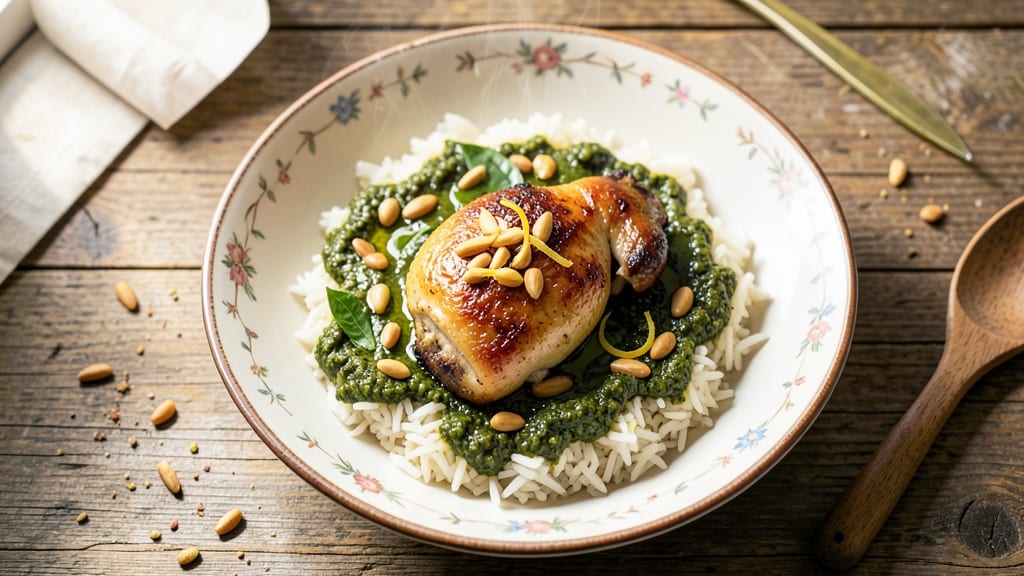
This chicken pesto rice recipe transforms a simple weeknight dinner into a restaurant-worthy meal with just one pan and 25 minutes of active time. The secret lies in blending fresh basil pesto directly into the rice while cooking, infusing every grain with vibrant herbaceous flavor.
No separate sauce needed—just tender chicken, aromatic rice, and a bright, herby finish that comes together effortlessly.
The beauty of this dish is its simplicity: juicy chicken thighs (or breasts) sear in the same pan where the rice cooks, creating a flavorful crust while the pesto-infused rice absorbs all those delicious juices.
The result is a harmonious blend of textures—tender chicken, fluffy rice, and a bright, herby finish that makes every bite feel special. Perfect for busy weeknights when you still want a meal that feels like a celebration.
Ingredients for chicken pesto rice
Fresh basil, toasted nuts, and tender chicken come together in one pan for vibrant, restaurant-style flavor.
| Ingredient | Amount | Notes |
|---|---|---|
| Boneless, Skinless Chicken Thighs 🍗 | 1 ½ lb | Cut into 1-inch pieces |
| Long-Grain White Rice 🌾 | 1 cup | Uncooked, jasmine or basmati preferred |
| Fresh Basil Leaves 🌿 | 1 ½ cups | Packed, stems removed |
| Pine Nuts 🥜 | ½ cup | Toasted for richness |
| Garlic Cloves 🧄 | 4 cloves | Peeled and roughly chopped |
| Extra-Virgin Olive Oil 🫒 | ½ cup | High-quality, fruity |
| Parmesan Cheese 🧀 | ½ cup | Freshly grated, from block |
| Lemon Juice 🍋 | 2 tbsp | Freshly squeezed |
| Chicken Broth 💧 | 1 ½ cups | Low-sodium preferred |
| Salt 🧂 | 1 tsp | Diamond Crystal kosher salt |
| Black Pepper 🌶️ | ½ tsp | Freshly ground |
| Red Bell Pepper 🍅 | 1 whole | Diced, any color |
| Red Onion 🧅 | 1 whole | Diced, medium size |
| Freshly Grated Nutritional Yeast 🧀 | 2 tbsp | For extra cheesy depth |
The basil is everything here—Trader Joe's or local farmers markets have the freshest, brightest leaves. I always grab extra because half goes into the pesto and half gets torn over the top at the end. Pine nuts are pricey, but Costco's bulk bag makes it worth it for occasional use. For the chicken, thighs stay juicier than breasts (trust me on this), but breasts work if that's what you've got. The Parmesan needs to be freshly grated—pre-grated tastes like sawdust in comparison. Look for Parmigiano-Reggiano if you want to splurge.
No pine nuts? Walnuts or cashews work perfectly—they just add a different texture. Fresh basil wilt fast? Dried basil at half the amount gets you close, though it won't be as vibrant. The chicken broth can be subbed with vegetable broth plus 1 tsp soy sauce for umami. Red bell pepper too mild? Swap for jalapeño or serrano for heat. And if you're out of nutritional yeast, extra Parmesan gives that same cheesy punch. The rice? Any long-grain works, but jasmine or basmati absorbs flavors best.
This dish reheats beautifully—honestly tastes better the next day as flavors meld. Store leftovers in an airtight container for up to 4 days in the fridge. For freezing, portion into single servings and it keeps for 3 months. The pesto-infused rice dries out fast when reheated, so add a splash of water or broth when warming. Double the recipe if you're feeding a crowd—it's that good.
Why You'll Love This Recipe
- One-Pan Magic: I swear by this recipe when I don’t want to scrub pots—just brown the chicken thighs in a skillet, toss in the rice and broth, then simmer. The garlic and basil steam right into the rice, so you get that rich pesto flavor without extra steps.
- Pesto Perfection: That homemade basil-pine nut pesto (even if you cheat with a jar) transforms simple rice into something luxurious. The nutty crunch from the pine nuts and the bright garlic-basil punch make every bite feel like a little Italian vacation.
- Lunchbox Hero: Between us, this is my go-to for meal prep. The rice holds up for days, and I just portion the chicken separately—no soggy dreams here. Toss it cold with a squeeze of lemon for a picnic, or reheat it for a quick office lunch that’ll have coworkers asking for seconds.
- Budget-Friendly Feast: Chicken thighs stretch further than breasts, and long-grain rice is a pantry staple. Fresh basil and garlic bulk up the flavor without breaking the bank, and the leftovers? Even better the next day when the pesto flavors meld into the rice. Honestly, it’s the kind of dish that makes grocery day feel like a win.
Step-by-step instructions for chicken pesto rice
This one-pan wonder comes together faster than you can say "pesto." Here's how to nail it every time.
Toast the Pine Nuts and Prep the Chicken
Start by toasting the 0.5 cup pine nuts in a dry skillet over medium heat for 3-4 minutes until they turn a rich golden brown and smell nutty. Watch them closely—they burn fast! Transfer them to a small bowl and set aside to cool slightly.
While they toast, cut the 1.5 lb boneless, skinless chicken thighs into 1-inch pieces. Season them generously with 1 tsp salt and 0.5 tsp black pepper, making sure each piece gets equal coverage. This seasoning step is crucial—it ensures every bite packs flavor.
Build the Pesto Base
In a food processor, combine the 1.5 cups fresh basil leaves, 4 cloves garlic, 0.5 cup extra-virgin olive oil, 0.5 cup parmesan cheese, and the toasted pine nuts. Pulse until you get a thick, vibrant green paste—about 30 seconds. Taste and adjust seasoning with more salt if needed.
Here's the thing—this is your flavor foundation. The basil should be bright, the garlic mellow but present, and the pine nuts should add a subtle crunch. If your pesto tastes too strong, add a splash of the 2 tbsp lemon juice to balance it. Set the pesto aside for now.
Sauté the Aromatics and Cook the Rice
In a large skillet with a tight-fitting lid, heat 1 tablespoon of the olive oil over medium heat. Add the diced red onion and diced red bell pepper, cooking for 5 minutes until they soften and become fragrant. You want them to release their natural sweetness without browning.
Add the 1 cup long-grain white rice and stir to coat it in the oil and aromatics. Pour in the 1.5 cups chicken broth and bring to a gentle simmer. This is where the magic starts—the rice will absorb the broth as it cooks, creating a flavorful base.
Cook the Chicken and Finish the Dish
Push the rice mixture to one side of the skillet and add the seasoned chicken pieces. Cook them for 5-6 minutes until they're no longer pink in the center. You want the chicken to develop a light golden crust—this ensures it stays juicy inside.
Once the chicken is cooked, stir it back into the rice mixture. Add the prepared pesto and the 2 tbsp freshly grated nutritional yeast, folding everything together gently. The nutritional yeast adds a cheesy depth that ties the dish together beautifully. Cover the skillet and reduce the heat to low, letting it simmer for 10 minutes.
Rest and Serve
Remove the skillet from heat and let the dish rest, covered, for 5 minutes. This resting period allows the flavors to meld and the rice to finish absorbing any remaining liquid. You'll notice the dish becomes even more aromatic as it rests—this is your cue that it's ready.
Fluff the rice gently with a fork and taste for seasoning. If it needs more brightness, add a splash of the lemon juice. Serve immediately, garnished with extra fresh basil leaves if you're feeling fancy. Each bite should deliver a perfect balance of herby pesto, tender chicken, and fluffy rice—all in one delicious, one-pan dish.
Pro Tips For Making Chicken Pesto Rice
- Sear Thighs First: Hit the chicken thighs with a screaming-hot pan—no oil needed, just let the natural fats render. I learned this the hard way: skipping the sear means bland, rubbery chicken that’ll fight you every bite, especially when mixed with pesto’s bright flavors.
- Toast Pine Nuts Fast: Keep a lid handy and toast those pine nuts low and slow—they burn faster than you’d think. I’ve ruined batches by walking away, so watch them like a hawk. A minute max, just until they’re fragrant and golden, or you’ll end up with bitter crunch.
- Don’t Overcook the Rice: White rice turns to glue if you stare at it too long. Once it’s absorbed the liquid, turn off the heat and let it sit covered—steam does the rest. I used to check it every 30 seconds, and now I just set a timer and walk away.
- Pulse Basil Gently: A food processor is fine, but don’t turn it into pesto soup—just quick pulses until it’s chunky, not paste. Fresh basil loses its pop when over-blended, and you want those bright flecks in every bite. I was skeptical until I tried it—now I never go back.
Common mistakes when making perfect results
Overcooking the Chicken
Chicken thighs are forgiving, but breasts can turn rubbery if cooked too long. I’ve ruined this dish by letting chicken sit in the pan past 5-6 minutes—once it’s no longer pink, it’s done.
Use a meat thermometer to check for 165°F internal temperature if you’re unsure. Overcooked chicken will dry out the entire dish, making the pesto-infused rice taste bland by comparison. 🍗
Skipping the Resting Step
This is a game-changer: letting the dish rest for 5 minutes after cooking lets the rice finish absorbing liquid and flavors meld. I used to skip this, and the rice always came out dry or the chicken too juicy.
The resting time also helps the pesto distribute evenly throughout the rice—without it, you’ll get pockets of raw pesto flavor. Trust me, five minutes makes all the difference. ⏳
Using Low-Quality Ingredients
Fresh basil and high-quality olive oil are non-negotiable. I once used dried basil and store-brand olive oil, and the pesto tasted flat. For the basil, Trader Joe’s or local farmers markets have the brightest leaves.
The olive oil should be extra-virgin—cheap oil makes the pesto taste bitter. And that Parmesan? Freshly grated Parmigiano-Reggiano is worth the splurge for that nutty depth. 🧀
Not Toasting the Pine Nuts
Toasted pine nuts add richness and prevent a bitter aftertaste. I’ve made this mistake—using raw nuts makes the pesto taste harsh. Toast them in a dry skillet over medium heat for 3-4 minutes until golden.
Watch them like a hawk—they burn fast! If you’re out of pine nuts, walnuts or cashews work, but toast them too for the same effect. 🥜
Adding Pesto Too Early
Pesto should go in at the very end to preserve its vibrant color and fresh flavor. I once mixed it in with the broth, and it turned into a sad, watery green sludge.
Add it after the chicken is cooked and the rice is almost done—just fold it in gently. The heat will meld the flavors without cooking out the basil’s brightness. 🌿
Ignoring the Broth Ratio
Using too much broth makes the rice mushy, while too little leaves it dry. Stick to 1.5 cups broth for 1 cup rice—this is the golden ratio. If your rice is always sticky or dry, adjust the broth by ¼ cup increments.
And if you’re using vegetable broth, add 1 tsp soy sauce for extra umami depth. The rice should be tender but still have a slight bite. 💧
Nutrition facts
Frequently asked questions
Can I use chicken breasts instead of thighs?
Yes, but chicken breasts require more careful timing to avoid drying out. Cut them into 1-inch pieces and cook for only 4-5 minutes until they reach 165°F internally. Remove them from the pan when done, then finish cooking the rice before adding them back. The thighs' higher fat content keeps this dish juicy and flavorful.
How do I make this dish vegetarian?
Swap the chicken for 1.5 cups of chickpeas (drained and rinsed) or 1 block of extra-firm tofu (pressed and cubed). For extra protein, add 1 cup of white beans or 12 oz of mushrooms (sliced). The pesto-infused rice will still be the star, but these alternatives add satisfying texture.
Can I make this recipe in an Instant Pot?
Sauté the onions, bell peppers, and chicken as directed, then add the rice, broth, and pesto. Seal the lid and cook on high pressure for 8 minutes, followed by a 5-minute natural release. The Instant Pot keeps the rice fluffy and the pesto vibrant. Just avoid adding the pesto until the very end to preserve its freshness.
What sides pair well with this dish?
This herb-packed dish stands alone, but a simple mixed green salad with lemon vinaigrette balances the richness. For extra heartiness, add garlic roasted asparagus or crispy roasted Brussels sprouts. The bright flavors complement the dish without overpowering it.
How do I store leftovers?
Store leftovers in an airtight container in the fridge for up to 4 days. Reheat gently in a skillet with a splash of water or broth to restore moisture. For freezing, portion into single servings and keep for 3 months. The pesto-infused rice reheats best when warmed slowly.