
Main Courses
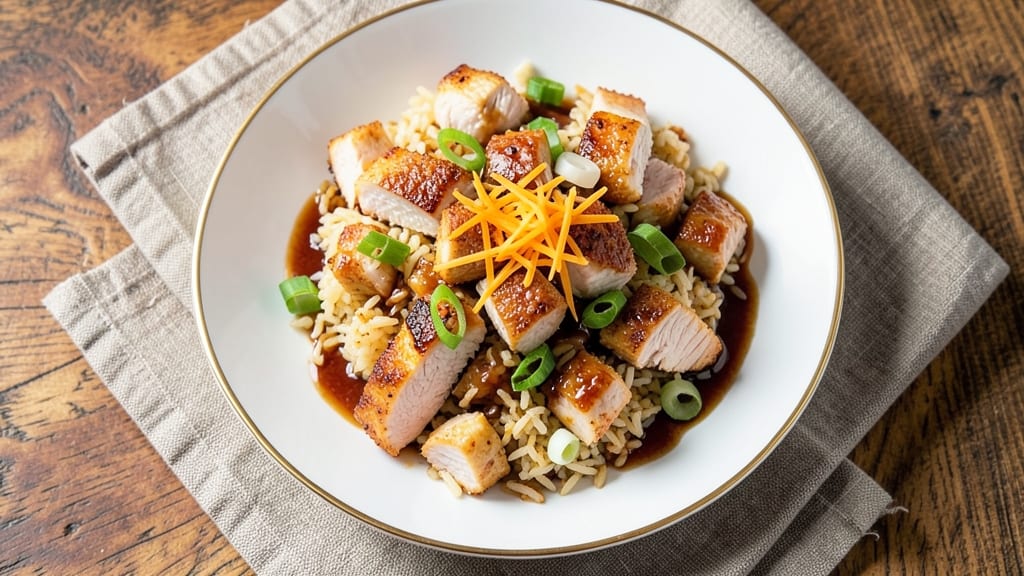
This chicken fried rice recipe with ginger transforms simple ingredients into a fragrant, restaurant-quality dish that dances with bold flavors. The secret lies in fresh ginger—its sharp, zesty kick cuts through the richness of the chicken and eggs, creating harmony in every bite.
I developed this version after years of perfecting the balance between tender chicken, perfectly cooked rice, and that signature ginger aroma that lingers in the air.
What sets this recipe apart is the high-heat stir-fry technique, where chicken sears quickly in a hot wok before joining the rice in a sizzling, aromatic medley.
Fresh ginger is minced finely for maximum flavor infusion, while optional shortcuts like pre-cooked rice or ginger paste keep the process efficient without sacrificing taste. The result? A dish that's both comforting and exciting—ideal for weeknight dinners or meal prep.
By the time you're done, you'll have golden-brown chicken, perfectly textured rice, and a sauce that's bright with ginger's zing and savory with soy. The dish stays vibrant even when reheated, making it perfect for lunches or takeout-style meals.
Garnish with green onions and sesame seeds for freshness and crunch, and you've got a plate that looks as impressive as it tastes.
Whether you're feeding a crowd or meal prepping for the week, this recipe delivers bold, satisfying flavors with minimal effort. The key is timing—keep everything moving in the wok to maintain that signature crisp-tender texture. Let's get cooking!
Ingredients for chicken fried rice recipe with ginger
Fresh ginger and day-old rice are the flavor anchors—simple but transformative ingredients for wok magic.
| Ingredient | Amount | Notes |
|---|---|---|
| Day-Old Cooked White Rice 🍚 | 4 cups | Cold, preferably leftover from 1-2 days ago |
| Boneless Chicken Breast 🍗 | 1 ½ lb | Cut into 1-inch cubes, skinless |
| Fresh Ginger Root 🧄 | 2 tbsp | Finely minced (about 1 oz), peel removed |
| Large Eggs 🥚 | 3 whole | Beaten, room temperature |
| Green Onions 🧅 | ½ cup | Sliced thin, white and green parts separated |
| Low-Sodium Soy Sauce 🥢 | 3 tbsp | Kikkoman preferred for authentic flavor |
| Sesame Oil 🫒 | 1 tbsp | Toasted, for aroma |
| Vegetable Oil 🫒 | 3 tbsp | High smoke point, like avocado oil |
| White Pepper 🌶️ | ¼ tsp | Freshly ground for subtle heat |
| Garlic Cloves 🧄 | 3 cloves | Minced, fresh preferred |
| Toasted Sesame Seeds 🌰 | 1 tbsp | For garnish, store-bought is fine |
| Diamond Crystal Kosher Salt 🧂 | ½ tsp | For seasoning, adjust to taste |
| Cornstarch 🌾 | 1 tbsp | For tenderizing chicken |
The rice is non-negotiable—day-old works best for texture, absorbing flavors without turning mushy. Day-Rice from the freezer section is a game-changer when you're short on time, but freshly cooked rice cooled overnight delivers the signature crispness. For ginger, organic root from the produce section gives the most vibrant flavor. Peel it first, then use a microplane for ultra-fine mincing—this releases the essential oils that make the dish sing. Chicken breast should be pounded to even thickness (about 1/4-inch) for consistent cooking, and cornstarch-coated for that signature crisp-tender texture. I always buy Kikkoman soy sauce for its balanced saltiness, but low-sodium versions work too if you're watching intake.
No fresh ginger? Ginger paste from the Asian aisle is a decent shortcut, though it lacks the bright punch. Swap chicken breast for thighs if you prefer richer flavor, but increase cooking time by 2-3 minutes. For a vegetarian version, replace chicken with extra-firm tofu pressed and cubed. The eggs can be pre-cooked and chopped if you're meal prepping ahead, though freshly beaten eggs yield better texture. Sesame oil should be toasted in the wok first to release its nutty aroma before adding other ingredients. If you're short on green onions, scallions or chives work equally well, though they won't provide the same mild onion bite.
Store prepped chicken and rice separately in airtight containers for up to 3 days—reheat in the wok with a splash of water for crispiness. The dish reheats beautifully, making it ideal for lunches. For longer storage, freeze portions for up to 3 months. I always make a double batch—one for dinner, one for leftovers that somehow taste even better the next day. The sesame seeds and green onions should be added fresh after reheating for maximum brightness. If using pre-cooked rice, spread it on a tray to cool quickly, as clumps will ruin the stir-fry texture.
Why You'll Love This Recipe
- Pantry Rescue Ready: I swear by this when my fridge is half-empty. Day-old rice? Perfect. A lonely chicken breast? No problem. Even if I forget to buy fresh veggies, the ginger and green onions pack enough punch to make it sing.
- Ginger’s Secret Weapon: That fresh ginger—grated right into the oil—adds this bright, zesty kick that turns ordinary fried rice into something special. It’s the kind of flavor that lingers, and honestly? It’s what makes this dish feel like a restaurant meal, not a weeknight scramble.
- Lunchbox Hero: Between us, this is my go-to for packing lunches. The chicken stays tender, the rice doesn’t get soggy, and the eggs add that satisfying bite. My kid brings it back with half gone—no complaints, just empty containers.
- Budget-Friendly Powerhouse: I can feed four people for under $10 with this. Chicken breast stretches, rice is cheap, and ginger lasts forever if you store it right. Plus, leftovers reheat like a dream—no dry, sad rice here.
Step-by-step instructions for chicken fried rice with ginger
Master this wok technique for restaurant-quality fried rice every time.
Tenderize the Chicken with Cornstarch
Cut the 1.5 lb boneless chicken breast into 1-inch cubes and place them in a bowl. Add the 1 tablespoon cornstarch and toss gently to coat each piece evenly. Let it sit for 10 minutes—this creates a delicate crust that locks in moisture and gives the chicken a tender texture.
I always use cornstarch instead of flour for this dish because it creates a lighter, more delicate coating that doesn't make the chicken heavy. The cornstarch also helps the chicken absorb flavors more effectively during cooking. Don't skip this marinating step—it makes a noticeable difference in the final texture.
Prepare the Ginger-Garlic Base
Heat 3 tablespoons vegetable oil in a wok or large skillet over medium-high heat until shimmering. Add the 1.5 lb chicken cubes and cook for 4-5 minutes until golden brown on all sides. Remove the chicken and set aside.
In the same pan, add 3 tablespoons vegetable oil (yes, we're using all of it) and swirl to coat the pan. Add the 3 cloves minced garlic and 2 tablespoons minced fresh ginger root, cooking for 30 seconds until fragrant. This aromatic base is the flavor foundation of the dish—don't rush this step or the flavors won't develop properly.
Scramble the Eggs Perfectly
Push the garlic-ginger mixture to one side of the wok, then add the 3 beaten eggs to the empty space. Let them cook undisturbed for 10 seconds until they begin to set, then gently scramble with a spatula until just set but still slightly runny. Remove the eggs and set aside with the chicken.
The key here is to cook the eggs just until they're barely set. They'll finish cooking when mixed with the rice, creating that signature silky texture. If you overcook them now, they'll turn rubbery. I like to use a heat-safe spatula to gently fold them—this prevents breaking the egg strands too much.
Stir-Fry the Rice with Precision
Add the 4 cups day-old cooked white rice to the wok and break up any clumps with your spatula. Stir-fry for 2-3 minutes until the rice is heated through and begins to sizzle. Add the 3 tablespoons low-sodium soy sauce and 0.5 teaspoon diamond crystal kosher salt, stirring constantly to distribute evenly.
This is where the magic happens. The day-old rice is crucial—it's drier and absorbs flavors better than fresh rice. I use a high-sided wok to contain everything while stirring vigorously. If the rice starts to stick, add a splash of water and keep stirring until it releases. The goal is to create separate grains with crisp edges.
Combine and Finish with Aromatics
Return the chicken and eggs to the wok, along with the 0.5 cup sliced green onions (white parts first, then green). Add the 1 tablespoon sesame oil and 0.25 teaspoon white pepper, tossing everything together for 1-2 minutes until heated through and well combined.
Taste and adjust seasoning if needed—you might want to add a bit more soy sauce for saltiness or a pinch of sugar to balance flavors. Remove from heat and let it rest for 1 minute to allow the flavors to meld. Garnish with 1 tablespoon toasted sesame seeds before serving immediately.
Pro Tips For Making Chicken Fried Rice Recipe With Ginger
- CHOP GINGER THIN: I used to slap thick slices into the pan and wonder why the flavor never really sang—ginger needs surface area. Use a mandoline or knife to slice it paper-thin (about 1/16-inch) so it cooks fast and infuses every bite. Toss the slices in after the chicken but before the rice, then stir them in for 20 seconds—just enough to wake up the oil without burning.
- COOK CHICKEN IN BATCHES: Crowding the pan turns your chicken into a sad, greasy mess. Cut the breast into 1-inch cubes, then work in two batches over medium-high heat—enough space so they sizzle and develop a crust. Push them to one side after 3 minutes, then add the eggs to the empty space (they’ll cook faster without stealing heat).
- BREAK EGGS INTO COLD RICE: I learned this the hard way—hot rice scrambles eggs into rubber. Spread the day-old rice on a plate, crack eggs directly over it, then mix everything together. The cold rice tempers the eggs instantly, giving you fluffy, separate curds instead of a gloppy omelet. (Yes, even if you're impatient like me.)
- STIR FAST, STOP EARLY: The moment rice hits the pan, it starts turning to paste. Work fast—scrape the wok sides every 10 seconds with a spatula—and pull it off the heat when the rice is just tender, not mushy. Overcooking by 30 seconds turns fried rice into glue. Taste-test a grain: it should hold its shape but yield slightly.
Pro cooking tips for chicken fried rice recipe with ginger
Wok Heat Control
Your wok needs to be screaming hot—think medium-high to high heat—before adding any ingredients. I use a 14-inch carbon steel wok (like the Mauviel M’Cook) because it heats up fast and retains heat beautifully.
If your wok isn't hot enough, the chicken will steam instead of sear, and the rice will turn soggy. Test the heat by flicking a drop of water—it should sizzle and evaporate instantly. 🔥
Ginger Mincing Hack
Fresh ginger makes all the difference, but mincing it properly is key. Use a microplane for ultra-fine texture—this releases the essential oils that give fried rice its signature aroma. For 2 tablespoons of ginger, you'll need about 1 ounce of peeled root.
If you're short on time, ginger paste from the Asian aisle works in a pinch, but it lacks the bright, fresh punch of real ginger. Trust me, your dish will taste completely different.
Egg Cooking Secret
The eggs should be scrambled just until they're barely set—still slightly runny—before mixing with the rice. This creates that signature silky texture in the final dish. I like to use a heat-safe spatula to gently fold the eggs rather than stir vigorously, which prevents breaking the strands too much.
If your eggs turn out rubbery, you overcooked them—keep them just slightly underdone at this stage. 🥚
Rice Texture Tips
Day-old rice is non-negotiable for authentic texture—it's drier and absorbs flavors better than fresh rice. If you're short on time, spread freshly cooked rice on a tray to cool quickly, or use Day-Rice from the freezer section. When stir-frying, break up any clumps immediately with your spatula.
If the rice starts to stick, add a splash of water and keep stirring vigorously—this creates those signature crisp edges. The goal is separate grains, not a mushy pile.
Chicken Cooking Time
Cook the chicken in a single layer at first to ensure even browning. It should take about 4-5 minutes until golden brown on all sides. If you're using chicken thighs instead of breast, increase cooking time by 2-3 minutes—they're more forgiving and stay juicier.
The cornstarch coating creates a delicate crust that locks in moisture, so don't skip this step. Overcrowding the wok will steam the chicken instead of sear it, leading to a less flavorful result. 🍗
Final Flavor Boost
After combining everything, taste and adjust seasoning immediately. You might need to add a bit more soy sauce for saltiness or a pinch of sugar to balance the ginger's sharpness. The dish should be vibrant, not bland.
I always finish with a drizzle of toasted sesame oil and a sprinkle of sesame seeds right before serving—this adds an extra layer of aroma and texture that takes the dish from good to restaurant-quality. Garnish with green onions for freshness and color.
Nutrition facts
Frequently asked questions
Can I use fresh rice instead of day-old rice?
Fresh rice will turn mushy when stir-fried—it's all about texture! For the best results, use day-old rice (or spread freshly cooked rice on a tray to dry quickly). If you're short on time, Day-Rice from the freezer section works perfectly. The key is dry, separate grains that crisp up when stir-fried.
What's the best way to cook the chicken for crispy texture?
Coat the chicken in cornstarch (not flour) and cook in a hot wok in a single layer for 4-5 minutes until golden brown. The cornstarch creates a delicate crust while keeping the chicken tender. Avoid overcrowding—this steams instead of sears. For extra crispiness, pat the chicken dry before cooking.
How do I make this dish vegetarian?
Swap the chicken for extra-firm tofu (pressed and cubed) or shitake mushrooms. Use the same cooking method—sear until golden, then proceed with the recipe. For extra protein, add edamame or chickpeas. The ginger and soy sauce will still shine, creating that signature flavor profile.
Why does my fried rice turn out soggy?
Soggy rice usually means one of three things: using fresh rice, not enough heat, or overcrowding the wok. Always use day-old rice, maintain high heat, and stir-fry in batches if needed. If the rice starts sticking, add a splash of water and keep stirring vigorously. The goal is crisp edges on each grain.
Can I make this ahead of time?
Yes! Store cooked components separately in airtight containers for up to 3 days. Reheat in the wok with a splash of water for crispiness. For longer storage, freeze portions for up to 3 months. Garnish with fresh green onions and sesame seeds after reheating for maximum brightness. The flavors actually improve overnight!