
Main Courses
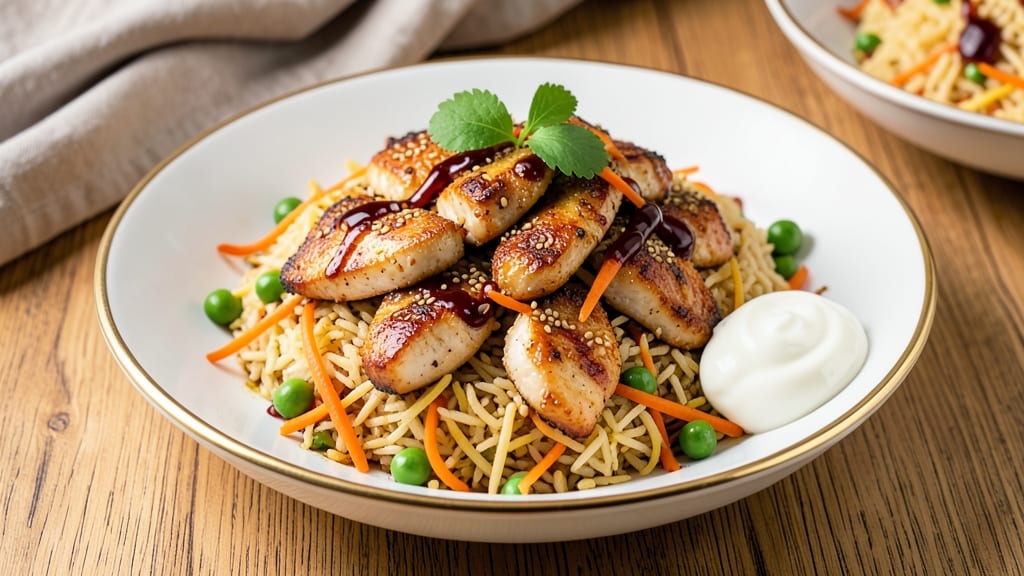
This Indian restaurant-style chicken fried rice delivers the perfect fusion of crunchy textures and bold spices you crave after a long day. 💛 The secret lies in perfectly seasoned chicken, day-old basmati rice, and a wok-heated spice blend that transforms simple ingredients into something restaurant-worthy.
I've spent years perfecting this recipe—starting with my first attempt that ended up with burnt rice and overcooked chicken—until I finally cracked the code for that signature smoky, garlicky aroma.
The foundation begins with jeera rice (cumin-infused basmati) that absorbs flavors beautifully, paired with tender chicken marinated in yogurt and garam masala.
We'll stir-fry fresh vegetables like carrots, peas, and green beans until they're just tender-crisp, then toss everything together with a homemade spice paste that packs layers of cumin, coriander, and turmeric. The key technique? High heat in the wok for that authentic wok hei smoke and caramelized edges.
What you'll end up with is a dish that's restaurant-style in every sense—golden chicken pieces, vibrant vegetables, and perfectly seasoned rice all coated in a fragrant, slightly smoky sauce. The texture contrast is what makes it special: crispy chicken, tender rice, and crunchy vegetables in each bite.
This isn't just fried rice; it's a flavor-packed meal that tastes like your favorite Indian takeout but made better at home.
Serve it with a side of cooling mint chutney or a simple cucumber raita to balance the richness. The best part? This recipe scales perfectly for meal prep or feeding a crowd—just double the ingredients and keep the same ratios. Let's get cooking!
Ingredients for chicken fried rice recipe indian restaurant style
These bold spices and textures come together for a restaurant-style dish that's all about smoky garlicky aroma and perfect crunch.
| Ingredient | Amount | Notes |
|---|---|---|
| Day-Old Basmati Rice 🍚 | 3 cups | Cooked and cooled overnight |
| Boneless Chicken Breast 🍗 | 1 ½ lb | Cut into bite-sized pieces |
| Plain Yogurt 🥛 | ½ cup | Full-fat for marination |
| Garam Masala 🌶️ | 1 ½ tbsp | Freshly ground preferred |
| Fresh Carrots 🥕 | 1 cup | Julienned or thinly sliced |
| Green Peas 🌱 | 1 cup | Frozen works perfectly |
| Green Beans 🌿 | 1 cup | Trimmed and cut into 1-inch pieces |
| Yellow Onion 🧅 | 1 whole | Finely chopped |
| Garlic Cloves 🧄 | 6 cloves | Minced for marinade and paste |
| Ground Cumin 🌿 | 1 ½ tbsp | Toasted for deeper flavor |
| Ground Coriander 🌶️ | 1 tbsp | Freshly ground preferred |
| Turmeric Powder 🧂 | ½ tsp | Bright yellow color |
| Red Chili Powder 🌶️ | 1 tsp | Adjust for heat preference |
| Soy Sauce 🥢 | 2 tbsp | Light or dark preferred |
| Vegetable Oil 🫒 | ½ cup | High smoke point preferred |
| Salt 🧂 | 1 ½ tsp | Kosher or sea salt |
| Black Pepper 🌶️ | ½ tsp | Freshly ground preferred |
The jeera rice (cumin-infused basmati) is non-negotiable for that authentic restaurant flavor. Look for basmati rice labeled 'parboiled' or 'long grain'—it stays separate and absorbs flavors beautifully. I always buy mine from Whole Foods or Indian specialty stores for the best quality. For the chicken, boneless breast gives you tender pieces, but thighs work too if you prefer more moisture. Marinate the chicken in yogurt and garam masala for at least 30 minutes—overnight is even better. The vegetables should be fresh but not overly soft; carrots and green beans from the farmers market have the best crunch.
No garam masala? Mix 1 tsp cumin, 1 tsp coriander, 0.5 tsp turmeric, and 0.25 tsp black pepper for a quick substitute. Short on green peas? Frozen peas work perfectly—they're pre-cooked and add that bright green color. The soy sauce can be swapped for coconut aminos if you're avoiding gluten. For extra smokiness, add a pinch of smoked paprika to the spice paste. The key is to keep everything moving in the wok—overcrowding leads to steamed rice instead of crispy fried rice. High heat is your friend here—don't be afraid to crank it up.
This dish tastes even better the next day once all the flavors meld together. Store leftovers in an airtight container in the fridge for up to 4 days. For meal prep, portion into containers with a little extra sauce on top to keep it moist. The rice reheats beautifully—just add a splash of water and microwave for 2 minutes. Freezing isn't recommended as the texture changes, but you can freeze the chicken and veggie mixture separately and cook fresh rice when you're ready to eat. Portion into single servings for easy grab-and-go lunches.
Why You'll Love This Recipe
- One-Pan Magic: I swear by this trick—no chopping boards, no extra pots. Toss in day-old rice, shredded chicken, and julienned carrots all at once, and let the wok do the work. (Yes, even on a Tuesday night.)
- Yogurt’s Secret Weapon: Honestly, that plain yogurt marinade changes everything. The garam masala clings to the chicken like a spice hug, giving it that smoky, restaurant-style depth without a single burnt note.
- Leftovers That Beg Repeat: Between us, this dish tastes better the next day. The rice soaks up all the flavors, and reheating it? Just a splash of water and a quick stir. My lunchbox’s new best friend.
- Budget-Friendly Feast: Chicken breast might sound fancy, but it’s the star here—no need for expensive cuts. A single breast feeds four, and the rest of the ingredients? Pantry staples you already own. (My wallet thanks me.)
Step-by-step instructions for Indian restaurant-style chicken fried rice
Here's how to recreate that perfect fusion of smoky spices and wok-fried textures at home.
👨🍳 Step 1: Marinate the Chicken for Maximum Flavor
In a bowl, combine the 1.5 lb boneless chicken breast cut into bite-sized pieces with the 0.5 cup plain yogurt, 1.5 tbsp garam masala, 1.5 tbsp ground cumin, 1 tbsp ground coriander, 0.5 tsp turmeric powder, 1 tsp red chili powder, 1.5 tsp salt, and 0.5 tsp black pepper. Mix thoroughly until every piece is evenly coated and let it marinate for at least 30 minutes (or up to 4 hours for deeper flavor).
This step is crucial for that authentic restaurant taste. The yogurt tenderizes the chicken while the spices infuse deeply. I like to press the marinade into the chicken pieces with my fingers to ensure maximum coverage. If using frozen peas, thaw them now by placing in a colander under warm water for 5 minutes.
🍳 Step 2: Stir-Fry the Vegetables for Crunchy Texture
Heat 0.5 cup vegetable oil in a large wok or deep skillet over medium-high heat until shimmering. Add the 1 whole yellow onion and 6 cloves minced garlic, cooking for 2-3 minutes until the onion turns translucent and golden. Remove and set aside.
In the same pan, add the 1 cup julienned carrots, 1 cup green peas, and 1 cup trimmed green beans. Stir-fry for 4-5 minutes until the vegetables are crisp-tender but still retain their vibrant colors. The peas should pop slightly when bitten, and the green beans should hold their shape with just a hint of softness. Remove and set aside with the onion mixture.
🔥 Step 3: Cook the Marinated Chicken to Juicy Perfection
Increase the heat to high and add the marinated chicken in a single layer. Let it sear undisturbed for 2-3 minutes until golden brown on one side. Flip each piece and cook for another 2-3 minutes until the chicken reaches an internal temperature of 165°F. Remove the chicken and set aside.
Here's the thing - don't overcrowd the pan. Cooking the chicken in batches ensures proper browning and prevents steaming. If your pan isn't large enough, work in two batches. The chicken should be fully cooked but still juicy, not dry. If you notice any pieces releasing liquid before reaching 165°F, they're likely undercooked - return them to the pan for another 30 seconds.
🥘 Step 4: Combine Everything with the Day-Old Rice
Return the pan to medium-high heat and add the 3 cups day-old basmati rice. Stir-fry for 2-3 minutes to heat through, breaking up any clumps. Pour in the 2 tbsp soy sauce and mix well. Add the cooked chicken and vegetable mixture back to the pan.
Now for the magic touch: sprinkle the reserved onion-garlic mixture over everything and toss gently to combine. The rice should be hot but still slightly separate. If it starts to stick, add 1-2 tablespoons of water to loosen it. Taste and adjust seasoning - you might need an extra pinch of salt or a dash of red chili powder to match your preferred heat level.
🍽️ Step 5: Finish with a Smoky Garnish (Optional but Recommended)
For that authentic restaurant finish, transfer the fried rice to a serving platter. Drizzle with any remaining pan juices and garnish with extra garam masala and black pepper. I like to add a final touch of soy sauce around the edges for extra umami depth.
Serve immediately while piping hot. The contrast of warm, fragrant rice with the smoky chicken and crisp vegetables makes this dish truly special. For extra crunch, you can even add a handful of fried shallots or crushed peanuts on top just before serving. This fusion of Indian spices with Chinese fried rice technique is what makes this dish so uniquely satisfying!
Pro Tips For Making Chicken Fried Rice Recipe Indian Restaurant Style
- CRUSH THE CHICKEN FIRST: Skip the long marinating—cut boneless chicken breast into ½-inch cubes, then toss them in a mix of yogurt, ½ teaspoon turmeric, and a pinch of salt for 10 minutes max. This keeps the meat juicy while letting the yogurt tenderize just enough to mimic that restaurant-style melt-in-your-mouth texture.
- STIR-FRY THE CARROTS LAST: I used to add shredded carrots at the start, and they’d turn mushy by the time the rice was done. Instead, julienne them thin (⅛-inch strips) and toss them in only for the final 2 minutes of cooking—high heat, constant stirring, and they’ll stay crisp-tender, just like in a proper Indian chaat-style fried rice.
- USE DAY-OLD RICE—BUT FIX IT: Day-old Basmati is non-negotiable, but if yours is still slightly damp, spread it on a tray and microwave for 1-2 minutes to dry it out completely. Cold, dry rice fries up better and absorbs the garam masala and butter without turning soggy—trust me, I’ve ruined batches by skipping this.
- SALT THE RICE BEFORE FRIED RICE: Toss the cold rice with ½ teaspoon salt before adding it to the wok—this balances the flavors as it cooks. I learned this the hard way: adding salt later makes the dish taste flat because the rice soaks up the butter and spices unevenly. Yes, even if the rice already has salt from cooking.
Storing and reheating your chicken fried rice recipe indian restaurant style
Refrigerator Storage
Let your fried rice cool to room temperature for no more than 2 hours before storing in an airtight container with a tight-fitting lid. I use glass containers from Boston's local kitchen supply store—they keep flavors fresh longer.
Store in the fridge at 40°F or below for up to 4 days, but honestly, it tastes even better the second day as flavors meld together. 💛
For portion control, divide into single-serving containers (about 1.5 cups per person). This makes reheating easier and prevents soggy rice. If you're prepping for meal prep, add a drizzle of soy sauce to each container before sealing—it keeps the rice moist and flavorful overnight.
Freezer Storage
Freezing isn't ideal for fried rice because it can make the rice mushy, but you can freeze the chicken and vegetable mixture separately for up to 3 months.
Portion into freezer-safe bags (I like Ziploc brand) and squeeze out all the air to prevent freezer burn. Label each bag with the date—trust me, you'll forget!
When ready to eat, cook fresh day-old basmati rice and stir-fry the thawed chicken and veggies together. The texture won't be identical, but it's a great shortcut for busy days. Pro tip: Thaw overnight in the fridge rather than microwaving to preserve texture.
Stovetop Reheating
My favorite method is stovetop because it revives the crispy edges and smoky aroma. Heat 1 tablespoon vegetable oil in a nonstick skillet over medium-high heat. Add the fried rice and stir-fry for 3-4 minutes, breaking up any clumps.
If it looks dry, splash in 1-2 tablespoons of water to loosen it up.
For extra flavor, add ½ teaspoon soy sauce and a pinch of garam masala while reheating. The high heat helps recreate that wok-fried texture. Serve immediately—this dish is best enjoyed fresh out of the pan! 🔥
Microwave Reheating
If you're short on time, the microwave works in a pinch. Transfer a single serving to a microwave-safe bowl and cover loosely with a microwave-safe lid (or damp paper towel). Heat on high for 2 minutes, stir, then continue in 30-second intervals until hot throughout.
Watch closely—fried rice can dry out quickly. If it's too dry, add 1 tablespoon water or chicken broth and stir. The texture won't be perfect, but it's a decent backup when you're in a rush. For best results, reheat only what you plan to eat immediately.
Meal Prep Tips
This dish is a meal prep dream—just double the recipe and store components separately. Keep the day-old rice in one container, the cooked chicken and veggies in another, and the spice paste in a small jar.
When ready to eat, combine everything in a hot skillet for 2-3 minutes to revive the flavors.
For extra convenience, prep individual portions in bento-style containers with compartments. Store the rice in one section and the chicken/veggies in another. Add a small sauce packet (soy sauce + a pinch of spices) on the side. Reheat each component separately for the best texture. 💡
Nutrition facts
Frequently asked questions
Why does Indian restaurant-style fried rice use day-old rice?
Day-old rice is drier and separates better when stir-fried, giving that signature crispy texture. Freshly cooked rice releases too much moisture and turns mushy when fried. The starches have time to firm up overnight, creating the perfect base for wok-frying. Plus, it absorbs flavors more evenly!
Can I substitute boneless chicken breast with thighs?
Chicken thighs work beautifully—they stay juicier and add richer flavor. Just marinate them for 30-60 minutes instead of hours since they cook faster. For best results, cut them into 1-inch pieces and sear until golden brown (about 4-5 minutes per side).
How do I make this dish vegetarian?
Swap the chicken for 1 cup chickpeas (tossed in the same marinade) or 1 block firm tofu (pressed and cubed). For extra protein, add ½ cup paneer or mushrooms. Keep the same cooking technique—high heat and quick stir-frying to prevent sogginess.
What's the secret to getting that smoky wok hei flavor?
Use a carbon steel or cast iron wok (or a heavy skillet) and crank the heat to high. Add a pinch of smoked paprika to the spice mix, and let the oil shimmer before adding ingredients. Work in batches—overcrowding steams instead of searing. The key is constant motion!
Can I make this dish spicier?
Add ½ teaspoon cayenne pepper or 1 chopped green chili to the marinade. For extra heat, stir in 1 teaspoon red chili flakes at the end. Adjust to taste—Indian restaurant versions often balance spice with cooling sides like raita.