
Side Dishes
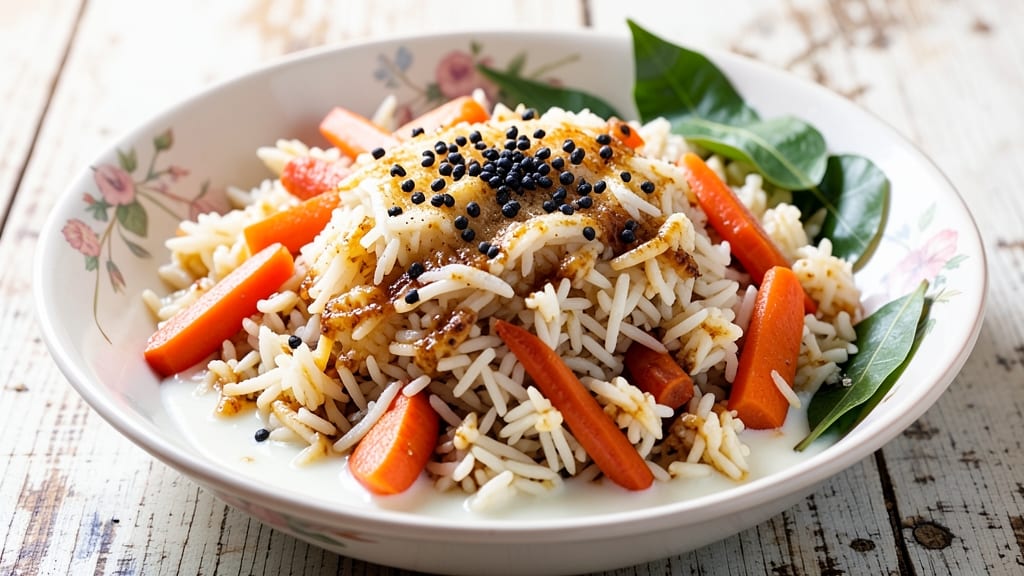
This South Indian carrot rice recipe brings vibrant flavors to your table with its aromatic blend of turmeric, mustard seeds, and coconut milk. 🌟 The dish is a staple in South Indian cuisine, offering a fragrant, slightly sweet, and nutty profile that pairs perfectly with curries and sambar.
My grandmother's technique of tempering spices with curry leaves creates that signature crunch and depth that makes this dish unforgettable.
What makes this recipe special is the balance of textures and flavors—soft, fluffy rice with tender carrots and a hint of coconut milk's richness.
The key lies in the tempering process, where mustard seeds, curry leaves, and asafoetida are toasted to release their full aroma, creating a layer of flavor that elevates every grain of rice. This method ensures the dish is not only delicious but also deeply authentic.
The result is a dish that's as comforting as it is flavorful, with each bite offering a harmonious blend of sweet carrots, fragrant spices, and the subtle creaminess of coconut milk. It's the kind of recipe that brings warmth to your kitchen and a sense of tradition to your table.
Perfect for a family meal or a special occasion, this carrot rice is sure to become a favorite.
Serve it alongside sambar, raita, or a simple yogurt dip to enhance its flavors even further. The versatility of this dish makes it a great addition to any South Indian meal, and its simplicity ensures it's accessible to cooks of all levels. Let's get started on creating this fragrant masterpiece!
Ingredients for carrot rice recipe south indian
These vibrant ingredients create the fragrant, nutty South Indian carrot rice your family will love.
| Ingredient | Amount | Notes |
|---|---|---|
| Long-Grain White Rice 🍚 | 1 ½ cups | Uncooked, rinsed thoroughly |
| Carrots 🥕 | 2 cups | Baby carrots or julienned whole |
| Coconut Milk 🥥 | 1 cup | Full-fat canned for creaminess |
| Mustard Seeds 🌶️ | 1 tbsp | Brown or yellow variety |
| Curry Leaves 🌿 | ¼ cup | Fresh, packed loosely |
| Asafoetida (Hing) 🌶️ | ⅛ tsp | Crushed between palms |
| Turmeric Powder 🧂 | ½ tsp | Freshly ground preferred |
| Cumin Seeds 🌿 | ½ tsp | Toasted for deeper flavor |
| Green Chillies 🌶️ | 2 whole | Slit lengthwise, seeds removed |
| Salt 🧂 | 1 tsp | Adjust to taste |
| Ghee or Coconut Oil 🫒 | 2 tbsp | For tempering spices |
| Water 💧 | 2 ½ cups | For rice cooking |
| Fresh Coriander Leaves 🌿 | ¼ cup | Chopped, for garnish |
The mustard seeds and curry leaves are non-negotiable for that signature South Indian crunch. Whole spices from the bulk section at Indian grocery stores or Penzeys give the best flavor—none of that pre-ground stuff. Look for bright green curry leaves (no brown or wilted ones) and mustard seeds that smell pungent, not stale. The asafoetida (hing) is the secret ingredient—it adds that umami depth that makes this dish sing. If you can't find it, garlic powder at half the amount works in a pinch, but trust me, hing is worth the hunt. For the carrots, baby carrots or julienned whole ones cook faster and stay tender—no mushy texture here.
No coconut milk? Light coconut milk or even full-fat Greek yogurt adds creaminess, though the flavor won't be identical. Running short on curry leaves? Dried thyme at one-third the amount gives a similar herbal note, but it won't be the same. The green chilies can be swapped for red chili powder (half a teaspoon), but fresh brings the best heat. For the rice, jasmine or basmati work perfectly if you can't find long-grain white. And if you're feeling lazy, pre-cut frozen carrots save time—just thaw and drain them first. The ghee can be swapped for coconut oil, but it'll taste more coconut-forward.
This dish reheats beautifully—just add a splash of water and cover it. Keeps in the fridge for 4-5 days in an airtight container, though it's best fresh. For meal prep, cook the rice and carrots separately, then combine when ready to eat. The spices lose their punch after 3 days, so make it fresh if you can. Garnish with fresh coriander just before serving—it brightens everything up. Leftovers taste even better the next day as the flavors meld together.
Why You'll Love This Recipe
- One-Pot Magic: I swear by this recipe when I’m too tired to wash extra bowls—just rice, carrots, and coconut milk simmered together until the grains are tender and the carrots melt into sweetness. The mustard seeds and curry leaves sizzle in the oil first, filling the kitchen with that unmistakable South Indian aroma, and then it’s hands-off until the rice is done.
- Creamy Without Guilt: Between us, coconut milk makes everything better, and here it turns plain rice into something lusciously textured—never mushy, always with that slight bite from the carrots. It’s rich but light, the kind of dish that feels indulgent but won’t weigh you down. (Yes, even on a Tuesday night.)
- Lunchbox Hero: This rice keeps beautifully for days, so I make a big batch on Sundays and portion it out for work lunches or school meals. The carrots stay bright and the flavors deepen overnight—perfect for reheating with a sprinkle of black pepper. My kids actually finish their lunches when this is in there.
- Pantry Staple Power: Honestly, you’re already stocked for this. Rice, carrots, and coconut milk are basics, and the spices? A few seeds and leaves you probably have lingering from that last curry. It’s the kind of recipe that costs next to nothing but feels like a special treat—ideal for feeding a crowd or stretching a budget without sacrificing taste.
Step-by-step instructions for South Indian carrot rice
Here's how to cook this aromatic, crunchy carrot rice with perfect texture every time.
🍳 Step 1: Temper the Spices for Maximum Flavor
Heat the 2 tbsp ghee or coconut oil in a heavy-bottomed pot over medium heat. Add the 0.5 tsp toasted cumin seeds and let them sizzle for 30 seconds until fragrant—you'll smell that nutty aroma wafting through your kitchen.
Next, add the 1 tbsp mustard seeds and let them pop and dance in the oil for 1 minute. Here's the thing—don't walk away. Mustard seeds burn fast! Then add the 0.25 cup curry leaves and 2 whole slit green chillies. Let them sizzle for 30 seconds until the curry leaves turn crisp and the chillies darken slightly.
Finally, add the 0.125 tsp asafoetida (hing) and 0.5 tsp turmeric powder. Stir for 10 seconds until the hing dissolves completely and the turmeric turns a vibrant yellow. This tempering step is what gives this dish its signature South Indian flavor punch.
👨🍳 Step 2: Cook the Carrots Until Tender-Crunchy
Add the 2 cups carrots (julienned or baby carrots) to the pot and stir to coat them in the spice oil. Cook for 5-6 minutes over medium heat, stirring occasionally, until the carrots soften slightly but still maintain a pleasant crunch—this is key for that perfect texture.
Here's where it gets fun—pour in the 1 cup coconut milk and 2.5 cups water. The coconut milk adds that creamy richness while keeping the dish light. Bring the mixture to a gentle boil, then reduce heat to low and let it simmer uncovered for 10 minutes. You'll see the carrots soften further but still hold their shape.
While waiting, rinse the 1.5 cups long-grain white rice thoroughly under cold water until the water runs clear. This removes excess starch and prevents the rice from becoming mushy. Drain well and set aside.
🍳 Step 3: Cook the Rice to Perfect Texture
Add the drained rice to the pot and stir gently to distribute it evenly. Add the 1 tsp salt and give it one final stir. Here's the critical part: bring the mixture to a boil again, then immediately reduce heat to low and cover the pot with a tight-fitting lid.
Cook for 15 minutes without peeking—resist the temptation! After 15 minutes, check the rice. It should be 80% cooked—still slightly firm in the center. If it's not, cover and cook for another 2-3 minutes. The rice will finish cooking from the residual heat.
Once the rice is cooked, remove the pot from heat and let it sit covered for 5 minutes. This resting period is crucial—it allows the steam to redistribute and the rice to absorb any remaining liquid, giving you perfectly fluffy grains with just the right crunch from the carrots.
🥘 Step 4: Finish and Garnish for Freshness
After resting, gently fluff the rice with a fork to separate the grains. The texture should be light and fluffy with tender carrots mixed throughout. If the rice feels dry, sprinkle in 1-2 tablespoons of water and gently fold it in.
Finally, transfer the carrot rice to a serving bowl and garnish with the 0.25 cup chopped fresh coriander leaves. The bright green color contrasts beautifully with the orange carrots and yellow turmeric, making it look as good as it tastes.
Serve warm with a side of yogurt or a simple cucumber raita. This dish keeps well in the fridge for 2-3 days, making it perfect for meal prep. The flavors actually improve as the spices meld together overnight!
Pro Tips For Making Carrot Rice Recipe South Indian
- Cook Carrots First: Sauté the grated carrots in oil until they soften just enough to lose their bite—about 3-4 minutes. I learned this the hard way: skipping this step leaves you with mushy carrots that turn the rice into a sad, watery porridge. The slight caramelization also adds depth that raw carrots can’t match.
- Toast Mustard Seeds Right: Crank the heat high and let those mustard seeds pop loudly before adding curry leaves—this is non-negotiable. I used to add them gently, and the flavor never hit the same. Popping them first releases their oils, which carry the aroma into every grain of rice.
- Use Full-Fat Coconut Milk: Light coconut milk will make your rice taste like it’s swimming in water. Save yourself the regret and grab the can labeled "full-fat" or "cream of coconut." The richness balances the earthy carrots and makes the dish feel indulgent, not flat.
- Parboil Rice Separately: Cook the rice in plain water (1:1.5 rice-to-water ratio) until just tender, then drain. Mixing it with the coconut milk and spices later keeps the grains distinct and prevents a gluey mess. Yes, it’s an extra pot, but your rice will thank you—no one likes gummy carrot rice.
Health benefits of these flavors
Digestive Comfort
This carrot rice dish is a gentle ally for your digestive system, thanks to its fiber-rich carrots and easily digestible rice. The soluble fiber in carrots helps regulate digestion and promotes a healthy gut microbiome.
Plus, the turmeric in the recipe has been shown to soothe inflammation in the digestive tract, making this a comforting choice after heavy meals. 🌱
Vitamin A Boost
Carrots are packed with beta-carotene, which your body converts to vitamin A—a nutrient essential for maintaining healthy vision, immune function, and skin health. A single serving of this carrot rice provides a significant portion of your daily vitamin A needs, supporting everything from night vision to skin repair.
I always feel more energetic after eating this dish, especially in the evenings.
Heart-Friendly Fats
The coconut milk in this recipe adds a touch of healthy fats that support heart health when consumed in moderation.
While coconut milk contains saturated fats, it also provides medium-chain triglycerides (MCTs), which are metabolized differently than other fats and may contribute to improved cholesterol profiles when part of a balanced diet. The dish's overall balance of nutrients makes it a heart-smart choice.
Blood Sugar Balance
Despite its natural sweetness, this carrot rice helps stabilize blood sugar levels thanks to its combination of complex carbohydrates and fiber. The low glycemic index of the rice and carrots means you'll avoid blood sugar spikes, making this a great option for those monitoring their glucose levels.
Pairing it with a protein source like yogurt or lentils further enhances its blood sugar-balancing properties.
Anti-Inflammatory Benefits
The star of this dish's anti-inflammatory properties is the turmeric, which contains curcumin—a compound known for its powerful anti-inflammatory effects. When combined with the black pepper (or asafoetida in this recipe), the curcumin's absorption increases dramatically.
Regular consumption of turmeric-rich foods like this carrot rice may help reduce chronic inflammation throughout the body.
Nutrient-Dense Convenience
This dish is a powerhouse of micronutrients packed into a single serving. You're getting vitamin C from the carrots, iron from the spices, and B vitamins from the rice—all while enjoying a comforting, flavorful meal.
It's the perfect example of how traditional South Indian cuisine combines nutrition with deliciousness, making healthy eating effortless and satisfying. The best part? It's ready in under 45 minutes—no compromise on flavor or nutrition. 💛
Nutrition facts
Frequently asked questions
Why does South Indian carrot rice have a yellow color?
The vibrant yellow hue comes from turmeric powder and the caramelization of spices during tempering. The turmeric not only adds color but also provides anti-inflammatory benefits and that signature South Indian flavor. The mustard seeds and curry leaves toasted in ghee deepen the color as they release their oils.
Can I make this recipe without coconut milk?
Yes! For a lighter version, use 1 cup water plus 2 tbsp yogurt instead of coconut milk. If you prefer more richness, substitute with ½ cup heavy cream or evaporated milk. The dish will still taste delicious, though the coconut flavor will be missing. For vegan options, coconut yogurt works beautifully.
How do I prevent my carrots from turning mushy?
Keep the carrots tender-crisp by cooking them only until they're slightly softened (5-6 minutes max). Avoid overcrowding the pot and never cover while cooking the carrots—steam makes them soggy. Also, use baby carrots or julienned whole carrots (they cook faster than thick slices).
What's the best rice for this recipe?
Long-grain white rice is traditional, but jasmine or basmati rice also work perfectly. For extra fluffiness, use parboiled rice (it holds up better to the coconut milk). Avoid short-grain rice like sushi rice—it becomes too sticky. Always rinse the rice thoroughly to remove excess starch.
Can I make this ahead of time?
This dish actually tastes better the next day as the flavors meld together. Cook and refrigerate in an airtight container for up to 4-5 days. Reheat gently with 1-2 tbsp water over low heat, covered. For meal prep, cook the rice and carrots separately, then combine when ready to eat—this keeps the texture perfect.