
Main Courses
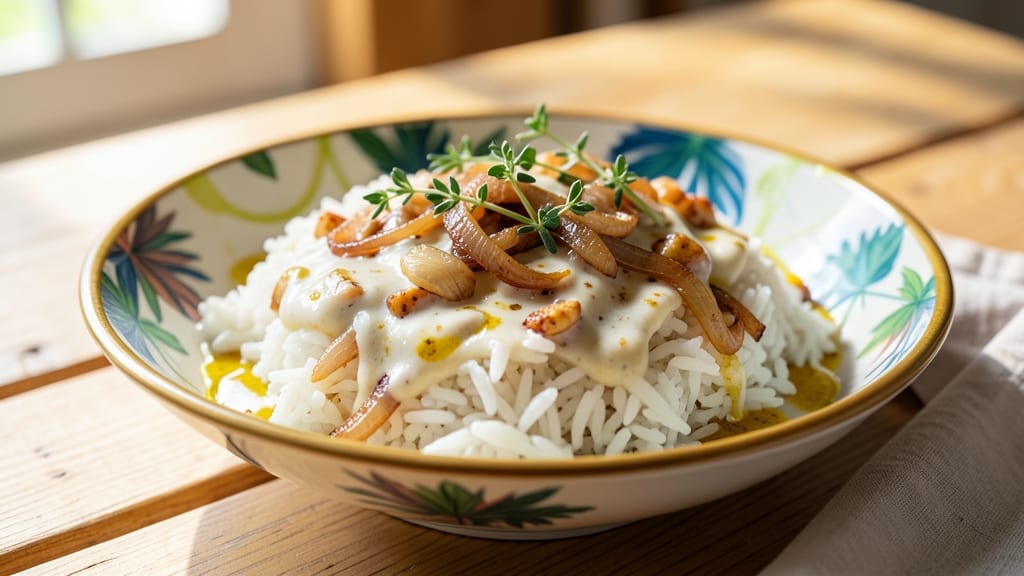
This Caribbean coconut milk rice recipe transforms simple grains into a fragrant, creamy masterpiece that captures the essence of island kitchens.
The secret lies in toasting the rice first—this step unlocks nutty depth before simmering it in rich coconut milk with aromatic thyme and garlic, creating a texture that’s tender yet slightly firm.
Every bite delivers tropical warmth with a velvety finish, making it the perfect foundation for grilled meats or fresh seafood.
The one-pot method ensures minimal cleanup while delivering restaurant-quality results. As the rice absorbs the fragrant coconut milk, the spices meld into a harmonious blend that’s both comforting and vibrant. Garnish with lime zest and cilantro for a bright, fresh contrast that elevates the dish to new heights.
This recipe is your gateway to Caribbean flavors—simple yet sophisticated, creamy yet balanced, and impossible to resist.
Ingredients for caribbean rice recipe with coconut milk
Simple grains meet tropical flavors for a creamy, fragrant rice dish that's restaurant-quality at home.
| Ingredient | Amount | Notes |
|---|---|---|
| Long-Grain White Rice 🍚 | 1 ½ cups | Uncooked, rinsed thoroughly |
| Full-Fat Coconut Milk 🥥 | 1 ½ cups | Canned, not carton |
| Yellow Onion 🧅 | 1 whole | Medium size, finely diced |
| Garlic Cloves 🧄 | 4 cloves | Fresh, minced finely |
| Fresh Thyme Leaves 🌿 | ¼ cup | Chopped, stems removed |
| Lime Zest 🍋 | 1 tbsp | Freshly grated |
| Fresh Cilantro Leaves 🌿 | ¼ cup | Chopped, for garnish |
| Unsalted Butter 🧈 | 2 tbsp | Full-fat preferred |
| Vegetable Oil 🫒 | 1 tbsp | For toasting rice |
| Salt 🧂 | 1 tsp | Kosher or sea salt |
| Black Pepper 🌶️ | ½ tsp | Freshly ground |
| Ground Cumin 🌿 | ½ tsp | Toasted for depth |
| Allspice Berries 🌶️ | ¼ tsp | Crushed lightly |
The coconut milk is non-negotiable here—full-fat canned gives you that rich, velvety texture. Thai Kitchen or Goya are my go-tos, but any brand with no additives works. For the rice, long-grain white is standard, but jasmine works too if you prefer a slightly floral note. Toasting the rice in butter first? That's where the nutty depth comes from—don't skip it. The allspice berries are the secret to that authentic Caribbean warmth; if you can't find whole berries, ground allspice at half the amount is fine in a pinch.
No fresh thyme? Dried works at one-third the amount, but the flavor won't be quite as bright. Substituting coconut milk? Heavy cream with a splash of lime juice mimics some of the richness, but you'll lose that tropical essence. The lime zest is crucial for that bright finish—organic limes from the produce section have more zest. For the cilantro, if you're sensitive to its flavor, you can skip it entirely or use flat-leaf parsley instead. The butter and oil together create the perfect balance for toasting—don't use all butter, or it'll burn.
This rice keeps beautifully—3-4 days in the fridge, 3 months frozen. Reheat gently with a splash of water or coconut milk to restore creaminess. I always make extra because it pairs perfectly with grilled chicken or fish. Store in an airtight container with the lid slightly loose to prevent sogginess. The flavors actually improve over time as the spices meld further—trust me on the leftovers.
Why You'll Love This Recipe
- Here’s what sold me: this rice reheats like a dream. Pack it cold for work, or warm it up for dinner—it’s my go-to when I’m meal prepping. Add grilled chicken or black beans, and suddenly you’ve got a full meal that doesn’t taste like leftovers.
- I’ll be real: coconut milk isn’t cheap, but a can goes a long way here. Stretch it into two meals, or save half for smoothies. The rice itself is affordable, and the flavors make it feel like you splurged. My wallet and my taste buds win.
Step-by-step instructions for Caribbean coconut milk rice
Here's how to craft this fragrant, creamy rice dish with authentic Caribbean flavors.
Toast the Rice and Aromatics
Heat a medium saucepan over medium-high heat and add the 1 tablespoon vegetable oil and 2 tablespoons unsalted butter. Once the butter foams and the oil shimmers, add the 1 whole yellow onion and 4 cloves garlic cloves, cooking for 3-4 minutes until the onion softens and becomes translucent.
Add the 1.5 cups long-grain white rice and stir for 2 minutes until the grains become translucent at the edges and develop a slight golden hue. This toasting step enhances the nutty flavor of the rice and prevents it from becoming mushy. I press down gently on the rice with a wooden spoon during the first minute—this prevents it from sticking together and ensures even contact with the hot oil and butter.
Add Spices and Coconut Milk
Reduce the heat to medium-low and sprinkle the rice with the 1 teaspoon salt, 0.5 teaspoon black pepper, 0.5 teaspoon ground cumin, and 0.25 teaspoon allspice berries. Stir the spices into the rice for 30 seconds until they're evenly distributed and the rice absorbs their aromas.
Pour in the 1.5 cups full-fat coconut milk and the 0.25 cup fresh thyme leaves, stirring gently to combine. The mixture should look creamy and slightly thick. Bring the liquid to a gentle simmer, then immediately reduce the heat to low—you want just enough heat to maintain a slow, steady bubble without boiling vigorously.
Simmer Until Creamy Perfection
Cover the saucepan with a tight-fitting lid and cook for 18-20 minutes without disturbing it. The rice will absorb most of the coconut milk as it cooks. After 10 minutes, check for doneness by gently fluffing the rice with a fork—if it's still slightly firm but the liquid is mostly absorbed, continue cooking. If the rice looks dry before the time is up, add 2-3 tablespoons hot water through the lid's steam vent.
I know it seems counterintuitive, but this covered simmering method is what creates that signature creamy texture. The coconut milk's natural fats and the spices work together to infuse the rice with rich, tropical flavors. The rice should be tender with a slight bite, not mushy, and the coconut milk should be completely absorbed by the end of cooking time.
Finish with Lime and Garnish
Once the rice is tender, remove the saucepan from heat and let it sit covered for 5 minutes. This resting period allows the rice to finish absorbing any remaining liquid and develop its final texture. Stir in the 1 tablespoon lime zest and gently fold it through the rice—this bright citrus note cuts through the richness of the coconut milk and adds a refreshing contrast.
Transfer the rice to a serving dish and garnish with the 0.25 cup fresh cilantro leaves, sprinkled evenly over the top. The cilantro adds a fresh, slightly peppery note that complements the creamy coconut and aromatic spices. Serve immediately while the rice is still warm, as the texture and flavors are at their peak. This dish pairs beautifully with grilled fish, jerk chicken, or as a standalone flavorful side.
Pro Tips For Making Caribbean Rice Recipe With Coconut Milk
- Sauté Onions Low and Slow: Caribbean rice needs deep flavor, and rushing the onions ruins it. Cook them over medium-low heat for 8–10 minutes until soft and golden—no browning yet—so they caramelize just enough to sweeten the rice without burning. I used to blast them on high and ended up with bitter, charred bits that overpowered everything else.
- Use Coconut Milk in Two Stages: Pour half the coconut milk in at the start to deglaze the pot, then add the rest after the rice has absorbed the first batch. This prevents a watery, soupy texture and ensures each grain gets creamy without turning mushy. Trust me, skipping this step means ending up with rice that’s more pudding than dish.
- Toast the Thyme Leaves: Toss the fresh thyme leaves into the pot with the onions and garlic—let them sizzle for 30 seconds until fragrant. This releases their essential oils and prevents them from turning to mush later. I was lazy about this once, and the rice tasted bland, like I’d forgotten the thyme entirely.
- Rinse the Rice Twice: Give that long-grain rice a thorough rinse in cold water—twice—before cooking. This removes excess starch, which keeps the grains separate and prevents a gummy, clumped texture when the coconut milk gets involved. I know it’s extra work, but unrinsed rice turns into gluey disaster in this recipe.
Essential equipment for perfect results
One-Pot Essentials
Your medium heavy-bottomed saucepan (I use my All-Clad tri-ply) is non-negotiable—it distributes heat evenly and prevents burning during the toasting phase. A tight-fitting lid is crucial for trapping steam and creating that signature creamy texture.
I recommend a glass lid so you can peek at the rice without losing steam. 🌡️
For stirring, a wooden spoon works best—it won’t scratch your pan like metal utensils. A fine-mesh strainer (like OXO Good Grips) helps rinse the rice thoroughly before cooking, removing excess starch that can make it gummy. Keep a small bowl nearby to drain the rinsed rice completely.
Spice Tools
A mortar and pestle (I love Kuhn Rikon) is ideal for crushing allspice berries to release their aromatic oils. If you don’t have one, a small rolling pin or even a ziplock bag with a spoon works in a pinch.
For measuring spices precisely, invest in a small digital scale—it’s more accurate than volume measurements for delicate spices like allspice.
Fresh thyme leaves should be stripped from stems using a sharp chef’s knife. I fold the stem in half and run the blade along the length to release the leaves cleanly.
A microplane (like Microplane Zester) is perfect for lime zest—it’s faster than a grater and yields finer, more flavorful zest.
Heat Control
An instant-read thermometer (I swear by ThermoWorks Thermapen) helps monitor the medium-low heat during simmering—aim for 180-190°F inside the pan. This keeps the coconut milk from curdling while ensuring even cooking.
A kitchen torch (like Blazer Torch) can crisp the lime zest and cilantro garnish at the end for an elegant finish.
For extra precision, a stovetop thermometer (like Ozeri Touchless) clips to your saucepan and displays the exact temperature. This is especially helpful if you’re new to low-and-slow cooking techniques—it prevents overheating, which can turn your creamy rice into a gluey mess.
Garnish Tools
A pair of kitchen shears (like Mercer Culinary) makes quick work of chopping cilantro leaves for garnish. For a more refined presentation, use a small offset spatula to spread the rice evenly on the serving dish before adding garnishes.
A lime juicer (like Bartender’s Joy) ensures you get every drop of juice for finishing touches.
Don’t overlook a fine-mesh sieve—it helps strain any excess lime juice or coconut milk residue from the zest or herbs, keeping your rice perfectly balanced in flavor. A small whisk comes in handy for quickly combining any extra lime juice or coconut milk if you need to adjust consistency.
Nutrition facts
Frequently asked questions
Why does my coconut rice turn out mushy?
Overcooking or insufficient toasting is usually the culprit. Always toast the rice in butter/oil until translucent before adding liquid—this builds structure. If the rice still feels mushy after 18-20 minutes of simmering, you likely used too much coconut milk. For every 1.5 cups rice, stick to 1.5 cups coconut milk max. The covered simmer should be gentle, not boiling vigorously.
Can I substitute coconut milk with something else?
While nothing replaces full-fat coconut milk for authentic flavor, you can try heavy cream + 1 tbsp lime juice for richness or whole milk + 2 tbsp coconut cream for a lighter texture. For a dairy-free option, use coconut cream + extra water (adjust to 1:1 ratio with rice). The dish will lose some tropical depth but still taste creamy.
How do I make this recipe vegan?
Swap the butter for vegan butter or coconut oil, use vegan coconut milk (check for additives), and replace allspice with 1/4 tsp ground allspice + 1/4 tsp cinnamon. The lime zest and cilantro garnish remain vegan-friendly. For extra umami, add 1 tbsp soy sauce when toasting the rice. The texture stays creamy, though the flavor will be slightly less complex without dairy.
Can I make this in a rice cooker?
Follow the same toasting steps in a pot first, then transfer everything to your rice cooker. Use the white rice setting and add 2 tbsp extra coconut milk (rice cookers often absorb more liquid). The texture may be slightly less creamy, but the flavors stay vibrant. For best results, let it rest 5 minutes after cooking before fluffing with lime zest.
What's the best way to reheat leftover coconut rice?
Reheat gently in a skillet with 1 tbsp coconut milk or water over low heat for 3-4 minutes, stirring constantly to prevent drying. Microwaving works too—cover with a damp paper towel and heat in 30-second bursts, stirring between each. Never reheat uncovered, or the coconut milk will curdle. For extra creaminess, add a splash of coconut milk when reheating.