
Salads
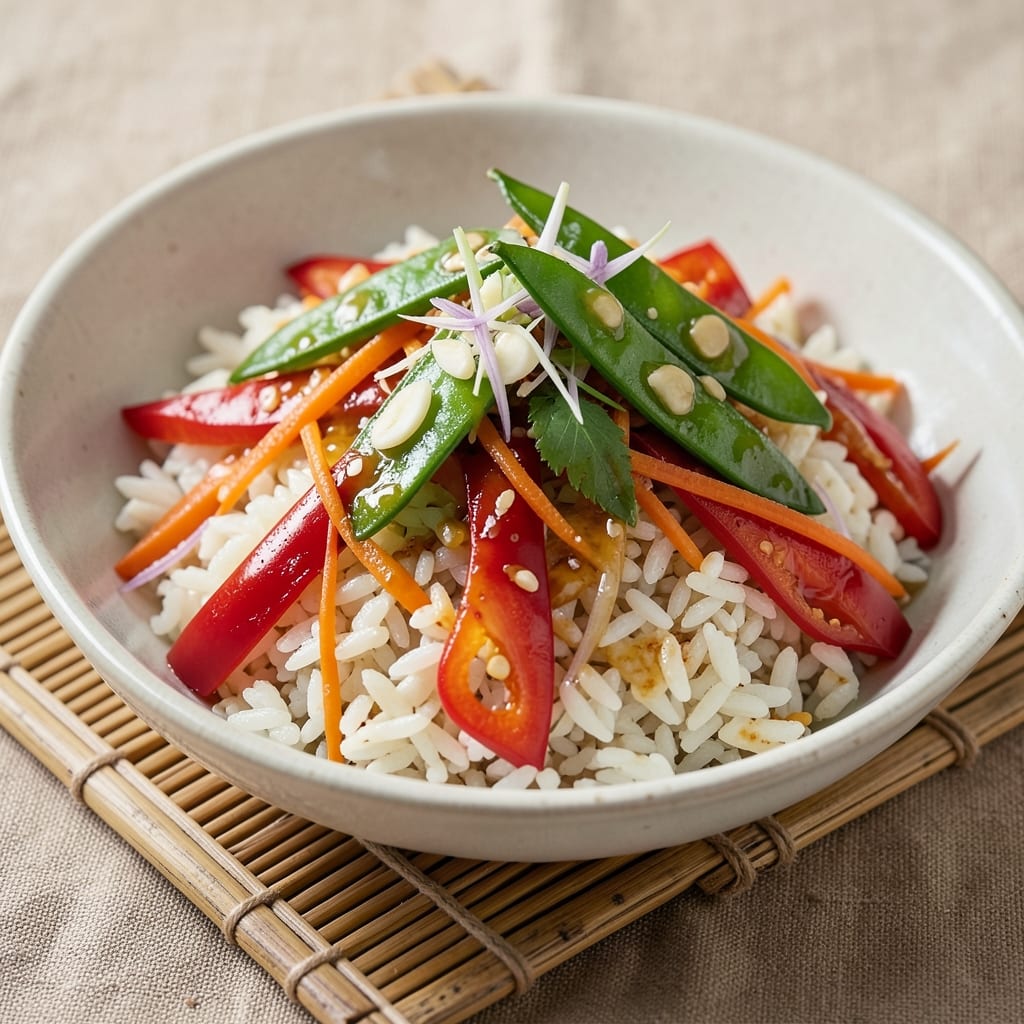
This Asian rice and vegetables recipe delivers restaurant-quality harmony in just 20 minutes, blending fragrant jasmine rice with vibrant stir-fried vegetables using wok-tossed techniques. The secret lies in high-heat cooking that preserves crisp textures while infusing aromatic flavors—think ginger, garlic, and soy—throughout every bite. I perfected this dish after years of adapting traditional Chinese stir-fry methods for home kitchens, where wok hei (breath of the wok) becomes achievable with a simple skillet.
The foundation begins with perfectly cooked rice—light, separate grains that won't turn mushy when tossed. We'll use a 1:2 rice-to-vegetable ratio to ensure each component remains distinct while contributing to the overall balance. Fresh vegetables like bell peppers, carrots, and snap peas get cut into even pieces for consistent cooking, while a simple sauce of soy sauce, sesame oil, and a touch of honey creates the perfect umami-sweet bridge between components.
What you'll achieve is a dish that's as visually appealing as it is flavorful—golden-brown vegetables with crisp edges, fragrant rice absorbing just enough sauce to become sticky yet still distinct, and aromas that fill your kitchen with the essence of an Asian street market. This recipe works equally well as a standalone meal or as a base for adding protein like shrimp or tofu. The technique is simple, but the result feels special.
For those with dietary preferences, we'll include variations that accommodate spicy, vegan, or gluten-free needs without sacrificing the dish's core balance. The key to success lies in proper timing and heat control—two elements that transform simple ingredients into something extraordinary. Let's get started on creating this fragrant, texturally perfect Asian-inspired dish.
Ingredients for asian rice and vegetables
Jasmine rice and vibrant vegetables transform into a fragrant wok-tossed masterpiece using precise ratios and high-heat technique.
| Ingredient | Amount | Notes |
|---|---|---|
| Jasmine Rice 🍚 | 1 cup | Uncooked, long-grain preferred |
| Red Bell Pepper 🌶️ | 1 whole | Thinly sliced, seeds removed |
| Carrots 🥕 | 2 whole | Julienned into thin strips |
| Snap Peas 🌱 | 1 cup | Fresh or frozen, trimmed |
| Garlic Cloves 🧄 | 4 cloves | Minced, aromatic intensity |
| Fresh Ginger 🌿 | 1 tbsp | Grated, finely textured |
| Sesame Oil 🫒 | 1 tbsp | Toasted, for aroma |
| Low-Sodium Soy Sauce 🍶 | 2 tbsp | Kikkoman preferred |
| Honey 🍯 | 1 tbsp | Pure, for balance |
| Vegetable Oil 🫒 | 2 tbsp | High smoke point |
| Green Onions 🧅 | 3 whole | Thinly sliced, garnish |
| Toasted Sesame Seeds 🌾 | 1 tsp | For texture contrast |
| Diamond Crystal Kosher Salt 🧂 | ½ tsp | Fine grain for seasoning |
| Black Pepper 🌶️ | ¼ tsp | Freshly ground |
The jasmine rice forms the aromatic foundation—look for Thai or Vietnamese brands at Asian markets for the most fragrant grains. Lundberg Family Farms jasmine rice from mainstream grocery stores works well too, but avoid pre-rinsed varieties as they lose texture. For the vegetables, freshness matters most—bell peppers should be firm with vibrant color, carrots crisp when sliced, and snap peas bright green. The ginger and garlic require freshly minced preparation (pre-minced jars lack potency). Store-bought sesame oil should be kept in a dark bottle to prevent rancidity, and Kadoya brand from Asian markets offers superior flavor.
No snap peas? Substitute snow peas or sugar snap peas at the same quantity. Bell peppers can be swapped for zucchini or broccoli florets, but adjust cooking time as needed. For a gluten-free variation, use tamari or coconut aminos instead of soy sauce. The honey can be replaced with maple syrup or agave nectar for vegan adaptation, though it alters the flavor profile slightly. If you're short on time, pre-cut frozen stir-fry vegetables work in a pinch, but fresh yields superior texture. The sesame oil is non-negotiable for authentic aroma—never substitute regular vegetable oil.
Rice should be cooked and kept covered at room temperature until ready to toss—never reheat directly as it loses texture. Fresh ginger and garlic can be stored in the fridge for up to 2 weeks when wrapped tightly. Sesame oil lasts 6-12 months unopened in a cool, dark place. For meal prep, assemble the dish completely and refrigerate for up to 3 days, though the vegetables will soften slightly. Reheat gently in a skillet with a splash of water to restore crispness. The sauce components can be pre-mixed and stored separately for 1 week, making assembly quicker.
Why You'll Love This Recipe
- One-Pot Magic: I swear by this for lazy nights—just toss everything in one pan, stir once, and walk away. The jasmine rice soaks up all the caramelized garlic and veggie juices while you handle whatever else life throws at you.
- Sweet-Savory Balance: That red bell pepper adds a bright crunch, while the carrots caramelize into something almost buttery. Honestly, the snap peas might be the star—crisp, fresh, and popping with every bite.
- Lunchbox Hero: Between us, this is my go-to for meal prep. Cold or reheated, it’s a hit—pack it for work, toss in a bento, or serve it at potlucks. The rice stays fluffy, and the veggies hold their shape (no sad mush here).
- Budget Win: Jasmine rice is cheap, bell peppers last forever, and you can use whatever veggies are on sale. I’ll be real: I’ve made this with frozen peas in a pinch, and no one noticed. Frugal but never boring.
Step-by-step instructions for wok-tossed Asian rice and vegetables
Master the art of wok hei with this precise method—where fragrant rice meets vibrant vegetables in perfect harmony.
Prepare the Jasmine Rice for Perfect Texture
Rinse the 1 cup jasmine rice under cold water until the water runs clear, then drain thoroughly in a fine-mesh strainer. This removes excess starch that would otherwise make the rice gummy. Transfer the drained rice to a small pot and add 1 cup water and the 0.5 teaspoon Diamond Crystal kosher salt. Bring to a boil over high heat, then immediately reduce to low heat, cover tightly with a lid, and simmer for 15 minutes.
After 15 minutes, turn off the heat but let the rice steam undisturbed for an additional 10 minutes. This resting period allows the grains to fully absorb moisture and develop their signature fragrant aroma. Fluff the rice gently with a fork before proceeding—it should be tender but still slightly firm to the tooth, with no liquid remaining in the pot.
Prep and Sauté the Vegetable Base
Heat a large wok or skillet over medium-high heat until it's smoking slightly. Add the 2 tablespoons vegetable oil and swirl to coat the surface evenly. Toss in the 2 whole carrots (julienned strips) and 1 whole red bell pepper (thinly sliced), cooking for 3-4 minutes until the carrots soften slightly and the peppers begin to blister at the edges.
Add the 4 cloves minced garlic and 1 tablespoon grated fresh ginger, stirring constantly for 30 seconds until fragrant. Here's where the magic happens: the aromatics should sizzle audibly and release their essential oils. If they burn, reduce the heat slightly—you want color without charring. Push the vegetables to one side of the wok and add the 1 cup snap peas, cooking for another 2 minutes until they brighten in color.
Create the Fragrant Sauce and Combine
Pour in the 2 tablespoons low-sodium soy sauce and 1 tablespoon honey, stirring vigorously to combine with the vegetables. The sauce should coat the veggies evenly, creating a glossy sheen. Add the 1 tablespoon sesame oil and toss everything together for 1 minute—this infuses the vegetables with that unmistakable nutty aroma that defines Asian wok cooking.
Now's the time to add the cooked rice. Using a rice paddle or spatula, gently fold the rice into the vegetable mixture, tossing continuously for 2 minutes until every grain is coated with the fragrant sauce. The rice should absorb the flavors without becoming mushy—this is where your timing matters most. If the mixture seems dry, add 1-2 tablespoons water to maintain moisture.
Finish with Garnishes and Serve Immediately
Remove the wok from heat and transfer the rice and vegetable mixture to a serving platter. Sprinkle evenly with the 1 teaspoon toasted sesame seeds and 3 whole green onions (thinly sliced), and finish with a generous crack of 0.25 teaspoon freshly ground black pepper. The sesame seeds add a delightful crunch contrast, while the green onions introduce a fresh, bright finish that cuts through the richness.
Serve immediately while the rice is still warm and the vegetables retain their vibrant colors. The combination of fragrant jasmine rice, perfectly cooked vegetables, and that signature wok-tossed sauce creates a dish that's both restaurant-quality and effortlessly homemade. Each bite should deliver a balance of textures—tender rice, crisp-tender vegetables, and that irresistible umami-sweet sauce.
Pro Tips For Making Asian Rice And Vegetables
- STIR-FRY IN BATCHES: Don’t toss everything in at once—garlic and bell peppers burn faster than carrots and snap peas. Start with garlic and peppers first, then add the harder veggies 2 minutes later. I used to char the garlic before it even smelled good, and that’s a crime in this dish.
- CUT CARROTS SMALLER: Skip the thick slices—julienne those carrots into ¼-inch matchsticks. They’ll cook faster, absorb flavors better, and blend in with the rice instead of looking like overcooked logs. (Yes, even if it takes 5 minutes extra—your future self will notice.)
- SALT THE RICE WATER: Add ½ teaspoon salt to the rice cooking water. The rice stays fluffier, and the veggies won’t taste bland when mixed in later. I learned this the hard way after making rice that tasted like nothing but starch.
- USE FROZEN SNAP PEAS: Skip the prep and grab frozen snap peas—they’re already blanched, so they cook in seconds and stay bright green. Fresh peas turn mushy if you’re not careful, and this shortcut saves 10 minutes without sacrificing texture. (I know, I know—it’s not traditional, but it works.)
Storing and reheating this recipe
Refrigerator Storage
Store your wok-tossed rice and vegetables in an airtight container for up to 3 days in the refrigerator. Let it cool completely before transferring to avoid condensation, which can make the rice soggy. I like using glass containers with tight-sealing lids—they preserve texture better than plastic. When reheating, add 1-2 tablespoons water to prevent drying out during the process. 🌱
Freezer-Friendly Method
For longer storage, freeze the dish in single-serving portions for up to 3 months. Spread the mixture on a tray first to freeze solid, then transfer to freezer bags with all air removed. When ready to eat, thaw overnight in the fridge and reheat gently in a skillet with a splash of water. The vegetables will soften slightly but retain their flavor. 🥶
Reheating for Best Texture
For stovetop reheating, use medium-low heat in a nonstick skillet with 1 tablespoon vegetable oil and 1 tablespoon water. Stir frequently for 5-7 minutes until heated through. Microwave reheating works too—cover with a damp paper towel and heat in 1-minute intervals at 50% power, stirring between each interval. This prevents rubbery rice and keeps the vegetables crisp. ⏱️
Reviving Crispness
If reheated vegetables lose their crispness, return them to a dry skillet over medium heat for 1-2 minutes to restore texture. The high heat reactivates the Maillard reaction, bringing back that satisfying bite. For extra flavor, add a drizzle of sesame oil while reheating—it enhances aroma without altering the dish's balance. 🔥
Sauce Separation Fix
If the sauce separates after storage, simply stir in 1 teaspoon honey and ½ teaspoon soy sauce while reheating. The extra moisture helps re-emulsify the sauce, restoring its glossy texture. For a richer flavor, add a pinch of white pepper—it complements the dish's umami notes beautifully. 🍶
Meal Prep Pro Tips
Prep components separately for maximum freshness: cook the rice and store it plain, then sauté vegetables fresh when ready to eat. This keeps the rice light and the vegetables crisp. For quick assembly, store the sauce ingredients in a small jar and mix just before combining with the rice. This approach maintains the dish's signature wok-tossed quality even when prepped ahead. ✨
Nutrition facts
Frequently asked questions
Can I substitute basmati rice for jasmine in this recipe?
Basmati rice works beautifully and has a similar texture when cooked properly. Use the same 1:1 rice-to-water ratio but increase cooking time by 2-3 minutes to ensure full doneness. The aromatic profile will differ slightly, but the dish's balance remains intact. For extra fragrance, add a pinch of cardamom to the cooking water.
How do I adjust this recipe for spicy flavors?
Add 1 teaspoon chili flakes or ½ teaspoon red pepper flakes when tossing with the vegetables, or stir in 1 tablespoon sriracha with the soy sauce and honey. For heat lovers, include 1-2 slices of fresh chili (like Thai bird's eye) when sautéing the aromatics. Balance the spice with an extra ½ teaspoon honey if needed.
What's the best way to achieve wok hei without a wok?
Use a carbon steel or cast iron skillet on high heat until smoking slightly. Keep the pan moving constantly and avoid overcrowding vegetables—this creates the signature smoky aroma. If your pan isn't hot enough, increase the heat and let it preheat for 3-5 minutes before adding oil. A well-seasoned pan mimics wok hei beautifully.
Can I make this recipe gluten-free?
Yes! Replace the soy sauce with tamari or coconut aminos (use 2 tablespoons for best flavor). For extra umami, add 1 teaspoon gluten-free fish sauce to the sauce mixture. Check that your sesame oil is certified gluten-free, as some brands process in shared facilities. The dish maintains all its flavor while being completely safe for gluten-sensitive diets.
Why did my rice turn out mushy?
Mushy rice usually happens from overcooking, improper resting, or stirring too soon. Always let the rice steam 10 minutes off heat after cooking, and avoid opening the lid during this time. For tossing, use a spatula or rice paddle instead of a fork to prevent breaking grains. If your rice is still too soft, spread it on a tray and dry it in a 200°F oven for 10 minutes before combining with vegetables.