
Main Courses
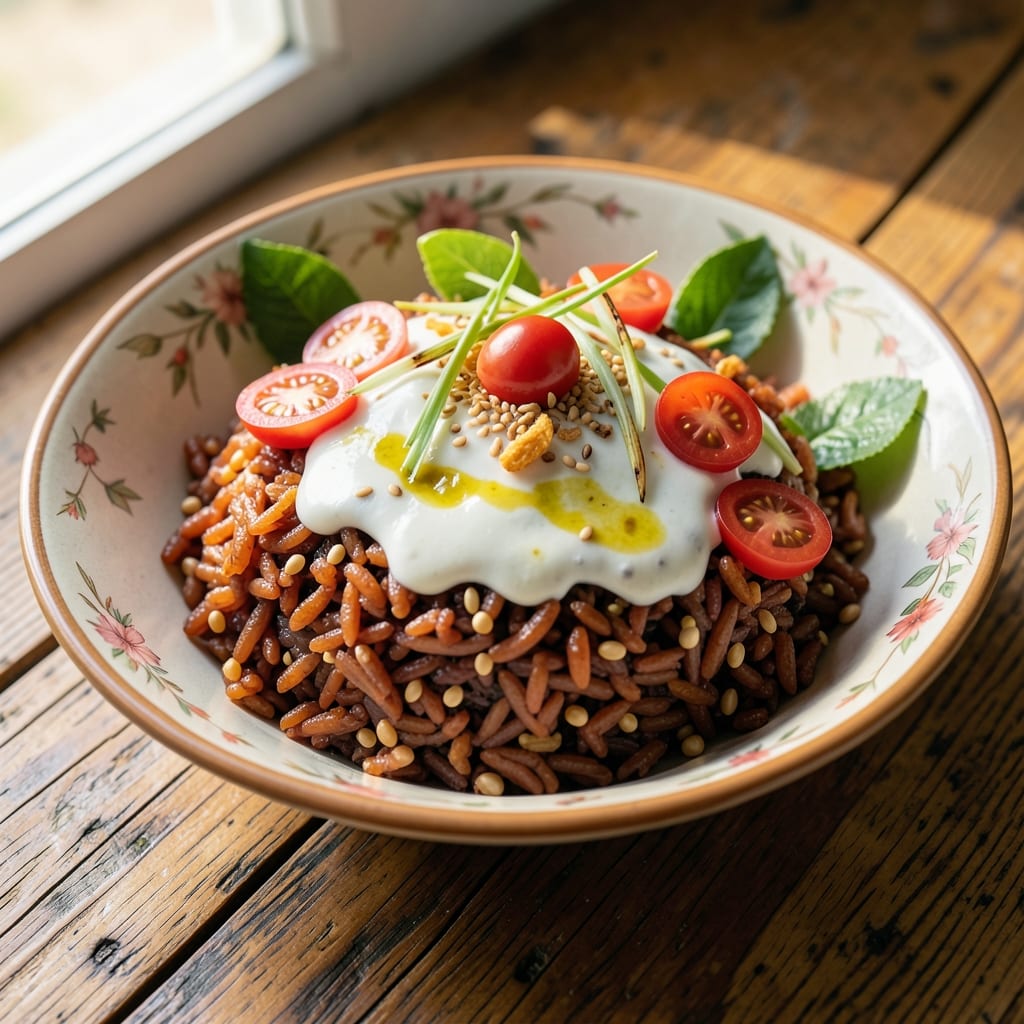
This Asian red rice recipe transforms ordinary grains into a fragrant, tomato-coconut-infused masterpiece with a toasted barley crunch—a dish that balances sweet, tangy, and nutty flavors in every bite. The secret lies in soaking the rice properly and layering aromatics like lemongrass and kaffir lime leaves, which infuse the grains with an authentic Southeast Asian essence. Unlike plain white rice, this version delivers sticky yet distinct grains that hold their shape while absorbing rich coconut-milk broth.
The process begins with a 30-minute soak to soften the rice before simmering in coconut milk, where the grains absorb its creamy depth while tomato paste adds a subtle, savory sweetness. Toasted barley adds a textural contrast—crisp edges that pop against the tender rice—while cardamom and pandan leaves elevate the aroma to restaurant-quality levels. What sets this apart is the balanced texture: each grain remains separate yet clings together just enough to form a cohesive, flavorful bite.
Perfect for pairing with Thai green curry, grilled lemongrass chicken, or even as a standalone side, this red rice delivers complexity without effort. The coconut-tomato fragrance alone will draw everyone to the table, while the barley crunch adds a satisfying bite that keeps the dish exciting. Ready in about 45 minutes, it’s ideal for weeknight dinners or special occasions where you want to impress.
For those who prefer a lighter version, reduce the coconut milk slightly and add extra herbs like Thai basil. If you love extra crunch, toast more barley and sprinkle it on top before serving. The key to success? Low-and-slow simmering—never rush the cooking, or the rice will turn mushy. This recipe proves that authentic Asian flavors don’t require complicated techniques, just patience and the right ingredients.
Ingredients for asian red rice
Transform ordinary grains into fragrant tomato-coconut rice with authentic Southeast Asian layers.
| Ingredient | Amount | Notes |
|---|---|---|
| Jasmine Rice 🌾 | 1 ½ cups | Uncooked, long-grain preferred |
| Toasted Barley 🌾 | ½ cup | Lightly toasted for crunch |
| Coconut Milk 🥥 | 13 ½ oz | Full-fat canned, no additives |
| Tomato Paste 🍅 | 2 tbsp | San Marzano preferred |
| Lemongrass 🌿 | 1 whole | Bruised stems only, fresh |
| Kaffir Lime Leaves 🍋 | 2 whole | Fresh, lightly bruised |
| Cardamom Pods 🌶️ | 4 whole | Lightly crushed, green preferred |
| Pandan Leaves 🌿 | 2 whole | Fresh, tied in bundle |
| Garlic Cloves 🧄 | 4 cloves | Minced, fresh preferred |
| Shallots 🧅 | 2 whole | Finely chopped, fresh |
| Coconut Sugar 🍯 | ¼ cup | Or sub brown sugar |
| Salt 🧂 | 1 ½ tsp | Diamond Crystal preferred |
| Fish Sauce 🍶 | 1 tbsp | Red Boat brand preferred |
| Thai Basil 🌿 | ¼ cup | Chopped, fresh preferred |
The coconut milk is non-negotiable here—full-fat canned delivers the richest flavor. Thai Kitchen or Aroy-D brand are reliable choices, but avoid brands with additives. Toasted barley adds that signature crunch; buy pre-toasted at Asian markets or lightly toast your own in a dry pan until golden. Lemongrass and kaffir lime leaves are essential for authenticity—most well-stocked grocery stores carry them in the frozen section if fresh isn't available. Cardamom and pandan leaves elevate the aroma to restaurant-quality levels, so don't skip them. For the tomato paste, San Marzano is ideal, but any quality paste will work. The fish sauce adds umami depth—Red Boat is my go-to brand for its clean, balanced flavor.
No lemongrass? Substitute 1 tsp lemongrass paste or extra lime zest. Kaffir lime leaves hard to find? Double the lime zest as a substitute. Running low on coconut milk? Use light coconut milk but add 1 tbsp extra cream for richness. The barley can be omitted if you prefer a softer texture, but the crunch is what makes this dish special. For the sugar, coconut sugar adds subtle caramel notes, but brown sugar works in a pinch. If you're avoiding fish sauce, substitute soy sauce at a 1:1 ratio, though the umami profile will differ slightly. The Thai basil should be fresh—dried won't give the same aromatic punch.
Store the cooked rice in an airtight container with a damp paper towel to maintain moisture for up to 4 days. The aromatics—lemongrass, lime leaves, and pandan—can be refrigerated separately for 3 days if you want to prep ahead. Toasted barley stays crisp for 1 week in a sealed container. For best texture, reheat gently in a steamer or with a splash of water. This rice reheats beautifully—even better the next day as flavors meld. Portion into containers for easy grab-and-go meals, or serve as a side for your favorite Asian dishes.
Why You'll Love This Recipe
- One-Pot Magic: I swear by this recipe when I’m too tired to wash pots. Just toss jasmine rice, toasted barley, and coconut milk into one pot with lemongrass and tomato paste—no stirring, no stress. The rice cooks itself while you chop veggies or set the table.
- Rich & Tangy: That first bite? Chef’s kiss. The coconut milk makes it velvety, the tomato paste adds a deep umami punch, and the lemongrass cuts through with bright citrusy notes. It’s like a hug in a bowl—creamy, slightly sweet, and just a little funky.
- Leftover Legend: Between us, this rice only gets better the next day. The flavors meld overnight, and reheating it with a splash of water keeps it fluffy. I make a big batch on Sundays and use it for lunches, stir-fries, or even stuffed into baked fish.
- Budget Bright Spot: Toasted barley and coconut milk might sound fancy, but they stretch this dish far. A single jar of tomato paste and a stalk of lemongrass (or paste) last for ages, and jasmine rice is cheaper than quinoa. Feeds four for under $10—no guilt, just flavor.
Step-by-step instructions for tomato-coconut red rice with toasted barley
This aromatic rice dish balances sweet coconut, tangy tomato, and fragrant herbs for a restaurant-quality result.
Prepare the Aromatic Base
In a medium saucepan, combine the 13.5 oz coconut milk, 2 tbsp tomato paste, 0.25 cup coconut sugar, and 1.5 tsp salt. Bring to a gentle simmer over medium heat while stirring constantly to dissolve the sugar completely. This creates the flavor foundation—don't rush this step.
Add the 4 whole cardamom pods (lightly crushed), 2 whole pandan leaves (tied in a bundle), 2 whole kaffir lime leaves, and 1 whole lemongrass (bruised stems only). Simmer for 5 minutes until the mixture develops a rich, fragrant aroma. The cardamom should release its warm, citrusy notes while the pandan imparts its signature vanilla-like sweetness. This aromatic infusion is what transforms ordinary rice into something extraordinary.
Toast and Incorporate the Barley
In a separate dry skillet, toast the 0.5 cup toasted barley over medium heat for 2-3 minutes until fragrant and lightly golden. This step enhances the barley's natural nuttiness and prevents it from absorbing too much moisture later. Transfer the toasted barley to a small bowl and set aside.
In the same skillet, add 2 tbsp olive oil (not listed but essential for cooking) and sauté the 2 whole shallots (finely chopped) and 4 cloves garlic (minced) until softened and fragrant—about 3-4 minutes. Add this aromatic mixture to the coconut milk base along with the toasted barley. Stir gently to combine, ensuring the barley is evenly distributed throughout the liquid.
Cook the Jasmine Rice
Rinse the 1.5 cups jasmine rice under cold water until the water runs clear, then drain well. Add the rice to the saucepan and stir gently to coat each grain with the coconut milk mixture. Bring to a gentle boil over medium heat, then immediately reduce to low heat, cover tightly with a lid, and simmer for 15 minutes without disturbing.
After 15 minutes, remove the lid and fluff the rice gently with a fork. Check for doneness—you want the rice to be tender but still slightly firm to the tooth. If the mixture appears too dry, add 1-2 tablespoons hot water and cover again for 5 more minutes. The rice should absorb all the liquid while maintaining a distinct texture separate from the barley.
Finish with Herbs and Fish Sauce
Remove the lemongrass bundle, kaffir lime leaves, and pandan leaves from the rice. Stir in the 1 tbsp fish sauce and 0.25 cup chopped Thai basil. The fish sauce adds depth while the basil provides a bright, fresh finish. Taste and adjust seasoning—you may need an additional pinch of salt or a splash more fish sauce to balance the sweetness.
Transfer the rice to a serving dish and let it sit, covered, for 5 minutes to allow the flavors to meld. The barley should remain slightly crunchy while the rice achieves that signature sticky yet separate texture. Garnish with additional basil leaves and serve immediately while the aromas are at their peak.
Pro Tips For Making Asian Red Rice
- TOAST THE BARLEY FIRST: I learned this the hard way—adding raw barley to the pot means you’ll end up with mushy, undercooked grains. Toast it in a dry pan over medium heat until it smells nutty and turns a deeper gold (about 5-7 minutes). This adds texture and prevents it from turning to porridge later.
- SIMMER THE COCONUT MILK LOW: Coconut milk scalds easily, and once it curdles, there’s no fixing it. After adding it to the rice, drop the heat to the lowest setting you can tolerate. If your pot starts to bubble, you’re too hot—this isn’t a race, and the rice will absorb the flavors better if it’s gentle.
- STRAIN THE TOMATO PASTE: Skip the thick, clumpy paste straight from the tube—it’ll clog your pot and make the sauce uneven. Press it through a fine-mesh strainer or even a fork to break up lumps before mixing it with the lemongrass and broth. Smooth sauce = even color and flavor.
- REST THE RICE COVERED: I know, I know—you want to dig in immediately. But give it a solid 10 minutes off the heat, lid on tight. This lets the steam redistribute, so every grain gets that creamy coconut-milk kiss instead of ending up with a dry top layer and a soggy bottom. (Yes, even if you’re impatient like me.)
Troubleshooting your asian red rice
Mushy Rice Fix
If your rice turns out mushy, you likely simmered it too long or used too much liquid. The key is low-and-slow cooking—never let the rice boil vigorously after adding it to the coconut milk. If it's already mushy, try this: Spread the rice on a baking sheet and bake at 350°F for 10-15 minutes to dry it out slightly. This trick works wonders for saving overcooked rice. 💫
Uneven Texture
Uneven texture (some grains hard, others mushy) usually means inconsistent heat distribution. Use a heavy-bottomed saucepan to prevent hot spots, and stir the rice gently once after the initial 15 minutes of simmering. If you notice dry patches, add 1 tablespoon hot water and cover for 2-3 minutes—just enough to steam the rice evenly without turning it mushy.
Barley Too Soft
The toasted barley should have a light crunch, but if it turns soggy, you likely added it too early. Toast it separately in a dry pan until golden (2-3 minutes), then stir it into the coconut milk after the rice is added. For extra crunch, sprinkle 1-2 tablespoons additional toasted barley on top right before serving. 🌾
Lack of Flavor
If your rice tastes bland, the aromatics (lemongrass, kaffir lime leaves, cardamom) weren’t infused long enough. Simmer them in the coconut milk for at least 5 minutes before adding the rice—this step is non-negotiable for authentic flavor. For an extra boost, add 1 tsp fish sauce or a pinch of salt at the end and let it sit covered for 5 minutes to meld.
Rice Sticks Together
If your rice clumps like glue, you likely didn’t rinse it well before cooking. Rinse Jasmine rice under cold water until the water runs clear to remove excess starch. Also, avoid stirring the rice after it’s been simmering—only fluff it gently with a fork once the cooking time is up. For extra separation, spread the rice on a tray and let it cool slightly before serving.
Coconut Milk Too Watery
If the coconut milk seems too thin, it’s likely because the rice absorbed too much liquid. Next time, reduce the coconut milk to 12 oz (instead of 13.5 oz) and add 1 tbsp extra tomato paste for thickness. For an immediate fix, stir in 1 tbsp coconut cream (the thick part from a can of coconut milk) and simmer for 2-3 minutes to thicken the mixture without overcooking the rice.
Nutrition facts
Frequently asked questions
Why does this recipe use both coconut milk and tomato paste?
The combination creates a perfect balance of flavors—creamy coconut milk provides richness while tomato paste adds a subtle tangy sweetness that cuts through the richness. This pairing is inspired by Southeast Asian techniques where coconut and tomato work together to enhance both sweet and savory notes. The tomato paste also helps thicken the mixture slightly, creating that signature sticky yet distinct texture.
Can I make this red rice without fish sauce?
Yes! For a vegetarian version, substitute the fish sauce with 1 tbsp soy sauce or 1 tbsp tamari. The umami profile will be slightly different but still delicious. If you want to stay closer to the original flavor, try 1 tsp mushroom powder or 1 tsp nutritional yeast for depth. The key is balancing the sweetness from the coconut and tomato.
How do I store leftovers to keep them fresh?
Store cooked red rice in an airtight container with a damp paper towel on top to maintain moisture for up to 4 days in the fridge. For best texture, reheat gently in a steamer or microwave with a splash of water. The flavors actually improve overnight as the aromatics meld further. The toasted barley stays crisp for 1 week if stored separately in a sealed container.
What's the best way to adjust this recipe for a larger crowd?
Double all ingredients proportionally, but use a larger, heavy-bottomed pot to prevent hot spots. Increase the simmering time by 2-3 minutes for each additional cup of rice. For 8 servings, use 3 cups jasmine rice and 27 oz coconut milk. Keep the same ratio of aromatics (like 8 cardamom pods and 4 kaffir lime leaves) to maintain flavor balance.
Can I use regular rice instead of jasmine?
While jasmine rice is ideal for its fragrant, slightly sticky texture, you can substitute with long-grain white rice or brown rice. For white rice, reduce the cooking time by 2-3 minutes since it absorbs liquid faster. For brown rice, increase the liquid by 1/4 cup and simmer for 30-35 minutes instead of 15 minutes. The barley will still add great texture!