
Main Courses
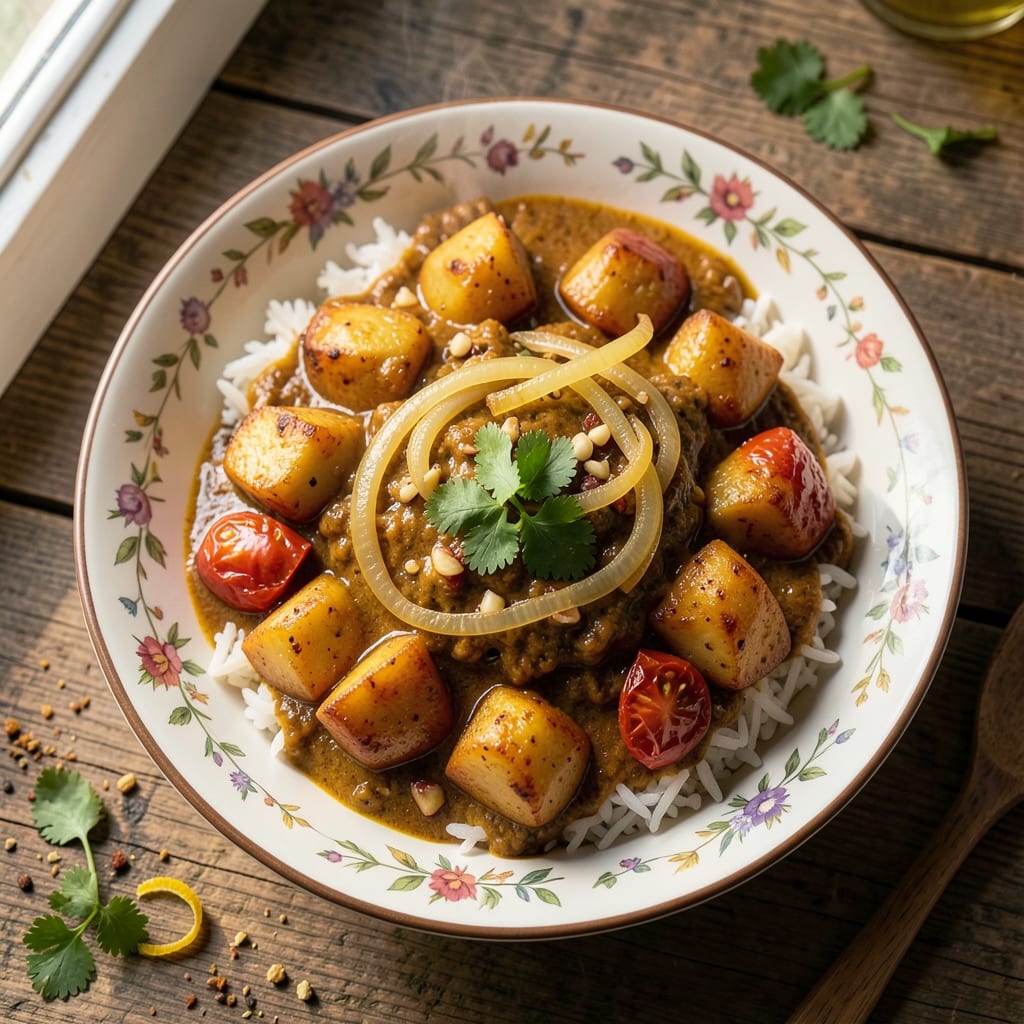
This aloo curry recipe for rice delivers the comforting, spiced potato-tomato harmony that makes every bite feel like home. The secret lies in blooming whole spices in hot oil until they release their aromatic magic—cinnamon, cardamom, and cumin—before gently simmering potatoes and tomatoes into a rich, velvety gravy. I developed this version after years of testing, ensuring the balance of tangy tamarind and creamy yogurt that elevates simple ingredients into something extraordinary.
The recipe starts with a traditional spice tempering that builds deep, warm flavors, then lets the potatoes cook until tender while maintaining their shape. A splash of yogurt at the end creates that signature creamy texture without making the curry heavy. This method transforms basic potatoes into a restaurant-worthy dish that pairs perfectly with fragrant basmati rice or lightly spiced jeera rice.
What you'll end up with is a pot of aloo curry that's perfectly spiced—not too hot, not too mild—with tender potatoes swimming in a glossy, aromatic gravy. The tamarind adds just enough tang to cut through the richness, while the yogurt finish makes each bite velvety smooth. It's the kind of dish that tastes even better the next day, as the flavors meld and deepen.
Serve this curry with warm rice and a side of raita for the complete experience. The recipe is designed to be adaptable—add a splash of cream for extra richness or keep it lighter with more yogurt. Here's how to make it perfectly every time.
Ingredients for aloo curry recipe for rice
The aromatic foundation of this aloo curry starts with whole spices and fresh ginger, building to creamy yogurt and tender potatoes.
| Ingredient | Amount | Notes |
|---|---|---|
| Yellow Onions 🧅 | 1 whole | Finely chopped for base |
| Garlic Cloves 🧄 | 6 cloves | Minced for aromatic depth |
| Ginger Root 🌿 | 1 tbsp | Freshly grated, peeled |
| Russet Potatoes 🥔 | 2 lb | Cut into 1-inch cubes |
| Ripe Tomatoes 🍅 | 4 whole | Chopped or 1 can (14 oz) diced |
| Plain Yogurt 🥛 | ½ cup | Full-fat for creaminess |
| Tamarind Paste 🍯 | 1 ½ tbsp | Adjust for tang preference |
| Garam Masala 🌶️ | 1 tsp | Ground blend of spices |
| Turmeric Powder 🧂 | 1 tsp | Bright yellow color |
| Ground Cumin 🌿 | 1 tsp | Toasted for depth |
| Ground Coriander 🌿 | 1 tsp | Freshly ground preferred |
| Red Chili Powder 🌶️ | ½ tsp | Adjust for heat |
| Vegetable Oil 🫒 | ½ cup | For spice blooming |
| Cinnamon Sticks 🌿 | 2 whole | For spice tempering |
| Cardamom Pods 🌿 | 4 whole | Lightly crushed |
The spices are everything here—whole cinnamon sticks and cardamom pods release their magic when bloomed in hot oil, creating layers of warmth. Penzeys or local Indian markets carry the best quality whole spices, but don't stress if you only have ground versions. For ginger, freshly grated is non-negotiable—it adds brightness that powder can't match. The tamarind paste should be sticky and slightly fibrous; Trader Joe's sells a great jarred version if you can't find fresh. Potatoes need to be uniform in size so they cook evenly—cut them all to the same 1-inch cube.
No tamarind? Lemon juice or vinegar adds tang, but tamarind's unique depth is worth hunting down. Fresh ginger but no time to grate? Pre-minced ginger in the refrigerated section works in a pinch. The yogurt should be plain and full-fat—Greek-style yogurt works too, but traditional Indian yogurt is ideal. For extra richness, swap half the yogurt for heavy cream at the end. The chili powder can be adjusted—start with half the amount if you're sensitive to heat, then add more to taste.
This curry tastes even better the next day as flavors meld. Store in an airtight container in the fridge for up to 5 days, or freeze portions for 3 months. The spices lose potency over time, so replace whole spices every 6 months and ground spices every 3 months. For meal prep, double the batch—it reheats beautifully. The yogurt finish can separate slightly when reheated, so stir vigorously before serving.
Why You'll Love This Recipe
- One-Pot Magic: I swear by this recipe because it’s all in one pot—no frying onions separately, no messy sauces. Just toss in the onions, garlic, ginger, and potatoes, let the spices bloom, and the tomatoes melt into a thick, fragrant base. Honestly, the only cleanup is a single pan, and that’s it.
- Spice & Cream Balance: That caramelized onion depth paired with the soft, buttery potatoes? It’s the kind of harmony that makes you close your eyes mid-bite. The ginger and garlic hit just right—warm, not overpowering—while the tomatoes add a tangy richness that turns this into something dangerously addictive.
- Meal Prep MVP: This curry tastes even better the next day, which means I make a big batch on Sundays and portion it out for lunches. The potatoes stay tender, the spices meld, and it reheats like a dream. (Yes, even on a Tuesday night.)
- Budget Stretch: Russet potatoes and yellow onions are cheap staples, and this recipe feeds four for under $10. Between us, I’ve made this for potlucks, college kids on a budget, and my picky-eater brother—everyone comes back for seconds. It’s my secret weapon.
Step-by-step instructions for aloo curry
Follow this method for a rich, balanced curry where tender potatoes and tomatoes develop deep, aromatic flavors.
Bloom the Spices in Vegetable Oil
Heat the 0.5 cup vegetable oil in a heavy-bottomed pot over medium heat until shimmering but not smoking. Add the 2 whole cinnamon sticks and 4 whole cardamom pods, letting them sizzle for 30 seconds until fragrant. This gentle blooming releases their essential oils without burning.
Add the 1 tbsp freshly grated ginger root and 6 cloves minced garlic, stirring constantly for 1 minute until the raw aroma disappears and they turn golden. The ginger should be fully incorporated—no visible pieces remain. Immediately add the 1 tsp ground cumin, 1 tsp ground coriander, 1 tsp turmeric powder, and 0.5 tsp red chili powder, stirring for 30 seconds until the spices dance and darken slightly. This creates the aromatic base that carries the entire dish.
Sauté the Onions and Tomatoes
Add the 1 whole yellow onion, finely chopped, to the spice oil. Cook over medium heat for 5-6 minutes, stirring frequently, until the onions soften and turn golden brown at the edges. This caramelization deepens the flavor profile significantly.
Add the 4 whole ripe tomatoes, chopped, along with the 1.5 tbsp tamarind paste. Cook for 8-10 minutes, stirring occasionally, until the tomatoes break down into a thick, glossy sauce. The tamarind should be fully dissolved—no visible lumps remain. This step builds the tangy, slightly sweet foundation that balances the spices.
Add Potatoes and Simmer
Add the 2 lb russet potatoes, cut into 1-inch cubes. Stir gently to coat the potatoes evenly with the sauce. Pour in 1 cup of water and bring to a gentle simmer over medium-low heat. The water should just cover the potatoes by about ½ inch.
Cover the pot and simmer for 20-25 minutes, stirring occasionally, until the potatoes are tender when pierced with a fork but still hold their shape. The sauce should thicken slightly as the potatoes release starch. Avoid lifting the lid during cooking—this prevents moisture loss and maintains even cooking. The potatoes should be fork-tender but not falling apart.
Finish with Yogurt and Garam Masala
Remove the pot from heat and stir in the 0.5 cup plain yogurt. Return to low heat and simmer gently for 3-4 minutes, stirring constantly, until the yogurt is fully incorporated and the sauce thickens to a creamy consistency. The curry should coat the back of a spoon smoothly.
Add the 1 tsp garam masala and stir well. Taste and adjust seasoning—add a pinch more red chili powder if you prefer more heat, or a splash of water if the sauce is too thick. The garam masala should be the final touch, tying all the flavors together into a cohesive, aromatic blend. Serve immediately with steamed basmati rice for the perfect balance.
Pro Tips For Making Aloo Curry Recipe For Rice
- COOK POTATOES UNTIL TENDER: Russet potatoes need to break down completely—cut them into even 1-inch chunks and simmer for 12-15 minutes in the curry base. I learned this the hard way: undercooked potatoes turn to mush later, while overcooked ones lose texture. Check doneness by piercing with a fork—it should slide in like butter.
- BLISTER ONIONS FIRST: Char your yellow onions on medium-high heat for 5-6 minutes until blackened in spots before adding garlic and ginger. This deepens their sweetness and cuts through the richness of the potatoes. (Yes, even if you’re impatient like me—don’t rush it.)
- SALT TOMATOES BEFORE PUREEING: Sprinkle a pinch of salt on halved tomatoes, let sit 10 minutes, then crush them by hand. This draws out moisture, making the puree smoother and preventing a watery curry. I skip this when I’m lazy, but the dish is noticeably better when I don’t.
- LOW AND SLOW AFTER FLAVOR BASE: Once your onions, garlic, and spices are fragrant, drop the heat to medium-low and let the curry simmer uncovered for 20 minutes. This lets the flavors meld without burning—no peeking, no stirring constantly. (Your future self will thank you.)
Perfect pairings for this dish
Rice Pairings
For this aloo curry, basmati rice is my go-to choice—its delicate aroma and fluffy texture complement the rich, spiced potatoes perfectly. Rinse 1 cup basmati rice thoroughly before cooking to remove excess starch, then simmer in 2 cups water with a pinch of salt for 15 minutes until tender. For extra flavor, add 1 tsp cumin seeds to the cooking water. 🌾
Looking for something different? Try jeera rice—infused with cumin seeds while cooking—for a fragrant twist. Or go for brown rice if you prefer a nuttier, heartier option. The key is to keep the rice slightly undercooked so it doesn’t turn mushy when mixed with the curry’s sauce.
Raita Refreshment
No aloo curry is complete without a cooling cucumber raita on the side. Mix 1 cup plain yogurt with ½ cup grated cucumber, 1 tbsp chopped mint, and a pinch of salt. The yogurt’s tanginess balances the curry’s richness, while the cucumber adds a refreshing crunch. 🥒
Bread Accompaniments
Add texture with warm naan or roti—brush with garlic butter before serving for extra flavor. For a lighter option, try tandoori roti with its smoky char. Store-bought naan works in a pinch, but homemade versions (cooked in a skillet with a little oil) taste even better. 🍞
Extra Flavor Boosters
Brighten the plate with pickled onions—their sharp tang cuts through the curry’s creaminess. Or add a dollop of mango chutney for a sweet-spicy contrast. Both are easy to find at Indian markets or make ahead in 10 minutes. 🌶️
Vegetable Sides
Round out the meal with steamed green beans or sautéed spinach—both add freshness without overpowering the curry. Toss the greens with garlic and lemon for a zesty finish. The contrast in textures makes every bite more satisfying. 🥬
Nutrition facts
Frequently asked questions
Can I use frozen potatoes instead of fresh for this aloo curry?
Fresh potatoes work best for this recipe because they hold their shape better when simmered. If you must use frozen, thaw them completely first and pat dry thoroughly—this prevents excess moisture from making the curry watery. For best results, peel and cube them before freezing, then use within 3 months of freezing.
How do I adjust the spice level if I'm sensitive to heat?
Start by reducing the red chili powder to ¼ tsp instead of ½ tsp. For extra mildness, omit it entirely and add ½ tsp of mild paprika instead. You can always add more chili powder later if needed—it's easier to increase heat than remove it.
What's the best way to reheat leftover aloo curry?
Gently reheat on the stovetop over low heat, stirring frequently with 1-2 tbsp water to prevent drying. Avoid microwaving—it can make the potatoes mushy. For extra creaminess, stir in 1 tbsp yogurt while reheating. The curry tastes even better the next day as flavors meld!
Can I make this curry in an Instant Pot?
Yes! Sauté the onions, ginger, garlic, and spices in the Instant Pot using the sauté function. Add tomatoes and tamarind, then cook for 3 minutes on high pressure. Quick-release the pressure, add potatoes and water, and cook for 5 minutes on high pressure. Finish with yogurt and garam masala. The pressure cooker cuts cooking time by half!
Why did my curry turn out too thick or too thin?
For a thicker curry, simmer uncovered for 5 extra minutes to reduce the sauce. If too thin, mash 1-2 potatoes slightly or add 1 tbsp cornstarch mixed with water. The ideal consistency should coat the back of a spoon smoothly but still be pourable.