
Main Courses
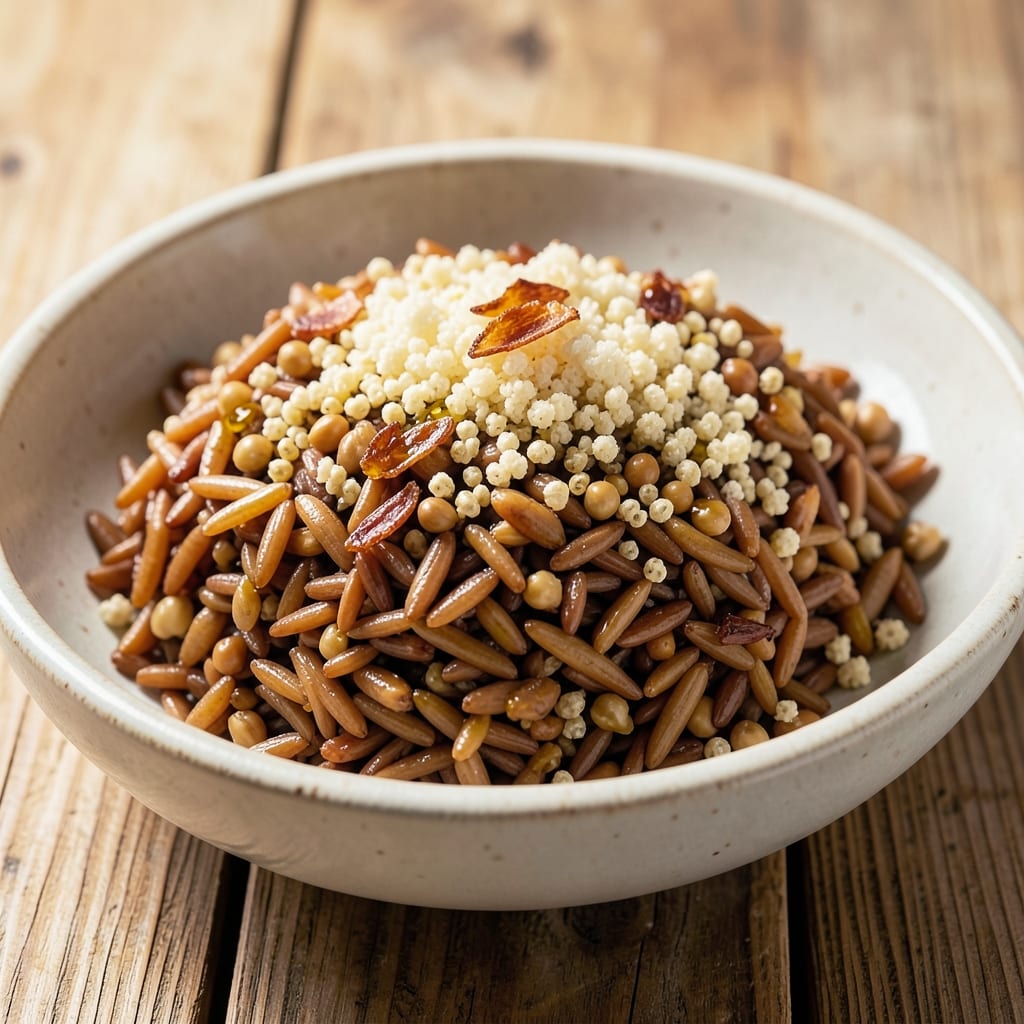
This 7 grain rice recipe transforms ordinary meals into a symphony of textures and flavors, blending nutty crunch with fluffy perfection. 🌾 The secret lies in combining seven distinct grains—each bringing its own unique character—while maintaining a harmonious balance that elevates any dish. Whether you're preparing a hearty bowl or a light salad base, this recipe delivers restaurant-quality results at home.
The beauty of this blend is its versatility—each grain contributes something special: wild rice adds earthy depth, quinoa brings protein-rich chewiness, and barley offers a satisfying bite. With the right soaking and simmering techniques, you’ll achieve grains that are tender yet still retain their individual textures. The result? A dish that’s as nutritious as it is delicious, perfect for meal prep or a special dinner.
What sets this recipe apart is its ability to adapt to any meal—serve it as a standalone grain bowl, mix it into salads, or use it as a flavorful base for stir-fries. The grains absorb flavors beautifully, making them ideal for pairing with roasted vegetables, grilled proteins, or fresh herbs. Plus, with a few simple adjustments, you can customize it to fit dietary needs, including gluten-free options.
Ready in about 45 minutes with minimal hands-on time, this recipe is designed for both beginners and seasoned cooks. The key is patience—letting the grains soak and simmer just right ensures they’re perfectly cooked without losing their distinct textures. Once you try this, you’ll never go back to plain rice again.
Ingredients for 7 grain rice
Seven grains, one perfect blend—nutty, fluffy, and packed with texture for any meal.
| Ingredient | Amount | Notes |
|---|---|---|
| Wild Rice Blend 🌾 | ½ cup | Uncooked, long-grain variety |
| Brown Rice 🌾 | ½ cup | Long-grain, uncooked |
| Quinoa 🌾 | ½ cup | Rinsed thoroughly |
| Barley 🌾 | ¼ cup | Pearled, uncooked |
| Farro 🌾 | ¼ cup | Pearled, uncooked |
| Couscous 🌾 | ¼ cup | Whole wheat preferred |
| Bulgur Wheat 🌾 | ¼ cup | Fine grind preferred |
| Vegetable Broth 💧 | 4 cups | Low-sodium preferred |
| Extra-Virgin Olive Oil 🫒 | 2 tbsp | For richness and texture |
| Garlic Cloves 🧄 | 3 cloves | Minced for flavor depth |
| Fresh Thyme Leaves 🌿 | 1 tbsp | Or 1 tsp dried thyme |
| Sea Salt 🧂 | 1 ½ tsp | Diamond Crystal preferred |
| Black Peppercorns 🌶️ | ½ tsp | Freshly cracked |
| Fresh Parsley 🌿 | ¼ cup | Chopped for garnish |
The grains are where the magic happens. Bob's Red Mill or Trader Joe's carry excellent pre-rinsed quinoa and whole-grain couscous—skip the rinsing step for those. Wild rice and barley need the most soaking time, so grab them first if you're prepping ahead. For the barley and farro, pearling matters—it cuts cooking time dramatically. If you're gluten-sensitive, swap the barley and farro for extra quinoa or certified gluten-free grains. The vegetable broth should be low-sodium—you'll be adding salt later, and you don't want to overdo it.
No quinoa? Buckwheat groats work beautifully as a 1:1 swap—they have that same nutty bite. Short on farro? Orzo pasta gives a similar texture, though it'll cook faster. The olive oil is non-negotiable here—it's what gives those grains that luscious finish. California Olive Ranch or Bertolli are my go-tos for consistent quality. Fresh thyme is ideal, but if you're using dried, remember it's potent—start with half the amount and adjust. The parsley is purely for garnish, so don't stress if you're out—just skip it or use another fresh herb like cilantro or dill.
This blend keeps beautifully for 5 days in the fridge, sealed in an airtight container. The grains actually taste better the next day as all the flavors meld together. For longer storage, freeze portions in 1-cup servings—they'll last 3 months without losing texture. Reheat with a splash of water or broth to restore moisture. I always make double batches because it's perfect for meal prep—grab a handful for lunches all week, or use it as a flavor base for stir-fries and soups.
Why You'll Love This Recipe
- One-Pot Magic: I swear by this—just toss all the grains (wild rice, quinoa, farro, barley) into one pot with broth, stir, and walk away. No measuring cups for each grain separately, no burning the bottom. The barley thickens the broth just enough to coat everything perfectly, while the quinoa adds that satisfying bite.
- Nutty Earthy Crunch: Between us, this isn’t your basic rice. The wild rice blend brings that smoky depth, the farro adds a chewy texture, and the barley? It’s like little toasty bits hiding in every bite. Honestly, I’ve caught myself eating it straight from the pot with a spoon—no shame.
- Meal Prep MVP: This keeps for days in the fridge, reheats beautifully, and actually tastes better the next day (the flavors meld like a cozy hug). Pack it in lunches, use it as a base for stir-fries, or serve it cold in grain bowls—it’s my go-to for busy mornings when I need something hearty but not heavy.
- Budget-Friendly Powerhouse: I buy grains in bulk, and this recipe stretches my dollar hard. Quinoa and farro might seem fancy, but they’re cheaper per serving than takeout, and you’re getting way more nutrition. Plus, the barley soaks up flavors like a sponge, so a little broth goes a long way—no wasted ingredients here.
Step-by-step instructions for 7 grain rice with perfect texture
This blend delivers a symphony of textures—chewy farro, fluffy quinoa, and nutty wild rice.
👨🍳 Step 1: Prep and Toast the Grains for Maximum Flavor
In a large, heavy-bottomed pot, combine all the dry grains: the 0.5 cup wild rice blend, 0.5 cup brown rice, 0.5 cup quinoa, 0.25 cup barley, 0.25 cup farro, 0.25 cup couscous, and 0.25 cup bulgur wheat. I like to use a Dutch oven for even heat distribution—it prevents scorching while toasting.
Heat the pot over medium-low heat and add the 2 tbsp extra-virgin olive oil. Stir the grains constantly for 5-7 minutes until they become fragrant and develop a golden hue. This toasting step enhances their natural nutty flavors and prevents mushiness. Watch closely—you want them to smell toasty, not burnt. If they start to darken too quickly, reduce the heat immediately.
🍳 Step 2: Add Aromatics and Broth for Depth of Flavor
Once the grains are toasted, add the 3 minced garlic cloves and 1 tbsp fresh thyme leaves. Stir for 30 seconds until the garlic becomes fragrant but doesn't brown. Here's the thing—garlic burns in seconds, so keep an eye on it.
Pour in the 4 cups vegetable broth and bring everything to a rolling boil. Once boiling, reduce heat to low and add the 1.5 tsp sea salt and 0.5 tsp freshly cracked black peppercorns. The broth should just barely cover the grains—this ensures they absorb flavor without becoming waterlogged. If you notice the grains are submerged too deeply, add a splash more broth later rather than starting with extra liquid.
⏰ Step 3: Simmer to Al Dente Perfection
Cover the pot with a tight-fitting lid and let the grains simmer for 25 minutes. Here's where patience pays off—don't peek! Every time you lift the lid, you release steam and extend the cooking time. After 25 minutes, check the grains: they should still have a slight bite but be mostly tender.
If the couscous and bulgur wheat are fully tender but the farro and wild rice still need time, uncover the pot and let it cook uncovered for an additional 5-7 minutes. The couscous cooks fastest, so this step ensures everything reaches perfect doneness simultaneously. You'll know it's done when the grains are tender but still hold their shape—no mushy texture here.
🥘 Step 4: Rest and Fluff for Ideal Texture
Once the grains are perfectly tender, remove the pot from heat and let it rest covered for 10 minutes. This resting period allows the grains to absorb any remaining liquid and develop their final texture. I know it's tempting to dig in immediately, but trust me—this step makes all the difference in the final result.
After resting, fluff the grains gently with a fork, being careful not to mash them. The couscous will be the most delicate—handle it with care. If the mixture looks dry, add 2-3 tablespoons of water and fluff again. The final texture should be a beautiful medley: fluffy quinoa, chewy farro, and nutty wild rice all working together.
🍽️ Step 5: Finish with Fresh Herbs and Serve Warm
Transfer the grain mixture to a serving bowl and stir in the 0.25 cup chopped fresh parsley. The parsley adds a bright, fresh note that cuts through the richness of the grains. Taste and adjust seasoning if needed—sometimes the broth's saltiness needs balancing with a pinch more salt or a squeeze of lemon.
Serve immediately as a side dish or as a base for grain bowls. The contrast of textures—chewy farro against fluffy quinoa, nutty wild rice with tender couscous—is what makes this blend so special. Each grain brings its own personality to the table, creating a harmonious bite that's far more interesting than plain rice.
Pro Tips For Making 7 Grain Rice
- SOAK THE BARLEY: I learned this the hard way—skipping the 30-minute soak for barley in this mix leaves it rock-hard and chewy, even after simmering. Toss it in warm water with a pinch of salt while you prep the rest; your jaw will thank you later.
- COOK IN STAGES: Start with the farro and quinoa in boiling water for 10 minutes, then add the brown rice and wild rice blend—this prevents the barley from absorbing all the liquid first and turning into mush. Think of it like a relay race: each grain gets its turn in the spotlight.
- SALT THE WATER: Yes, even if your broth or stock is already seasoned, add an extra 1.5 teaspoons of salt to the cooking water for the grains. The barley and farro soak up flavor like sponges, and you don’t want them tasting bland while the wild rice steals the show.
- REST UNDER FOIL: After draining, spread the grains on a baking sheet and tent loosely with foil for 5 minutes. This evens out the texture—no more sticky clumps or dry bits—so they’re fluffy and separate when you serve. (Yes, even if you’re impatient like me.)
Serving suggestions for this dish
Protein Pairings
This 7-grain blend pairs beautifully with grilled chicken breast—its mild flavor lets the nutty grains shine. I love using lemon-herb marinated chicken for a bright contrast. For a vegetarian option, pan-seared tofu with a soy-ginger glaze works wonderfully, absorbing the grains' flavors. 🍗
Roasted Vegetable Bowls
Transform your grains into a hearty bowl by topping with roasted Brussels sprouts and caramelized onions. Toss the veggies in 2 tbsp olive oil, 1 tsp smoked paprika, and ½ tsp sea salt, then roast at 400°F for 20-25 minutes. The sweetness of the onions balances the earthy grains perfectly.
Fresh Herb Garnishes
Brighten your dish with cilantro or dill—both add a fresh, vibrant note. I like to mix 2 tbsp chopped cilantro with 1 tsp lime juice and a pinch of chili powder for a zesty garnish. For a Mediterranean twist, try fresh mint with a drizzle of lemon-tahini dressing. 🌿
Dressing Options
A light yogurt-based dressing with 1 tbsp lemon juice, 1 tsp honey, and ½ tsp cumin elevates the dish. For a richer option, blend 2 tbsp tahini, 1 tbsp olive oil, and 1 clove garlic with water to thin. Both dressings enhance the grains' nuttiness without overpowering them.
Warm Bread Pairing
Serve alongside warm naan or crusty sourdough to soak up any extra flavors. Brush the bread with garlic-infused olive oil and toast until golden. The contrast of soft bread with the hearty grains makes every bite satisfying.
Meal Prep Serving
For meal prep, store grains in glass airtight containers with a squeeze of lemon juice to keep them fresh. Reheat with 1 tbsp water per cup of grains and top with avocado slices or pickled red onions for a quick, restaurant-style bowl. 💡
Nutrition facts
Frequently asked questions
Can I substitute any of the grains in this 7-grain blend?
The key is maintaining texture variety. Swap buckwheat groats for quinoa (1:1 ratio) for extra nuttiness, or use orzo pasta instead of farro—it cooks faster but gives a similar chewy bite. Just reduce cooking time by 5 minutes if using orzo.
How do I adjust this recipe for a larger group?
Double or triple the ingredients while keeping the same ratios. Use a larger pot with a 1.5-inch liquid headspace above the grains. For 8+ servings, increase broth by 1 cup per 2 cups of grains to prevent drying out. Let it simmer 10-15 minutes longer for even cooking.
Why does my 7-grain blend turn mushy?
Overcooking or insufficient liquid are the usual culprits. Always use low heat after boiling and avoid peeking! If it's still mushy after resting, it likely needed less broth—start with 3 cups next time. For couscous specifically, cook it separately for 2 minutes in hot water before adding to the pot.
Is this grain blend gluten-free?
Not as written—barley and farro contain gluten. For a gluten-free version, replace them with extra quinoa and certified gluten-free bulgur (like millet). Always check labels on pre-packaged grains. The flavor profile stays similar but gains a slightly lighter texture.
Can I make this ahead of time?
Yes! It tastes even better the next day. Store in an airtight container in the fridge for 5 days or freeze for 3 months. Reheat with 1 tbsp water per cup of grains, covered, over low heat for 5 minutes. Add fresh herbs after reheating to preserve their brightness.